



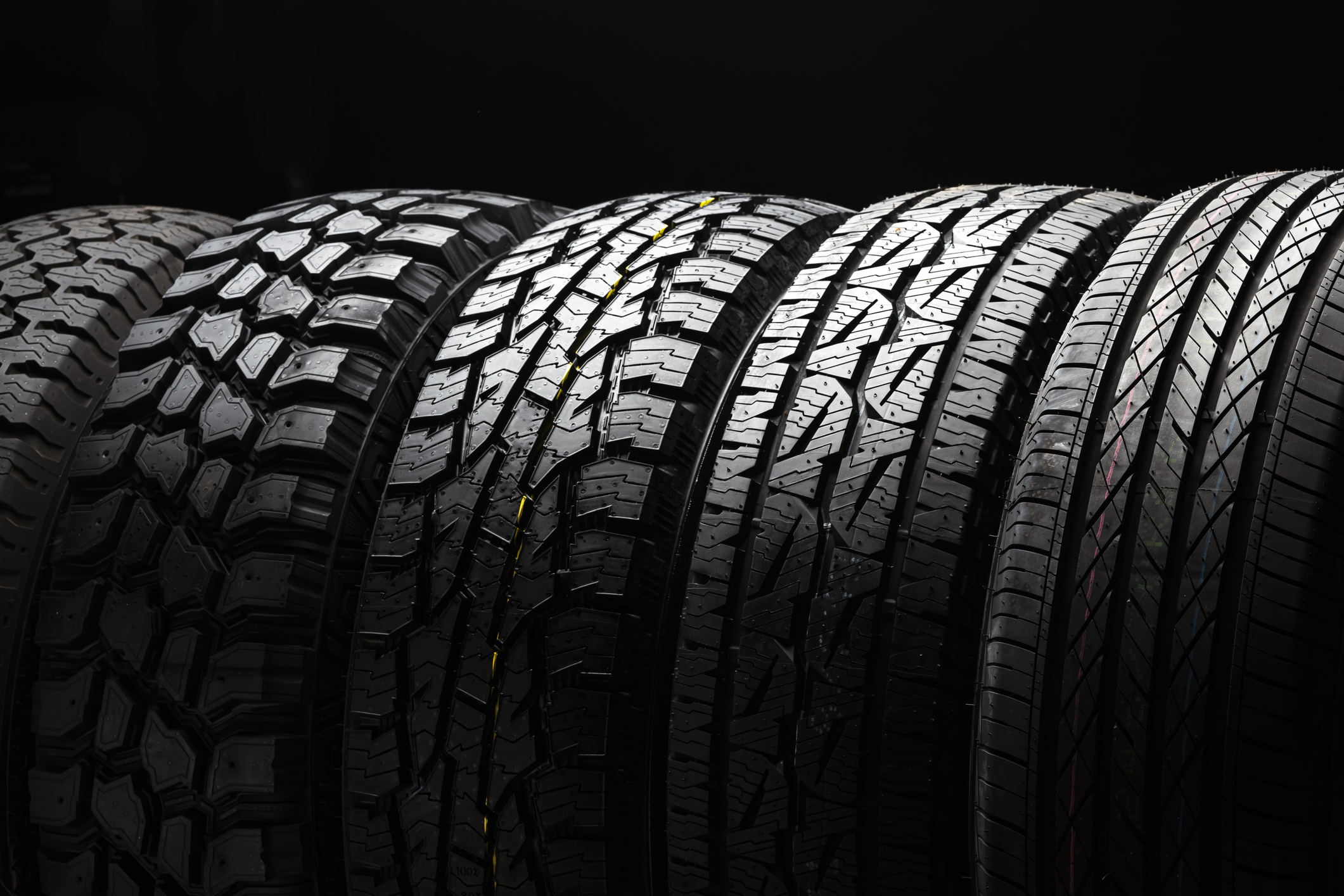
We’re back with another Gearhead Guru Guide, this time in honor of National Car Care Month. We thought it would be a “wheely” good time to share our wealth of knowledge with you all on how to care for your car by selecting the most vital component of the vehicle’s safety and stability: the tires! It’s always a great idea to be thinking about your vehicle’s tires no matter the season, so here’s some tips to get you started.

Learn the different types of tires:
Check with your mechanic or trusted tire installation technician to find the best tires that match your vehicle’s recommended size/type, your driving style and average mileage, local/seasonal weather hazards, and your budget. Here’s a little more information on the types of tires available, and things to consider when selecting the right option for your needs:
- All-Terrain Tires – designed for both street and off-road driving, focusing on toughness and durability and strong off-road features for dirt/mud/ice/etc.
- Performance Tires – designed for energetic drivers who focus on a more sporty driving style, available for all-season and summer-only options, and focus on features like dry or wet traction
- Touring Tires – designed for day to day driving, can be used on a broad range of vehicles, available for all-season and summer-only options
- Winter/Snow Tires – designed for maximum grip and traction in winter weather conditions, optimal for cold weather use and not made for warm-weather driving

Bonus Tidbit: Donut or Spare Tires – designed for very short term use of no more than 50-70 miles, and are intended only for short term emergency use until you can replace your worn/damaged tire with new ones or get them repaired; these are also not designed to be driven at high speeds and it’s recommended at a max of 50 MPH or below for safety
Here’s a great breakdown of tire types with visuals and lengthy descriptions:
Remember, regardless of the tires you should be regularly checking tire air pressure and keeping an eye on the wear-and-tear and tread depth, along with knowing how to gauge when it’s time to swap out to a different type of tire for the season or a change in driving habits.

Here’s some great tips to keep your tires in tip-top shape:
To ensure you have maximum stopping power, you should be regularly testing tread depth. Adequate tread depth will allow your vehicle to grip the road and maintain safe control, and may mean the difference between safely coming to a stop or skidding out. Tread depth is a vertical measurement between the top of the tread rubber and the bottom of the tire’s deepest grooves, which on average for most vehicles in the US is 10/32” or 11/32”. Check your tread depth using “The Quarter Test” – scan your tire and find the area that has the lowest tread depth, then place the quarter head first into the tire tread. If you can see all of Mr. Washington’s noggin, your tire tread is at or below 4/32” and that means you’re in need of new tires! When vehicles reach 4/32 inch tread depth, it’s time to change and replace your tires, as this increases the chances of hydroplaning and inefficient stopping power to prevent accidents.
You should be having your tires rotated regularly to ensure even tread wear. In general, it’s recommended to rotate your tires with each oil change or at minimum every other oil change, which on average is about every 3,000 to 7,000 miles. Your driving style, driving habits, and road conditions all affect wear and tear on the tires, and by rotating you’re extending the life of your tires and ensuring even wear. At each oil change, your mechanic will also inspect the condition of your tires and let you know if they notice uneven wear and tear, as this may be an alignment issue.
You’ll want to balance your wheels every 15,000 miles and perform a realignment to ensure you prevent excessive wear or damage.
Always make sure your tires are properly inflated to pressure, especially when the temperature fluctuates at least 10 degrees up or down. Performing a monthly inspection of your tires air pressure using a tire pressure gauge may help you notice leaks or wear and save you from a flat tire. It’s best to check the vehicle’s tire air pressure in the morning, before you take it out for a drive. Your vehicle will have a sticker on the inside of your driver-side door with the posted air pressure requirements for your tires. Underinflated tires wear unevenly and may be at increased risk for punctures and flats, or even come unseated from the wheel.
![[Facebook]](https://www.classicdirecttoyota.com/blogs/293/wp-content/plugins/bookmarkify/facebook.png)
![[LinkedIn]](https://www.classicdirecttoyota.com/blogs/293/wp-content/plugins/bookmarkify/linkedin.png)
![[Twitter]](https://www.classicdirecttoyota.com/blogs/293/wp-content/plugins/bookmarkify/twitter.png)
![[Yahoo!]](https://www.classicdirecttoyota.com/blogs/293/wp-content/plugins/bookmarkify/yahoo.png)
![[Email]](https://www.classicdirecttoyota.com/blogs/293/wp-content/plugins/bookmarkify/email.png)
Connect with us


- All-New 2027 Toyota Highlander: The Electric SUV for Illinois
- Top 5 Features of the 2026 Toyota 4Runner That Conquer Illinois Winters
- Celebrate the Holidays by Gifting a Road Trip to the Michigan Ice Fest 2026!
- Extending the Spirit of The Giving Season: Great Ways to Give Back to the Community For the Holidays (Lake County, Waukegan Area)
- Your 2025 Holiday Gift Guide for Car Lovers