



At Classic Auto Group, we really, really love cars. We’re constantly honing our skills to stay in the know and ahead of the curve so we can help our customers find the right car for their needs. We make it our business to know everything there is about safety, performance, and aesthetics of each of the vehicles we sell. But we recognize that buying and selling cars is probably not a daily part of our customers’ lives, or even a weekly one. That’s why we’re sharing our helpful Automotive Terminology posts with all of you, so you can feel confident when you set out to find your next perfect car.

Our Automotive Terminology series is designed to help you learn the lingo and technological terms of the automotive industry. By the time you’re ready to buy a car or even bring it in for maintenance appointments, you’ll have all the “know-how” to navigate the conversation with ease.

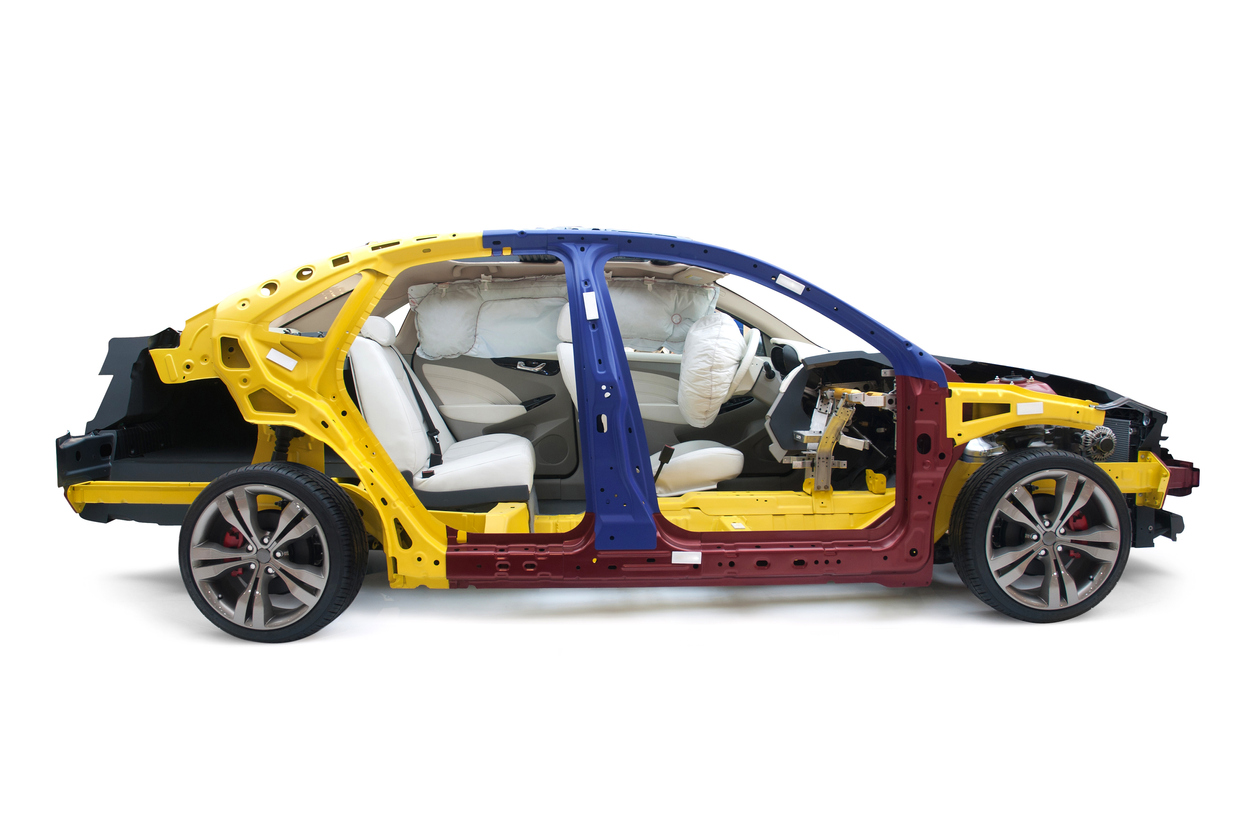
Today, we’re highlighting one of the most important safety features on your vehicle: the airbag system. Automotive manufacturers are constantly amending and updating the safety features in modern vehicles, and especially so for the Airbag restraint system to keep you safe in a collision. Check out our post today to learn more about how these safety features work and why they were implemented!

Although iterations of inflatable safety airbags existed as early as the 1950s, Allen Breed is considered the inventor of modern airbags; Breed patented the world’s first electromechanical automotive airbag system in 1968! It took a little while for the invention to catch on, but by the mid-80s he began to receive orders from GM, Chrysler, and Ford. By the mid-1990s, the airbag safety systems were employed as standard, and today they’re included in every American vehicle and over 90% of European models.

Curious to learn more? This article by Second Chance Garage is a great reference point on the history of airbags, and this article by Wired helps breakdown the mechanics and engineering behind this lifesaving device.
Let’s take another look at how Airbags work and Why:
Ever wonder why race cars don’t have airbags? Donut Media is here to explain, and the answer is not as simple as you might think:
Terms to know:
Airbag deactivation
A system that uses sensors in a vehicle’s front passenger seat to determine whether to activate that seat’s front airbag, based on whether it detects the presence of an individual of sufficient weight.
Airbags
A cushion that deploys and fills with air when a major impact occurs to reduce a vehicle occupants chances of coming in contact with the vehicle’s interior surfaces.
Curtain airbags
Also known as “head airbags.” Wide-spanning airbags that when deployed cover the side glass in a side impact or, in some applications, a rollover, to keep occupants’ heads and limbs fully inside the vehicle.
Knee airbags
Small airbags that deploy under the dashboard by the knees, typically on the driver’s side where the steering column and other hard vehicle parts are located.
Seatbelt pretensioners
A seatbelt with a mechanism that reels in the belt when the airbag is deployed for the purpose of keeping the occupant in the proper position.
Side airbags
Small airbags that deploy from the outside edge of a seat to protect the occupant’s rib cage in a side impact collision.
Side curtain rollover sensor
A sensor that determines in the event of a collision whether or not it is necessary to deploy a vehicle’s side curtain airbags.
![[Facebook]](https://www.classicdirecttoyota.com/blogs/293/wp-content/plugins/bookmarkify/facebook.png)
![[LinkedIn]](https://www.classicdirecttoyota.com/blogs/293/wp-content/plugins/bookmarkify/linkedin.png)
![[Twitter]](https://www.classicdirecttoyota.com/blogs/293/wp-content/plugins/bookmarkify/twitter.png)
![[Yahoo!]](https://www.classicdirecttoyota.com/blogs/293/wp-content/plugins/bookmarkify/yahoo.png)
![[Email]](https://www.classicdirecttoyota.com/blogs/293/wp-content/plugins/bookmarkify/email.png)
Connect with us


- 2026 Toyota Corolla Buying Guide
- 2026 Toyota Camry Showroom Walkaround
- 2026 Toyota Tacoma Towing Guide: Real-World Performance in Waukegan, IL
- The Race for Best Compact SUV: 2026 Toyota RAV4 vs Honda CR-V in Northern Illinois
- The Icon Reimagined: 2026 Toyota 4Runner vs. 2026 Toyota 4Runner i-FORCE MAX in Waukegan