



Jun 24, 2022
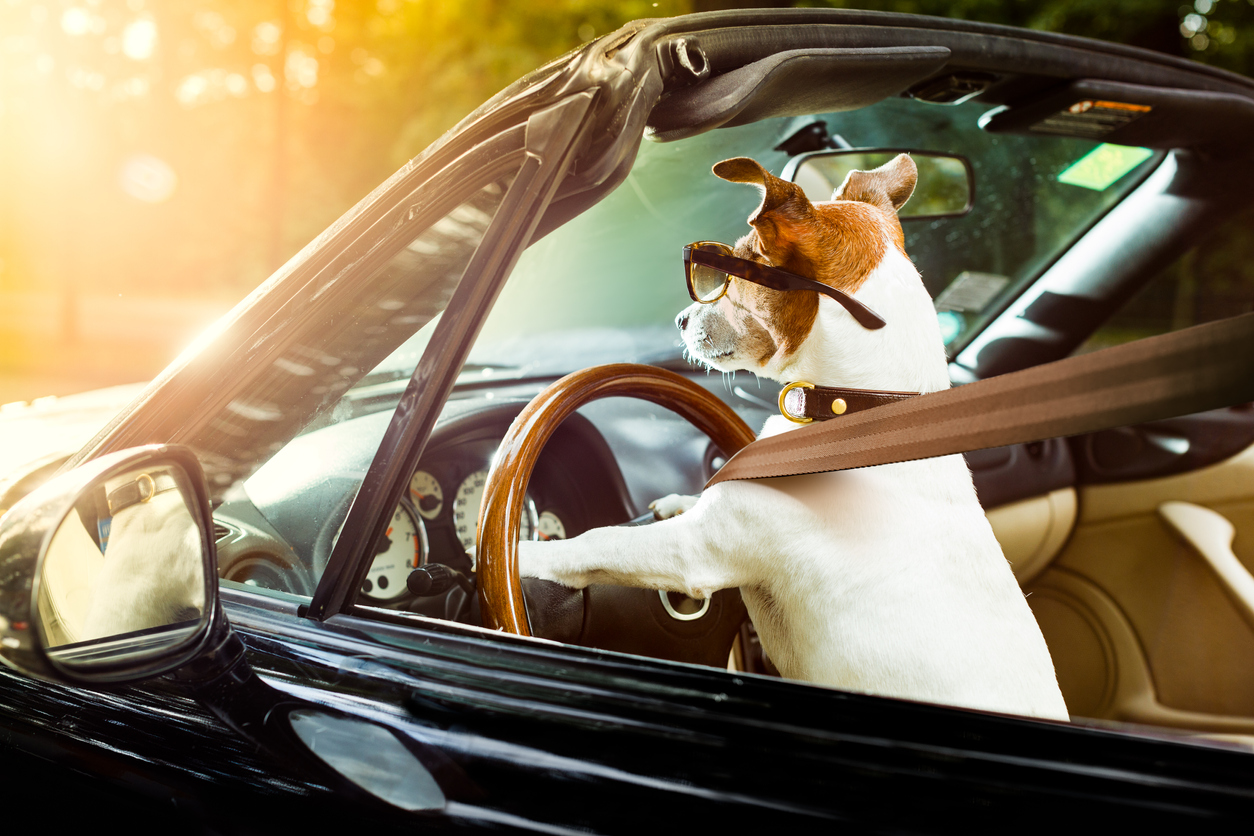
Today is Take Your Pet to Work Day! So we thought it would be helpful to highlight a few safety tips for traveling with your furry friend in the car and on the road. These tips and tricks will keep your pets healthy and secure on all of your adventures, be they commuting to the office or away on a vacation. Check it out!

- Always travel with ample water to ensure that you and your pet can remain hydrated and cool down in event of excess heat and extreme weather conditions. In some cases, you can even include a small towel to saturate with cool water to help your dog stay cool.
- It’s tempting to keep your dog in your lap for company, or to allow them to roam in the car instead of howling or whining anxiously in the back, but it’s extremely important to keep them secured and safe. Not only are roaming dogs a distraction for drivers, but it can cause a pet unnecessary injury or death should your vehicle become involved in an accident. The safest place for your pet is secured in the backseat in a pet-safe seatbelt harness or pet friendly car seat, or secured in the cargo area.
- If your dog gets car sickness and vomits, you can avoid that situation by having the dog travel on an empty stomach, and keep them secured in their seat so they will settle and rest.

- For dogs that are nervous or excitable about car travel, having your dog practice by letting them sit in the car with you in the driveway, followed by short drives of increasing length around the local area can help get them accustomed to the feeling.
- Keep your car well ventilated while driving, but don’t allow your pet to hang out of any open windows or hatchbacks. Dogs have been known to jump out of windows and be placed in peril on busy highways, or leap out of them in parking lots or spotlights and go missing. Cracking the window only enough so they cannot fit their head through, or aiming air conditioning/heating vents in their direction is best.
- On lengthy car trips, be sure to stop and allow your pet exercise every few hours and plan in some water and potty breaks in a dog-friendly area to reduce accidents as well as anxiety.

- Never leave your pet alone in a parked vehicle. No matter whether it’s just for a moment, or if the windows are cracked, your pet should never be left by their lonesome in the car. In fact, as of May 2018, 28 different states have laws to protect animals left in a vehicle, especially when parked in dangerous conditions such as intense heat or cold, or parked in direct sunlight, etc. Law enforcement may reserve the right to forcibly enter the vehicle to rescue the animal.
- A Car can be 20 degrees hotter inside than the outside ambient temperature, meaning even on a 70 degree day that feels lovely outside? Your vehicle can reach a dangerous high of 90 degrees in the interior, even with the window cracked. On an 85 degree day, your car’s temperature will climb above 100 degrees in mere minutes, and within half an hour it will be an unbearable 120 degrees! Shady spots do not offer efficient heat protection on hot days and as the sun shifts, so will the direct sunlight.
- Pets who are overweight, in their senior years, have special medical needs, and those with very dark coats are extra susceptible to the risk of heat stroke and heat exhaustion.Remember that Flat Faced Dogs and Cats are extremely susceptible to heat stroke, as their flat nasal and mouth cavities prevent their ability to properly breathe and cool themselves. They cannot pant properly, and what appears to be “stubbornness” may in fact be exhaustion and early signs of heat exhaustion or heat stroke!

- Ensure that your animal has a proper grooming and haircut for the summer months and warm weather. Be sure to bring your pet to an experienced groomer for a trim, but be sure that they don’t fully shave them down to their skin unless medically necessary to prevent sunburn.
- Know the signs and symptoms of overheating in your pet. These signs can include excessive panting, difficulty breathing, increased heart and respiratory rate, excessive drooling, weakness and wobbling, dazed or confused behavior, and even fainting. Extreme heat can cause seizures, diarrhea, vomiting, and elevated body temperatures.
- Do not walk your pet on pavement or asphalt without proper foot protection for their paw pads; ambient temperatures above 65 degrees can already cause physical burns and discomfort as well as irreparable damage due to the fact that roadways, concrete, and rocks will be even hotter. This helpful information from the AKC will explain safe temperatures for pets and when footwear is necessary.
CNET’s Smart Tips for Keeping Your Pet Safe in the Car:
Teach Your Dog to Get Into the Car:
5 Items to Have with you When Driving with Your Pet:
![[Facebook]](https://www.classicdirecttoyota.com/blogs/293/wp-content/plugins/bookmarkify/facebook.png)
![[LinkedIn]](https://www.classicdirecttoyota.com/blogs/293/wp-content/plugins/bookmarkify/linkedin.png)
![[Twitter]](https://www.classicdirecttoyota.com/blogs/293/wp-content/plugins/bookmarkify/twitter.png)
![[Yahoo!]](https://www.classicdirecttoyota.com/blogs/293/wp-content/plugins/bookmarkify/yahoo.png)
![[Email]](https://www.classicdirecttoyota.com/blogs/293/wp-content/plugins/bookmarkify/email.png)
Connect with us


- 2026 Toyota Corolla Buying Guide
- 2026 Toyota Camry Showroom Walkaround
- 2026 Toyota Tacoma Towing Guide: Real-World Performance in Waukegan, IL
- The Race for Best Compact SUV: 2026 Toyota RAV4 vs Honda CR-V in Northern Illinois
- The Icon Reimagined: 2026 Toyota 4Runner vs. 2026 Toyota 4Runner i-FORCE MAX in Waukegan