



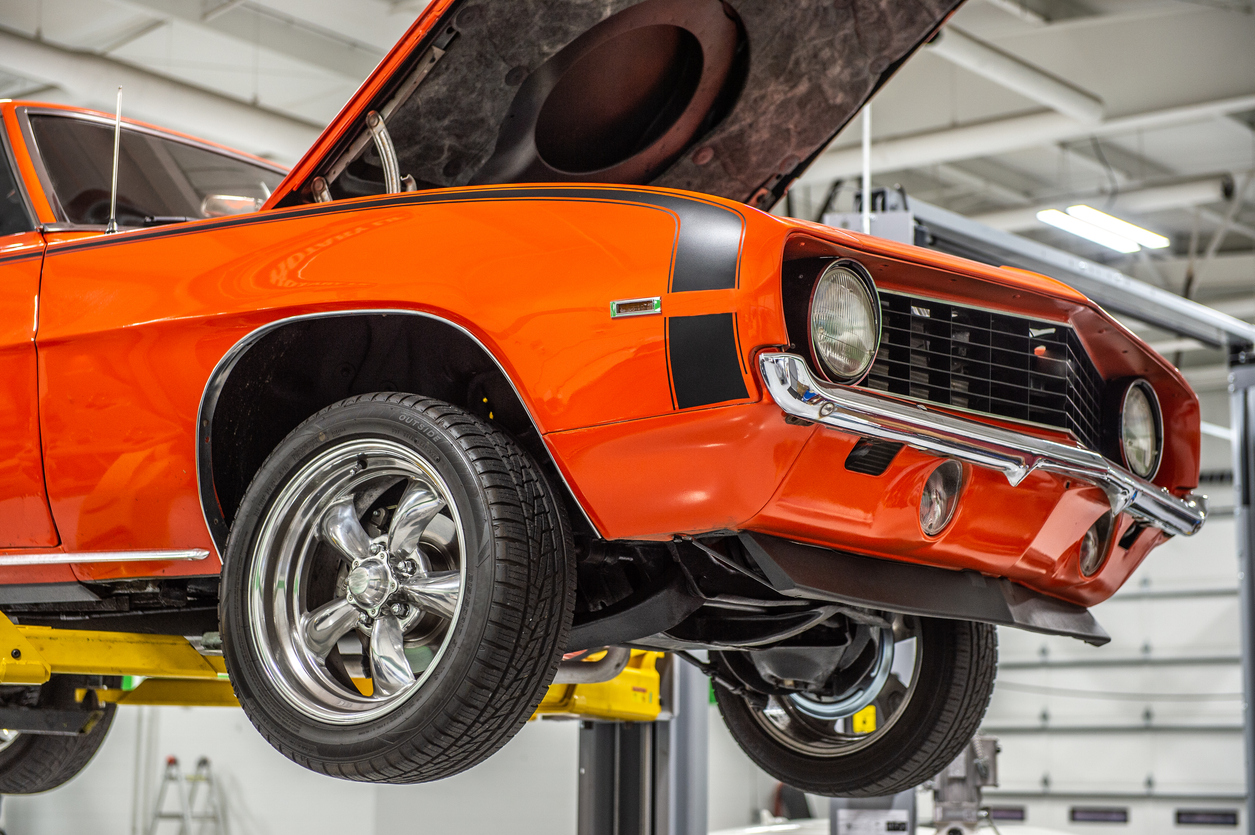
Welcome back to another edition of our Gearhead Guru Series, in which we help you become the best version of yourself as an automotive enthusiast. Today, we’re focusing on some maintenance tasks and tips for keeping your collector cars and vintage cars in their best condition. Let’s learn how to care for your classic car and keep those vehicles pristine for years to come!

The Basics of Maintaining and Storing a Classic Car
The care and keeping of your vintage and classic collectible vehicles is paramount! These basic maintenance tips and checks will save you a lot of hassle and large ticket repairs down the road. Learn how to properly prepare your car for long term storage, keep you car in top shape while its actively in use, and how to spot signs of damage before they become a larger issue.
- Always use the correct type of gas. Collector cars tend to be older and have differing needs to the average modern car. While modern unleaded gas contains a percentage of ethanol, this may not be ideal for your vintage collectible. We recommend utilizing “recreational gas” often sold for use in boats, RVs, campers, etc, as this is generally an ethanol-free option. A good practice for all drivers, but especially in the collectible car market, is to always maintain a half a tank of gas or more to help prevent damage to the fuel system and fuel pump.
- Remember to use the correct motor oil. Collector cars generally require a conventional oil, instead of the modern day synthetic options. If you’re not sure, or your vehicle does not have its owners manual, your trusted service technician can help you identify the best option. Even if your car is traveling less than 1,500 a year, you still have to change your oil at least every 6 months. For collectible and antique cars that may be sitting in storage longer, you should maintain a schedule of at least once yearly oil changes plus oil filter replacements at minimum. Keep a regular eye on your oil levels as well, never letting it dip low to prevent long term damages.

- Regularly inspect for signs of excessive wear and rust, and keep it clean both inside and out. Older cars are more susceptible to rust and rot, especially on the undercarriage and wheel wells. Bringing your classic car into a professional car wash and detail once a month or every other month is recommended to maintain the exterior paint and prevent buildup. Cold weather months can have an added risk for salt build-up and road gravel damage, so you will want to rinse it off weekly if driving in cold winter weather. While you can certainly wash and maintain it at home, we do recommend occasional professional cleanings to ensure no details are overlooked to help prevent rust. If you go the DIY route, steer clear of the power washer as it may cause more harm than help by stripping away protective coatings and paint. Cars that sit in storage may also take on a couple of hitchhikers like mice, chipmunks, and related rodents who take up residence in the stationary vehicle for warmth and safety; be sure to check the interior fabrics and upholstery for signs of rips, tears, and animal droppings.
- Inspect and maintain the tires. Since classic cars are generally not a daily driver, this means they’re spending a lot of time in storage. While tires can last for several years, factors such as weather, heat/humidity, duration of storage time, driving habits and frequency all have a heavy impact on durability and longevity. It’s important to take your classic car out for a spin and regularly condition and clean the tires to prevent dry rot and other issues. Make sure you’re checking tire pressure and inflating appropriately to proper PSI. Keep up with regular tire rotations and tread depth checks as well.

- Change and flush the fluids. Bring your classic car into a professional auto body mechanic to have the transmission fluid and differential fluid flushed and changed. The cooling system should be flushed out annually to help prevent corrosion, clogging, and build up. Let your mechanic know how long the vehicle will be stored for so they can help you find the correct ratio of distilled water to coolant for optimal storage. Your mechanic will also want to bleed the brakes twice a year for proper maintenance and even wear on the brake pads and rotors.
- Store your classic vehicle properly. Car collecting enthusiasts recommend maintaining a temperature-controlled environment not exceeding or going below 50 degrees for optimal storage, and never above 70 degrees. A heated garage or climate controlled storage facility are preferable, and one that utilizes a dehumidifier to maintain no more than 40-50% humidity, especially if you live in a humid or wet weather prone area. The environment should be clean and dry to prevent humidity causing rust and other degradation. Additionally, store your car with a full tank of gas to prevent condensation and moisture build-up during storage. Consider purchasing a high quality vehicle cover that’s custom fitted to your make/model for best protection. Ensure the car has been fully washed, vacuumed, and adequately detailed before entering storage to help prevent mold and mildew. Consider also utilizing a “tire saver” or tire cushion to prevent flat spots during longer term storage. Be sure to still perform regular annual maintenance on your stored vehicles.
Here’s some additional information and professional advice for classic vehicles:
How to Shop for a Classic Car with Jay Leno’s Garage
Should You Buy a Classic Car? Scotty Kilmer is Here to Help
Goss’ Garage Long-Term Storage Tips
How to Maintain A Classic Car from Classics World
Tips for Classic Car Repair from Motor Week
![[Facebook]](https://www.classicdirecttoyota.com/blogs/293/wp-content/plugins/bookmarkify/facebook.png)
![[LinkedIn]](https://www.classicdirecttoyota.com/blogs/293/wp-content/plugins/bookmarkify/linkedin.png)
![[Twitter]](https://www.classicdirecttoyota.com/blogs/293/wp-content/plugins/bookmarkify/twitter.png)
![[Yahoo!]](https://www.classicdirecttoyota.com/blogs/293/wp-content/plugins/bookmarkify/yahoo.png)
![[Email]](https://www.classicdirecttoyota.com/blogs/293/wp-content/plugins/bookmarkify/email.png)
Connect with us


- 2026 Toyota Corolla Buying Guide
- 2026 Toyota Camry Showroom Walkaround
- 2026 Toyota Tacoma Towing Guide: Real-World Performance in Waukegan, IL
- The Race for Best Compact SUV: 2026 Toyota RAV4 vs Honda CR-V in Northern Illinois
- The Icon Reimagined: 2026 Toyota 4Runner vs. 2026 Toyota 4Runner i-FORCE MAX in Waukegan