



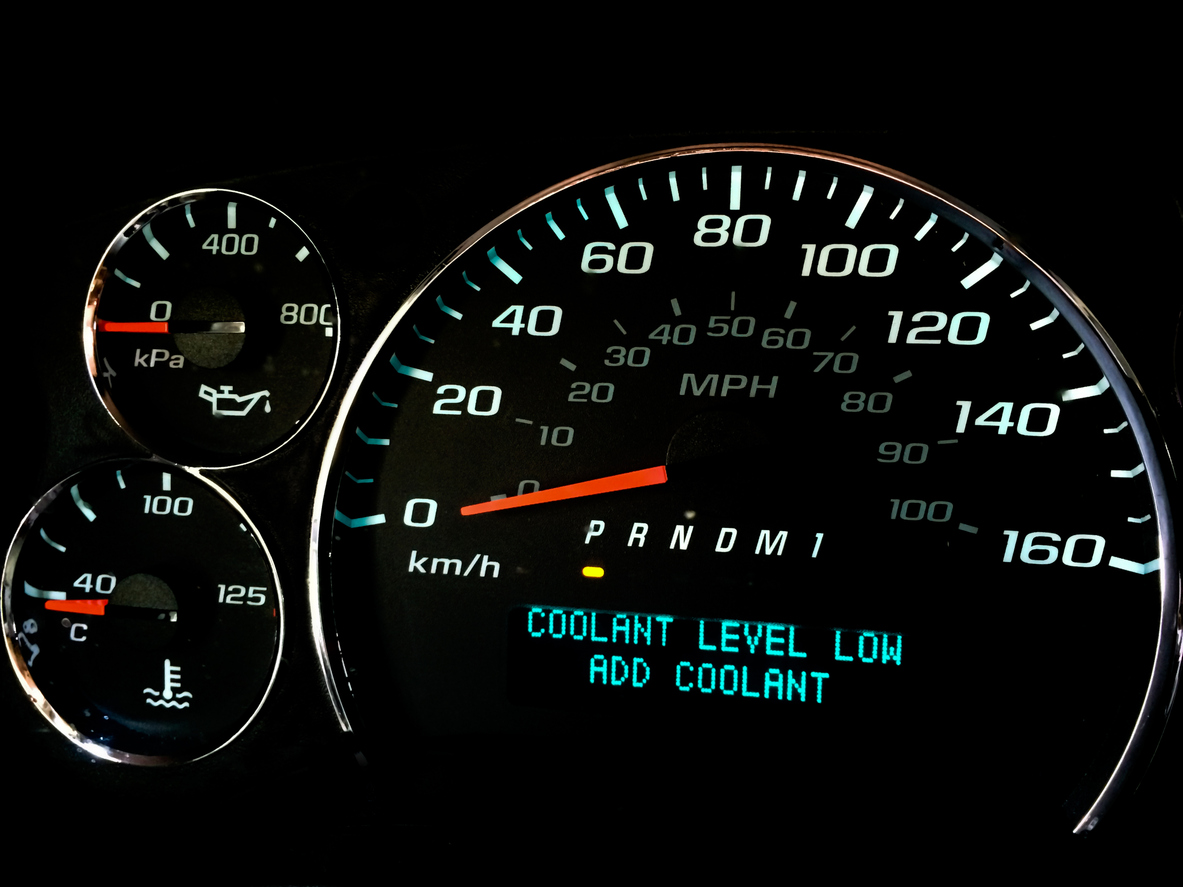
We understand that buying and repairing cars is not a part of our clients daily or even weekly lives, so you may find yourself a little overwhelmed when it comes to navigating conversations in the automotive industry. Well, worry no more! We’re here to help educate you on important terms, phrases, and vehicle parts so you can handle things like the pros. Thanks to our automotive terminology blogs, you can arm yourself with some serious know-how, and will be able to converse with the biggest gearheads and seasoned auto body and mechanic technicians alike.
Today, we’re going to learn about two vital radiator fluids utilized for daily functioning in your vehicle: antifreeze and coolant.

What is the difference between antifreeze and coolant, and what do they do?
Many individuals use these terms interchangeably, btu they are in fact entirely different fluids with unique purposes. Antifreeze, is an ethylene glycol based liquid which helps lower water’s freezing point to prevent it from turning to ice and damaging the vehicle engine. Engine coolant helps keep the engine running at a consistent temperature, while antifreeze helps prevent engine damage when the temperatures dip below freezing. Engine coolants are a combination of water + antifreeze; generally this is a 50/50 mix, but it may be as high as 70% water and 30% antifreeze. Your local mechanic can help you determine which mix ratio is correct for your vehicle depending on your local climate. Engine coolant is also referred to as “radiator fluid.”

What are the maintenance requirements and signs the coolant/antifreeze needs a service?
You should replace your engine coolant between 30,000 to 100,000 miles, according to your vehicle’s owner guide. If you’re unsure, you can bring the vehicle in to the service center and a technician will help you find the correct mileage point for your make/model/year. It does need to be replaced at regular intervals, lest you end up with an overheated engine and more costly repairs! Don’t skip this vital step!
As you drive, the coolant can become contaminated with particulate matter such as rust, scale, and dirt. Driving your vehicle with dirty coolant can cause clogs, which may further corrode or damage or even lead to overheating. Regularly flushing the coolant and replacing it with fresh fluid is recommended service every two years on average.
You’ll notice that it’s time to bring your vehicle in for an antifreeze/coolant checkup if you notice any of the following:
- You notice a sweet-smelling aroma from under the hood, or a maple-syrup scented liquid under the vehicle in a puddle (this latter may indicate a leak)
- You find yourself frequently adding coolant/antifreeze to the reservoir
- Steam is emitted from under the hood
- You notice the temperature gauge climbing consistently to the hotter end
- You hear a gurgling or bubbling sound when you start the car, or a hissing/sizzling sound which may indicate a coolant leak
- You notice you’re achieving less mileage per gallon than usual
- You’re unable to properly accelerate at a reasonable rate
- The heater is constantly blowing hot air from the vents
- The engine automatically cuts-off
As mentioned in our previous Gearhead Guru Guide, you want to maintain your coolant/antifreeze levels to prevent engine overheating and other related damages! So schedule your appointment with your local trusted service center ASAP.

Defining automotive terminology:
antifreeze
Any chemical, commonly ethylene glycol, that is added to the cooling water of an engine in order to decrease its freezing point for winter operation, when ambient temperatures may be below the normal freezing point of water.
coolant
Any substance, usually a liquid, that is circulated around a vehicle’s engine in order to reduce and regulate temperature by absorbing excess heat and then transferring it to another medium (e.g. the surrounding air) where it is safely and efficiently dissipated. An ideal automotive coolant has high thermal capacity, low viscosity, and is chemically inert and non-toxic; though specific properties can vary widely by intended usage, most ordinary personal vehicles use water as the base coolant with additives such as ethylene glycol or methanol to lower its freezing point, raise its boiling point, and prevent corrosion.
(Definitions via Wikipedia)
![[Facebook]](https://www.classicdirecttoyota.com/blogs/293/wp-content/plugins/bookmarkify/facebook.png)
![[LinkedIn]](https://www.classicdirecttoyota.com/blogs/293/wp-content/plugins/bookmarkify/linkedin.png)
![[Twitter]](https://www.classicdirecttoyota.com/blogs/293/wp-content/plugins/bookmarkify/twitter.png)
![[Yahoo!]](https://www.classicdirecttoyota.com/blogs/293/wp-content/plugins/bookmarkify/yahoo.png)
![[Email]](https://www.classicdirecttoyota.com/blogs/293/wp-content/plugins/bookmarkify/email.png)
Connect with us


- 2026 Toyota Corolla Buying Guide
- 2026 Toyota Camry Showroom Walkaround
- 2026 Toyota Tacoma Towing Guide: Real-World Performance in Waukegan, IL
- The Race for Best Compact SUV: 2026 Toyota RAV4 vs Honda CR-V in Northern Illinois
- The Icon Reimagined: 2026 Toyota 4Runner vs. 2026 Toyota 4Runner i-FORCE MAX in Waukegan