



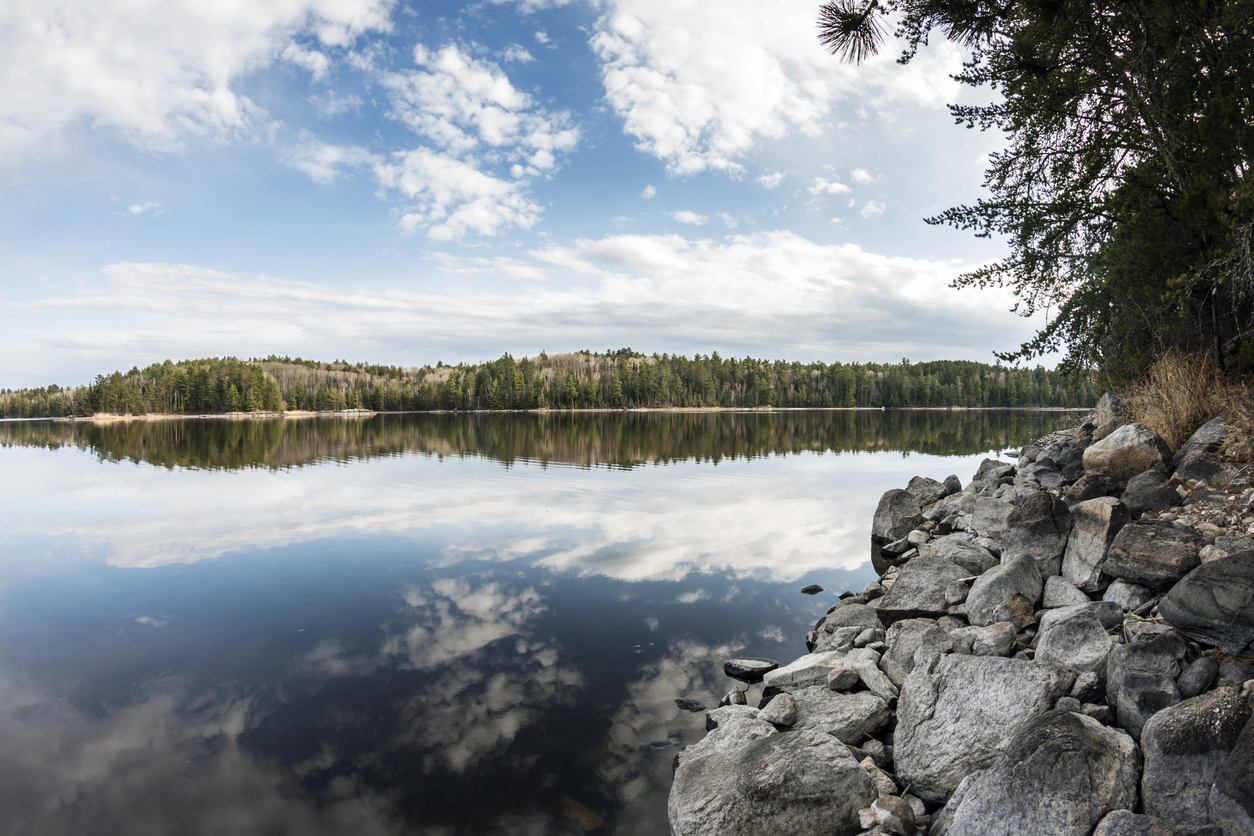
Welcome back to another fun travel blog from Classic! We’re traveling to Minnesota to explore another great installment in the National Parks tour bucket list: Voyageurs National Park! This certified International Dark Sky Park is one of the best places to see the Northern Lights, a hot spot for wildlife spotting, and prime real estate for camping and other outdoorsy adventures. It’s also world-renowned for its pristine waters, making it the best spot to visit for kayaking, canoeing, and paddleboarding enthusiasts.
The best time to visit is in August for the Perseid meteor shower, and in September and October, when the 218,000 acres of local trees and plants are at their fall foliage finest. So, what are you waiting for? Charge up those camera batteries and let’s hit the road in your new car from Classic as we set off to make some memories.

What to See at Voyageurs National Park
Explore the Rainy Lake Ethnobotanical Garden, a painstakingly maintained restoration project aimed at cultivating local, native plants and reducing any invasive plants near the Rainy Lake Visitor Center. Stroll through the Ellsworth Rock Gardens, created by self-taught artist Jack Ellsworth, blending the natural environment with fine arts and natural elements.
Visit Anderson Bay and marvel at the exposed white granite cliffs jutting out 80 feet high and into the water, and enjoy spectacular views of the bay as well as Rainy Lake. Marvel at the stunning sheer granite cliffs of Grassy Bay which rise 125 feet above the surface of Sand Point Lake, and reach high into the sky for one of the tallest points within the park.
Take a hike through 50 plus miles of hiking trails on any of the 16 different options ranging from easy to moderate in difficulty.You can hike them on your own with a map, or join in any of the ranger-led activities to learn more about the area and get a unique perspective of the park’s cultural and natural histories.

Enjoy kayaking, boating, fishing, paddleboarding, canoeing and more along the various lakes including Rainy Lake, a freshwater lake along the Minnesota and Canada border with a third of the lake’s area located inside Voyageurs National Park; Namakan Lake, half of which is located within the limits of Voyageurs National Park; Sand Point Lake which is on the border of Minnesota and Ontario, and half of which is situated within the Voyaguers National Park; Kabetogama Lake which is entirely nestled in the National Park limits and has an impressive 78 miles of shoreline and 200 islands. There are also 26 smaller inland lakes, which when combined with the aforementioned contribute to a third of the park’s total area!
For Lodging, you’ll want to check out Kettle Falls Hotel, a historic hotel and the only formal lodging within the Voyageur limits; a fun fact about this location is that it’s only accessible by water! To enjoy the great outdoors, you can select from any of the Frontcountry Campsites, which include water access, private and public boat launches, picnic tables, bear lockers, outdoor privies, and fire rings. There are also two primitive camp site options located along the Kab-Ash Hiking Trail; these are accessible by land. If RV camping is more your style, there are premium, preferred, and standard level campsites which are TV friendly.

Keep a Lookout for Local Plants and Wildlife
This area is absolutely teeming with wildlife, and you’ll feel like you’ve stepped into a Nat Geo documentary. Keep your eyes peeled for the local critters and you might spot some otters, hares, porcupines, moose, wolves, bald eagles, and more! The park is also known as prime fishing spot and one of the best in the country, where you can glimpse or catch more than 50 different species of fish and aquatic life including lake sturgeon, walleye, northern pike, black crappie, smallmouth bass.
The forests and plant life here are part of a transitional area between boreal forest and a temperate deciduous forest; there are more than 50 different tree and shrub species, more than 40 fern and moss species, 200 plus grasses, and plentiful wildflowers! There are more than 400 different types of wildflowers here, with native options including lady’s slipper, bunchberry, red columbine, twinflower, and marsh marigold. (The park has an abundant wildflower population, but reminds visitors they’re for observing and not for picking to help preserve and conserve habitats.) Mushroom hunters will be delighted to learn that there are abundant species of fungi and mushrooms, which thrive in the park thanks to its many lakes and ponds, so many in fact that they are too plentiful to quantify and number.
Learn more about the park from the Voyageurs Conservancy:
![[Facebook]](https://www.classicdirecttoyota.com/blogs/293/wp-content/plugins/bookmarkify/facebook.png)
![[LinkedIn]](https://www.classicdirecttoyota.com/blogs/293/wp-content/plugins/bookmarkify/linkedin.png)
![[Twitter]](https://www.classicdirecttoyota.com/blogs/293/wp-content/plugins/bookmarkify/twitter.png)
![[Yahoo!]](https://www.classicdirecttoyota.com/blogs/293/wp-content/plugins/bookmarkify/yahoo.png)
![[Email]](https://www.classicdirecttoyota.com/blogs/293/wp-content/plugins/bookmarkify/email.png)
Connect with us


- The Race for Best Compact SUV: 2026 Toyota RAV4 vs Honda CR-V in Northern Illinois
- The Icon Reimagined: 2026 Toyota 4Runner vs. 2026 Toyota 4Runner i-FORCE MAX in Waukegan
- Beyond Zero: Your Guide to the 2026 Toyota Electrified Lineup at Classic Toyota
- More Than a Commute: The Top 5 Features of the 2026 Toyota Corolla
- Classic Toyota Supports AAUW Preschool