




Are you familiar with trends in technology that are shaping the current and future trajectory of the automotive industry? Let’s talk about it! We’ll be taking a look at some of the current features automakers are offering in EVs, Hybrids, and gasoline powered vehicles, as well as ways they’re predicted to improve over the next 5 to 10 years. Here are some interesting features to keep in mind as you shop around for your next car, or plan for your future vehicle!
Self-Driving and Driverless Technology
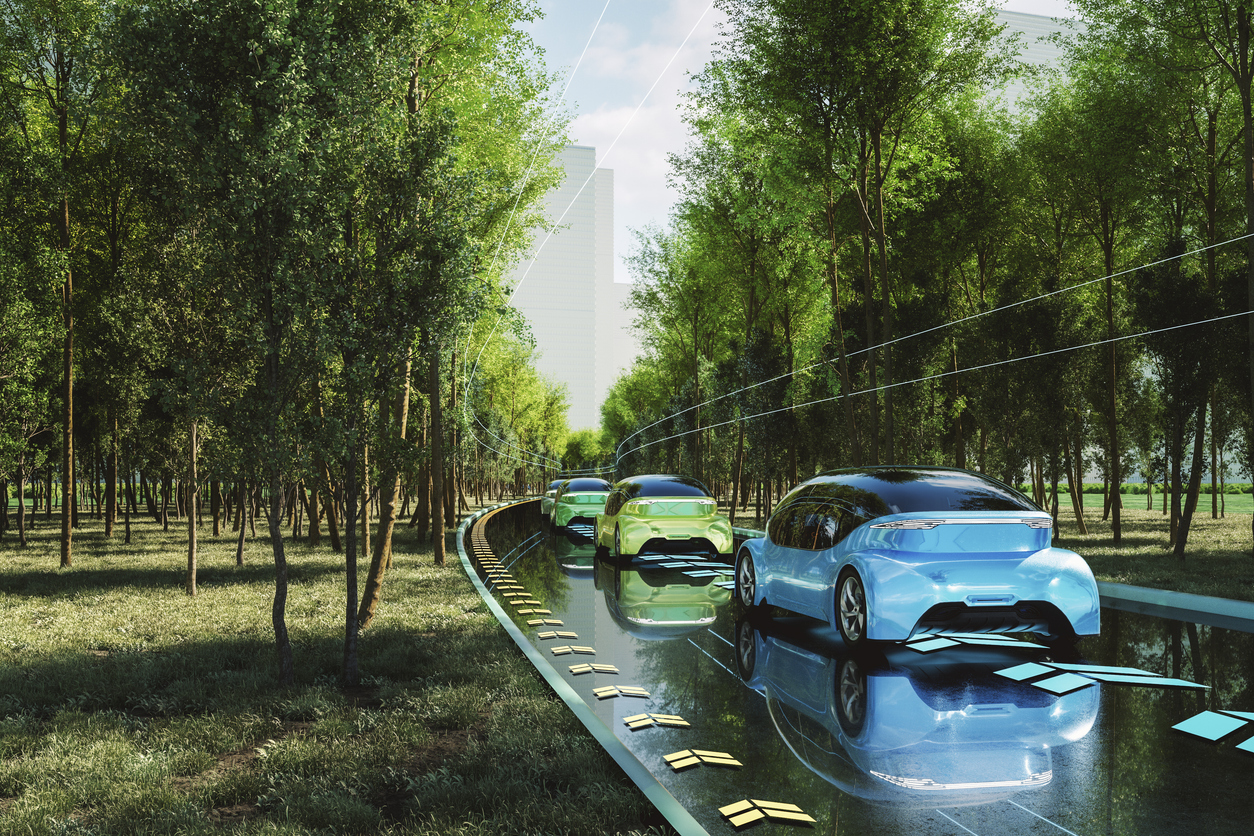
Although some vehicles currently offer an automated or self-driving feature and limited driverless capabilities, the industry doesn’t expect to see a widespread use of fully autonomous vehicles for another 5 to 10 years. Current technologies exist for parking assistance, recalling a vehicle from a parking space, automatic braking, cruise control and speed assistance, lane change assistance, and more. Some companies are currently testing limited markets with driverless vehicles for public transportation and reimagining the way we utilize and view mass-transit options. Concept cars in the fully-autonomous categories are exploring features such as a more social oriented interior setup with seats facing one another, extended legroom and reclining seats in place of a driver’s cabin, and even some smaller vehicles for 1 to 2 people to reduce road congestion and road width allowing for more walkability and cycling options.
What are some features you’d like to see from automakers with regards to autonomous/driverless technologies? What autonomous driving features does your vehicle have that you love?
Electric Batteries (and EV Charging Stations)
It’s no secret that electric and hybrid vehicles are in high demand! EV options have been increasing their popularity thanks to increased mileage range and access to charging stations. Automakers are working out the kinks by extending battery storage, combatting issues like range loss due to extreme heat or cold, and partnering with fueling stations and competitors to form a wide network of flexible charging access. Trend forecasters and automotive experts predict that by 2030, most EVs will hit a 400+ mile range point, putting them on equal ground with current gas-powered vehicles. The US Government aims to make at least half of all new vehicles sold in the US zero-emission vehicles by the year 2030, and help create a convenient and accessible network of about 500,000 electric charging stations. Automakers expect EVs to make up the majority of vehicle sales by 2050! Global leaders and automotive manufacturers are joining forces to extend research, design, and production capabilities for Hybrids and EVs as part of the worldwide commitment to reducing emissions, smaller carbon footprint, and reducing the ongoing effects of global warming.
What are some features you would love to see in future Hybrid and Electric Vehicles? What are some of your favorite qualities on your current EV or Hybrid?
Connectivity and Infotainment Technologies
Over the last several decades, automakers have been increasing accessibility to electronic features such as GPS driving directions, Bluetooth connectivity, DVD and Media players, in-vehicle calling, and mobile phone connections. Some vehicles come equipped with their own 5G Mobile HotSpot and Wi-Fi options, allowing for improved connectivity for phone calls and video chats, accurate navigation, live road and traffic conditions. A plethora of safety features have also been included as standard in most modern vehicle infotainment systems: driver assistance, hazard assistance, backup cameras, over-the-air updates, remote key access, vehicle-to-vehicle communications, repair diagnostics and maintenance reminders, lane departure warnings, automatic emergency braking, adaptive headlights, electronic stability control, and many more! Automakers and traffic/roadway officials are hoping that future advancements will allow vehicles and drivers to communicate with each other to reduce congestion, improve roadway safety and reduce collisions, and more.
Are there any safety features or modern connectivity additions you’d like to see added to vehicles in the future? What connectivity and electronic safety features do you find most useful in your current vehicle?
![[Facebook]](https://www.classicdirecttoyota.com/blogs/293/wp-content/plugins/bookmarkify/facebook.png)
![[LinkedIn]](https://www.classicdirecttoyota.com/blogs/293/wp-content/plugins/bookmarkify/linkedin.png)
![[Twitter]](https://www.classicdirecttoyota.com/blogs/293/wp-content/plugins/bookmarkify/twitter.png)
![[Yahoo!]](https://www.classicdirecttoyota.com/blogs/293/wp-content/plugins/bookmarkify/yahoo.png)
![[Email]](https://www.classicdirecttoyota.com/blogs/293/wp-content/plugins/bookmarkify/email.png)
Connect with us


- 2026 Toyota Corolla Buying Guide
- 2026 Toyota Camry Showroom Walkaround
- 2026 Toyota Tacoma Towing Guide: Real-World Performance in Waukegan, IL
- The Race for Best Compact SUV: 2026 Toyota RAV4 vs Honda CR-V in Northern Illinois
- The Icon Reimagined: 2026 Toyota 4Runner vs. 2026 Toyota 4Runner i-FORCE MAX in Waukegan