



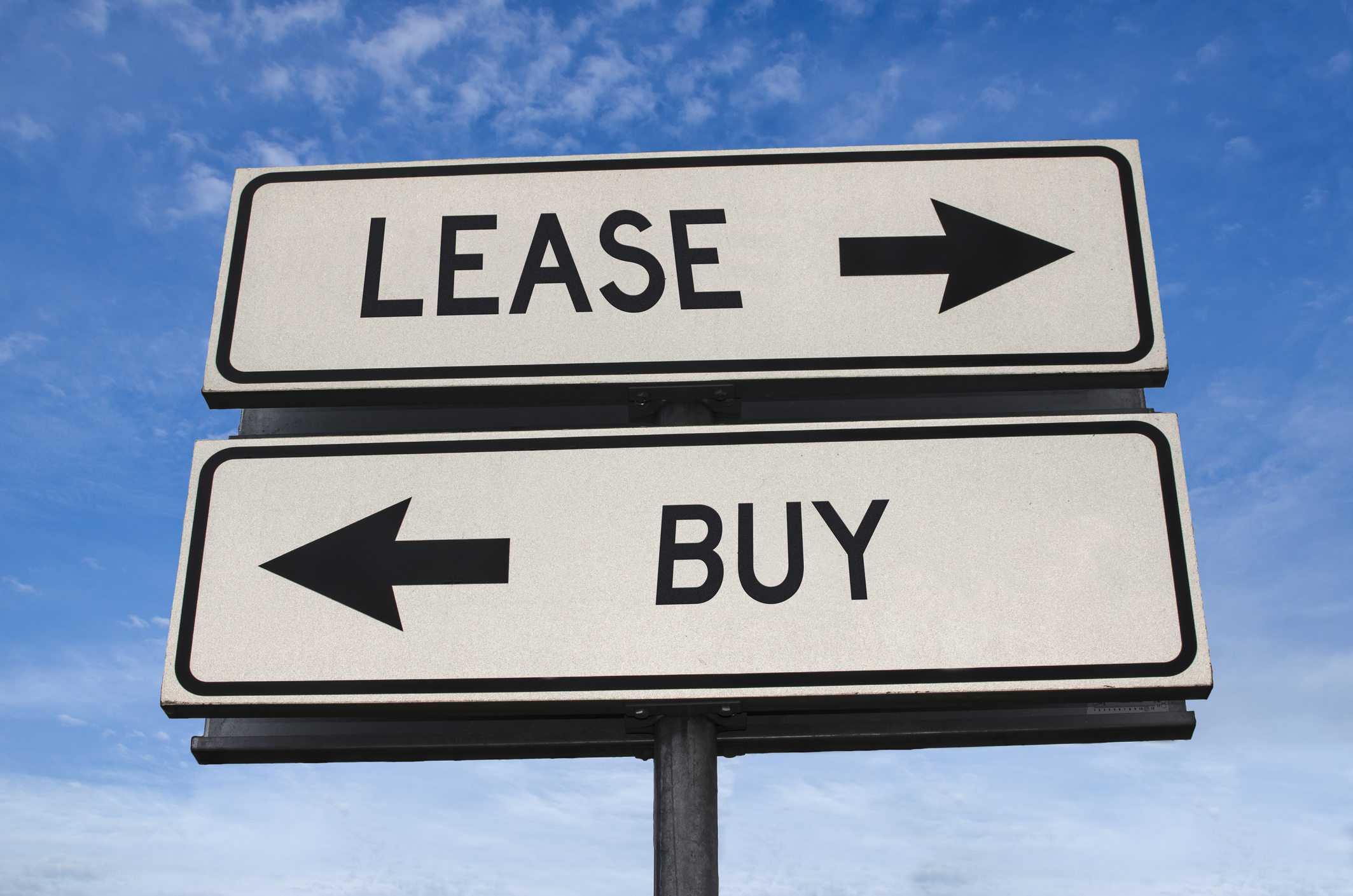
While cars are a part of our every day, we understand that for most other people, buying and selling cars is not really a part of their daily or even weekly routine. As a result, navigating the ins and outs of the industry can feel a little daunting from time to time. Thankfully, we’ve got the key to figuring out exactly how to wade through the jargon and terminology, and are here to help alleviate some of the stress with our Classic Auto Group Decoder! For today’s topic, we’re going to cover some key points to know in regards to leasing and financing.

You feel more prepared to interpret “the fine print” of your leasing, purchase, and financing agreements once you know the lingo. We’re confident that after our primer, you’ll be able to drive off the lot and on your way home in your new or leased vehicle with a sense of security that you’ve done all your research thoroughly!

How To Prepare For Leasing a Vehicle
- Set a budget. Be sure to calculate your personal budget expenses to calculate the costs of leasing, insuring, and operating your intended vehicle. There may be specific fees and costs associated with the leasing agreement at the time of signing. In addition, you’ll need items such as comprehensive coverage, gap insurance, or wear-and-tear coverage. Be sure to budget these into your monthly cost estimates!
- Do your research. Make a list of your must-haves when it comes to your Daily Driver Vehicle. Know what style of vehicle you’re looking for (Sedan, SUV, Truck, etc.) Look at the different price points for the vehicle that best fits your lifestyle and needs, and explore the options available to you in a reasonable range. Thoroughly research the pros and cons of each feature, option, and design. Take some test drives of each type to see what feels most comfortable for you.
- Learn car leasing and purchase agreement terminology. Make sure you read today’s handy guide of vocabulary words thoroughly so you can more easily understand the terms of your leasing agreement and payment plans. Figure out if you have a “Closed-End Lease” or an “Open-End Lease,” and be sure to read all of the fine print before signing.
- Explore your options for returning the car or keeping it at the end of your lease, if you opt for a leasing contract instead of purchasing outright. Many lessees prefer to trade-in their lease for a newer model, but others prefer to extend the lease term or even purchase the car outright. Two to three months before your lease ends, you’ll want to explore your options and see what best fits your budget and lifestyle. If you’re returning your vehicle or extending the lease, you may be subject to inspection for your vehicle’s condition as per terms and conditions of your lease.

Key Terms to Know When Shopping for Leased Vehicles
- Acquisition fee
- Also known as a “bank fee,” an “administrative fee” or an “assignment fee.” For a vehicle lease, a fee charged by the leasing company at the inception of the lease that is intended to cover a variety of administrative costs, such as obtaining a credit report, verifying insurance coverage, checking the accuracy and completeness of the lease documentation, and entering the lease into its data and accounting systems.
- APR
- Annual Percentage Rate. The cost of credit (i.e., the interest rate) expressed as a yearly rate.
- Cap reduction
- Capital reduction. In a vehicle lease, any trade-in amount, cash down payment or rebate amount that reduces the cost of the vehicle being leased (its “capitalized cost”).
- Drive-off fees
- Also referred to as “Total Due at Signing.” The total cost that must be paid by the lessee at the inception of a vehicle lease, which typically includes the first months lease payment, any security deposit required by the leasing company, any acquisition fee charged by the leasing company, any documentation fees charged by the dealer, and various state registration fees.
- Incentive
- Any kind of financial assistance from a vehicle manufacturer that, by reducing either the net price or the cost of financing/leasing, motivates customers to buy/lease a new vehicle. The most common incentives are customer cash rebates, low-interest financing and leases that are subsidized by the manufacturer.
- Mileage allowance
- In a vehicle lease, the number of miles the lessee is permitted to drive over the term of the lease without incurring an excess mileage penalty.
- Money factor
- Also referred to as a “lease factor” or “lease fee.” An auto leasing industry term for expressing the interest rate used to calculate the monthly lease payment, and equal to the leases APR divided by 2,400. (For example, an APR of 7.2% equals a money factor of 0.0033.)
- Also referred to as a “lease factor” or “lease fee.” An auto leasing industry term for expressing the interest rate used to calculate the monthly lease payment, and equal to the leases APR divided by 2,400. (For example, an APR of 7.2% equals a money factor of 0.0033.)
- Payoff amount
- Also called the “buyout amount.” The amount that, at any specified time during the term of a vehicle lease or loan, is required to be paid in order to discharge the remaining obligation.
- Also called the “buyout amount.” The amount that, at any specified time during the term of a vehicle lease or loan, is required to be paid in order to discharge the remaining obligation.
- Purchase option
- The right given to a vehicle lessee to purchase the vehicle at the end of the lease term for an amount equal to the vehicle’s residual value.
- The right given to a vehicle lessee to purchase the vehicle at the end of the lease term for an amount equal to the vehicle’s residual value.
- Residual value
- A vehicle leasing company’s assumption of what a vehicle will be worth at the end of the lease, which is a factor used to determine the monthly lease payment. (The higher the residual value, the lower the monthly payment.)

Got questions? We understand, and we’re here to help. If you have any questions about leasing and financing a vehicle, stop by our dealership and ask one of our trusted employees to guide you through the process. Or, just give us a call and schedule an appointment to speak with a leasing agent, and we’ll get you out on the road in the car of your dreams in no time.
![[Facebook]](https://www.classicdirecttoyota.com/blogs/293/wp-content/plugins/bookmarkify/facebook.png)
![[LinkedIn]](https://www.classicdirecttoyota.com/blogs/293/wp-content/plugins/bookmarkify/linkedin.png)
![[Twitter]](https://www.classicdirecttoyota.com/blogs/293/wp-content/plugins/bookmarkify/twitter.png)
![[Yahoo!]](https://www.classicdirecttoyota.com/blogs/293/wp-content/plugins/bookmarkify/yahoo.png)
![[Email]](https://www.classicdirecttoyota.com/blogs/293/wp-content/plugins/bookmarkify/email.png)
Connect with us


- 2026 Toyota Corolla Buying Guide
- 2026 Toyota Camry Showroom Walkaround
- 2026 Toyota Tacoma Towing Guide: Real-World Performance in Waukegan, IL
- The Race for Best Compact SUV: 2026 Toyota RAV4 vs Honda CR-V in Northern Illinois
- The Icon Reimagined: 2026 Toyota 4Runner vs. 2026 Toyota 4Runner i-FORCE MAX in Waukegan