



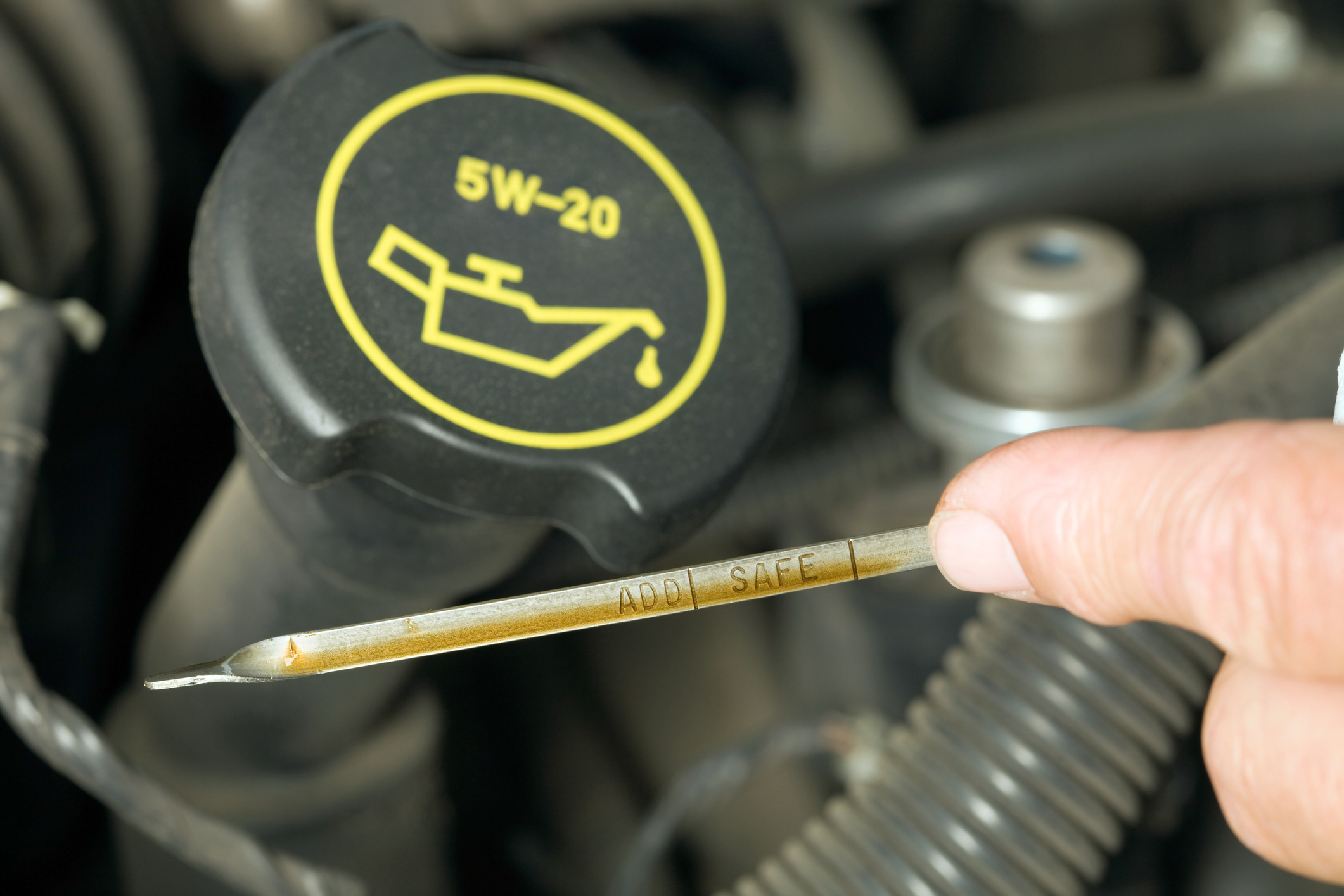
If you’ve ever found yourself overwhelmed in the aisle of the automotive store, we think today’s post will give you a little boost of confidence. Determining which type of oil your vehicle needs can seem daunting at first, with all the types and varieties on the market. Selecting the right type of oil for your vehicle depends on several factors: the manufacturer’s make/model recommended option, the environment and climates you’re driving in, your driving habits, and even the age of your vehicle. We’re going to break it down for you today a little further so you can level up your gearhead knowledge!

Types of Motor Oil
You should always select the motor oil type listed in your vehicle manufacturer’s owner’s manual for proper care and longevity. There are four general types of motor oil, each serving a different purpose.
Conventional Motor Oil is the most common type of motor oil on the market. It’s ideal for cars with low to average mileage, simple engine designs, light-duty vehicles, and older model vehicles. Many mechanics also recommend this type of oil for vehicles over 75,000 miles to help older engines receive more lubrication. It’s readily available at every repair shop and most retailers, and is very affordable. The cons here are that it doesn’t last as long between oil changes as synthetic oil, requiring oil changes every 3,000 to 7,000 miles.
Synthetic Motor Oil is best for vehicles which require peak performance and high levels of lubrication. The synthetic option provides higher viscosity, reduced oxidation and thermal breakdown, and helps prevent oil sludge. It can also improve fuel efficiency and horsepower. However, this is one of the most expensive options, costing anywhere from two to four times that of conventional oil. This oil is best for those who depend on their vehicle for heavy towing and hauling, extreme weather conditions (very hot or very cold), and for those with turbochargers. It does outlast conventional oil in duration between changes, requiring 10,000 to 15,000 miles or every 6 months to a year.
Synthetic Blend Motor Oil offers a middle ground between Full Synthetic and Conventional Motor Oils. This type of oil is a blend of synthetic and conventional with additives to assist in preventing oxidation. It’s becoming one of the most popular options on the market, and makes it easy for drivers to make the swap from conventional to synthetics. This option is a cost effective way to give your engine increased protection and performance of synthetics without the higher price tag.
High Mileage Motor Oil is specifically designed with vehicles of more than 75,000 miles. This oil is formulated to help reduce oil seepage and minimize leaks, as well as reducing emissions in older engines.

When is the Ideal Time for an Oil Change
Your manufacturer’s owner’s manual will tell you the best peak time to change your oil, but here are some other signs that you need an oil change.
Check your oil levels at regular intervals and ensure the oil on the dipstick is between the low and high marks. Next, look for signs of dark, dirty engine oil by checking the dipstick; fresh oil will be a clear, amber color while a darker, grainy, or dirty oil indicates you’re in need of an oil change.
Your vehicle’s check engine or oil-change light reminder may illuminate on the dashboard.
If you hear loud noises from the engine such as a knocking or grinding noise, this may indicate the engine has poor lubrication and an oil change and refill is necessary. You may also notice unusual smoke from the exhaust.
You may notice you’re not getting proper mileage to the gallon as average; low oil levels can lead to reduced fuel efficiency.
![[Facebook]](https://www.classicdirecttoyota.com/blogs/293/wp-content/plugins/bookmarkify/facebook.png)
![[LinkedIn]](https://www.classicdirecttoyota.com/blogs/293/wp-content/plugins/bookmarkify/linkedin.png)
![[Twitter]](https://www.classicdirecttoyota.com/blogs/293/wp-content/plugins/bookmarkify/twitter.png)
![[Yahoo!]](https://www.classicdirecttoyota.com/blogs/293/wp-content/plugins/bookmarkify/yahoo.png)
![[Email]](https://www.classicdirecttoyota.com/blogs/293/wp-content/plugins/bookmarkify/email.png)
Connect with us


- 2026 Toyota Corolla Buying Guide
- 2026 Toyota Camry Showroom Walkaround
- 2026 Toyota Tacoma Towing Guide: Real-World Performance in Waukegan, IL
- The Race for Best Compact SUV: 2026 Toyota RAV4 vs Honda CR-V in Northern Illinois
- The Icon Reimagined: 2026 Toyota 4Runner vs. 2026 Toyota 4Runner i-FORCE MAX in Waukegan