



We’re celebrating Ada Lovelace day with an ode to this genius Mathematician and world’s first computer programmer! Each year on the second Tuesday of each OCtober, Ada Lovelace Day is celebrated to help recognize the contributions of women in STEM (Science, Technology, Engineering, and Mathematics)

Who was Ada Lovelace and what did she contribute to modern computing?
Interested in engineering and mechanics from a young age, Lovelace’s passion for complex geometry, analytics, and intense numerical calculations led her to friendship with Charles Babbage. Together, the pair pioneered both a prototype of a digital computer (Babbage) and its first computer program, “The Analytical Engine” (Lovelace). Lovelace wrote the first algorithm for a machine, and recognized that the computer had capabilities and possible usage beyond just calculations, including such grand ideas as computer-generated music!
Many decades later, computers have evolved into a fully ubiquitous part of our culture, right down to the tiny powerful computers we carry around in our pockets each day, our smartphones! Everything from manufacturing to home appliances to entertainment to transportation relies on the hardwork and calculations of computer algorithms and programs.
Today we’re going to dive into that a little bit and expand further on how computers help us get from place to place in our own personal vehicles.

What are some notable inventions by Women in STEM that advanced the Automotive Industry?
- Bertha Benz helped engineer a new brake pad design when her vehicle’s brake pads failed while driving; she commissioned a cobbler to install some leather replacements!
- Mary Anderson engineered the first hand-operated windshield wiper to remove frost.
- Margaret Wilcox used her background in mechanical engineering to divert heat from the engine into the vehicle creating the first heating system, and the foundations for today’s modern climate control system.
- Stephanie Kwolek was a chemist whose work led to the development of synthetic fibers known as Kevlar which are used in modern day tire fabrication.
- Gladys Mae West was a Mathematician who created a mathematical model of the Earth’s shape which was incorporated into the creation of Global Positioning Systems (GPS) which revolutionized the way we map and travel the world.
- Helene Rother Ackernecht was one of the first women to work as an automotive designer as part of the interior styling staff at General Motors.
- Katharine Blodgett developed a specialized liquid detergent that allowed 99% of light to pass through it even with thick layers applied to glass, which is credited to shaping the invention of non-reflective and anti-glare windshields in today’s modern vehicles.
- Suzanne Vanderbilt led a 6-woman team of designers who helped implement features like the retractable seat belt.
- Heady Lamarr was not just a famous Hollywood actress, she also helped develop a system that intercepted torpedo signals during WWII and bounced incoming signals from opposing naval ships to “hop” away. This signal hopping feature has been translated into modern tech from everything such as Bluetooth to GPS to Wifi.

How are computers and their algorithms used in today’s modern automobiles?
The automotive computer regulates the car’s engine to optimize its performance, improve fuel economy, and reduce emissions by monitoring pollution control. The computer is in charge of firing the spark plugs during ignition, monitors each plug individually, and can adjust the timing of each piston to ensure efficiency and reliability in power output.
There are many sensors and components which take readings and measurements and transmit them to the computer to improve and maintain performance:
- Electronic Fuel Injectors electronically monitor measured fuel consumption so the engine only gets the exact amount required and prevents the engine from getting flooded; it pumps the fuel at high pressure through a small valve or nozzle to aid in the combustion process, and by proxy improves efficiency and with less emissions.
- Rotation Sensors monitor and record the rate at which each component spins
- Position Sensor detects the position and movement of an object with utmost accuracy
- Temperature Sensors measure the temperature of liquids and gasses through variations in a circuit’s resistance
- Airflow Sensors measure the air fed into the engine through the intake manifold
- Knock Sensor is used to detect uneven fuel burning which can cause irregular engine vibrations.
- Oxygen Sensor measures how much oxygen is in the exhaust and gauges how well the fuel is burning.
- Tire Pressure Sensors monitor the air pressure and temperature of your vehicle’s tires, and trigger an alert if it’s too low or too high to improve fuel efficiency, extend the life of the tire, and improve driving safety.
Additional sensors throughout the vehicle also tell the computer to do things like deploying airbags, apply assistive braking systems, unlock the vehicle doors, engage the vehicle security systems, apply automatic traction control, etc.
These numerous systems work together to provide vital data and information to the car’s computer system when something goes awry through alerts called “Electronic Control Units” or ECUs. These ECUs trigger the Malfunction Indicator Lights (MILs) such as “Chjeck Engine” or “Tire Pressure” etc, and also provide the car’s computer with Diagnostic Trouble Codes (DTCs). Your trusted service technician and professional mechanic can utilize a special tool and portable code reading devices to pull the data from those sensors and diagnose the issue via the logged codes.
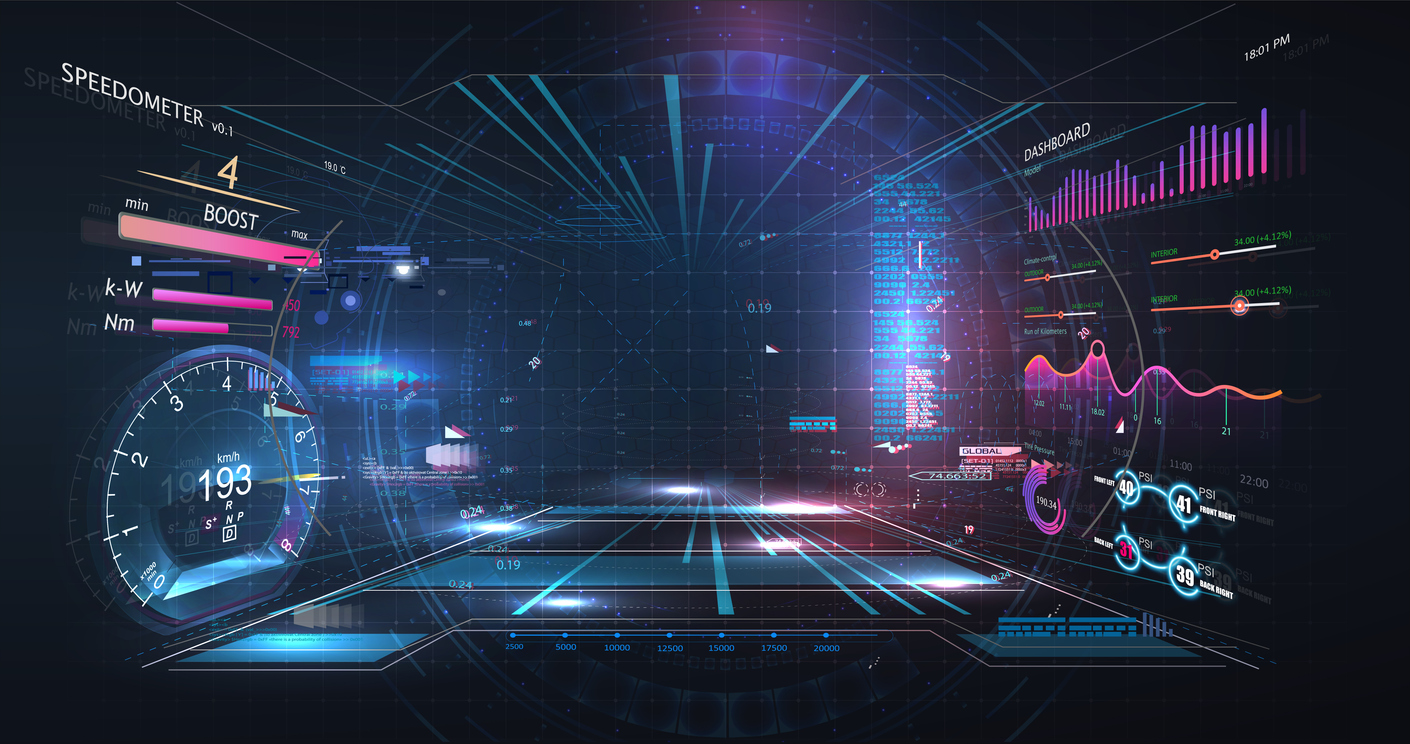
Many vehicles also come standard now with state-of-the-art infotainment systems featuring GPS, Radio, smartphone connectivity, onboard wifi, vehicle apps, music and radio features. This also controls things like in-built reversing cameras, proximity sensors, light sensors, feature sensors, camera sensors, parking guidance systems, driver alert systems, heads-up display projections, and even digital instrument clusters and gauges.
Hybrid vehicles have even more complicated computer configurations to help manage the change between power sources (fuel to the internal combustion engine versus electric battery) for a seamless transition and smooth ride. In Electric Vehicles, the computers are the central functioning mechanism, governing all vehicle processes to ensure safety and efficiency, making these vehicles essentially a fully functional computer on wheels; examples include computerized speed controls monitoring proper wheel rotation, battery management, charging, regenerative braking, digital cockpit and dashboard features, infotainment, and other safety features.
![[Facebook]](https://www.classicdirecttoyota.com/blogs/293/wp-content/plugins/bookmarkify/facebook.png)
![[LinkedIn]](https://www.classicdirecttoyota.com/blogs/293/wp-content/plugins/bookmarkify/linkedin.png)
![[Twitter]](https://www.classicdirecttoyota.com/blogs/293/wp-content/plugins/bookmarkify/twitter.png)
![[Yahoo!]](https://www.classicdirecttoyota.com/blogs/293/wp-content/plugins/bookmarkify/yahoo.png)
![[Email]](https://www.classicdirecttoyota.com/blogs/293/wp-content/plugins/bookmarkify/email.png)
Connect with us


- All-New 2027 Toyota Highlander: The Electric SUV for Illinois
- Top 5 Features of the 2026 Toyota 4Runner That Conquer Illinois Winters
- Celebrate the Holidays by Gifting a Road Trip to the Michigan Ice Fest 2026!
- Extending the Spirit of The Giving Season: Great Ways to Give Back to the Community For the Holidays (Lake County, Waukegan Area)
- Your 2025 Holiday Gift Guide for Car Lovers