



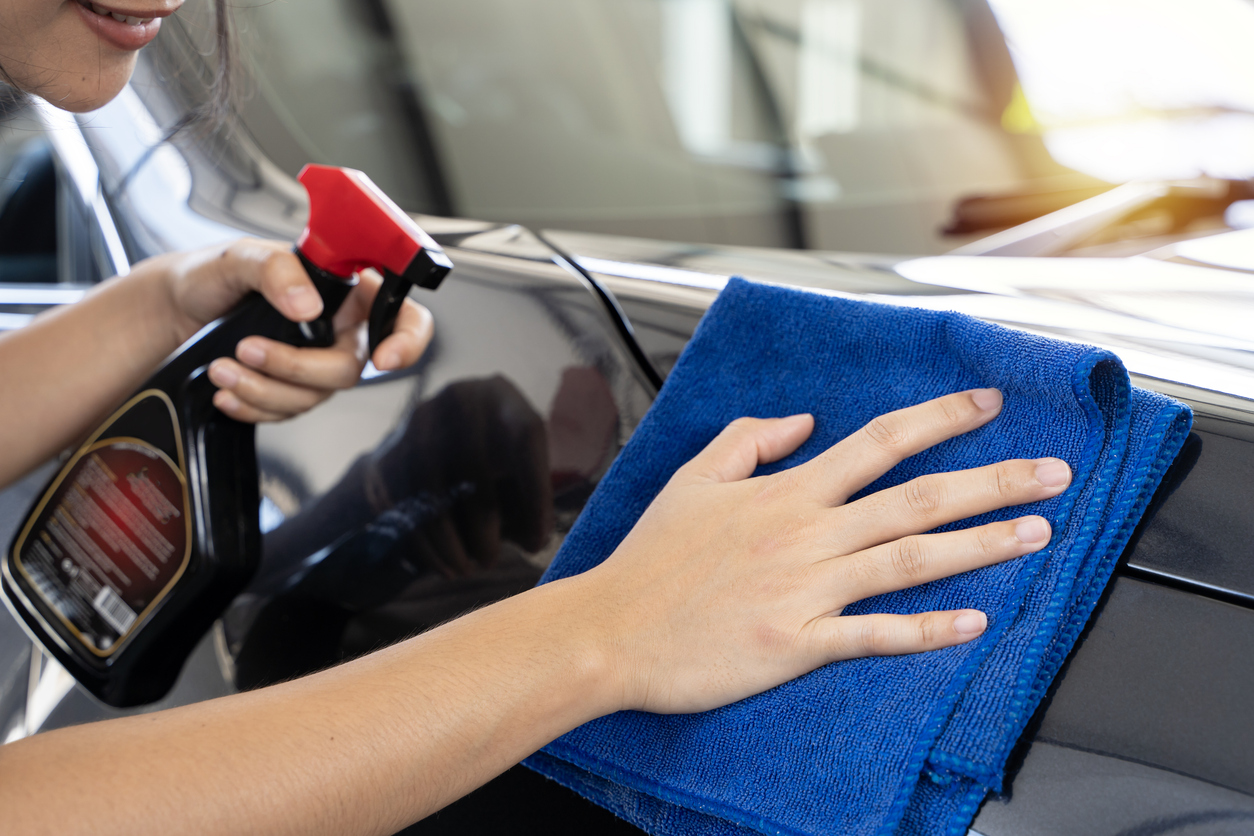
It’s housekeeping week, so we thought we’d do a little tidying and minding of our vehicles! From important paperwork to cleaning and maintenance tips, you’ll find an easy care guide for maintaining the interior of your vehicle.

Let’s start by making sure we have the essentials ready to go at a moment’s notice! Inside your vehicle in a safe space, generally the center console or glovebox or wallet, you should have readily accessible:
- Your Vehicle Registration and/or official dated receipt of payment for updated registration if renewed recently.
- Proof of Insurance with updated policy coverage dates (you can also download this to your mobile phone wallet and/or utilize a digital app version in most states)
- Your Driver’s License should be up to date and in your possession at all times.
- Maintenance Records of recent repairs and regular oil changes
- Your vehicle owner’s manual should be accessible in a pinch to identify warning lights and access important make/model information for maintenance and safety
- Emergency contact numbers in an ICE list on your phone or a paper list in the glovebox
Important: Never store your vehicle title inside of the car itself. This is the official proof of ownership for your vehicle, and should it get damaged or stolen this may cause significant issues for recovery or insurance purposes. The title should be stored at home in a fireproof safe or other related location. Likewise if you have a “bill of sale” for your vehicle, it should be stowed with the title and never inside the vehicle itself.

Basic emergency and maintenance tools you should keep in your vehicle include:
- A tire pressure gauge to maintain proper pressure
- Jumper cables in case of emergency
- A spare tire with tire jack
- A tire patch kit and air pump
- A few blankets and towels
- In cold weather months: include a small container of kitty litter and/or road salt with a portable shovel in case of emergency
- LED flashers or reflective cones/triangles in case of emergency
- A handcrank or small pocket LED flashlight
It’s always a good rule of thumb to purchase a basic car emergency kit, but you can also assemble your own with some of our previous blog tips from earlier this year. We’ve detailed exactly what to put in your homemade emergency kit from top to bottom. It’s also a great idea to have an extra set of clothes on hand to change into if you get stranded in inclement weather or have an emergency.

To keep your car clean regularly you should keep on hand at home and in your garage:
- A hydrophobic windshield/glass treatment to aid in proper visibility.
- Coolant/antifreeze to prevent your vehicle from overheating.
- Proper motor oil for your make/model of vehicle so you can always top it off before long drives and maintain proper fluid levels.
- Glass Cleaner for streak-free, obstruction free windshields
- Specialized Car Shampoo and Rinse that’s formulated to remove debris and grime without harming your paint or wrap.
- Carpet Cleaner powder or spray to maintain vehicle upholstery and cut down on environmental allergens and debris, and use a soft bristle brush.
- Interior Car Cleaning Wipes specifically formulated to protect your vehicle’s interior fabric (leather, PVC, fabric, etc)
- Clean microfiber cloths instead of sponges as they pick up dirt and debris without scratching or creating dreaded paint swirls.
- A clay bar to help remove dirt and contaminants from your vehicle after washing with cleansers and shampoos.
- A decent portable vacuum cleaner that can adequately remove dust, dirt, and debris while trapping allergens that can reach into small nooks, crannies, and side pockets.

We love including our kids in our car care maintenance routines not just for family bonding, but vehicle owner educational purposes. Teaching younger drivers how to upkeep their vehicle is a great way to promote regular vehicle maintenance when they’re ready to drive their own. Plus, playing with bubbles is always a fun time!

Some professional detailer tips to maintain your vehicle’s aesthetics as long as possible include:
- Cleaning your vehicle out of direct sunlight and in a shady area to allow the cleansers to work efficiently without evaporation.
- Don’t use sponges in a swirling, circular motion; choose one direction to wipe and stick with it!
- Utilize more than one bucket: one for an initial rinse down, one for clean soapy water, one with clean water for rinsing the dirty sponge/microfiber cloth; this eliminates chances of dragging grit and grime back onto the car after it’s been cleaned.
- Clean your car starting with a washdown of the tires, followed by top to the bottom of the vehicle for maximum efficiency.
- If you spot bugs or bird droppings on your vehicle, make sure to remove them by using a special removal cleaner or some sort of lubricant to avoid scratching the paint.
- Remove sap, dead bugs, and animal droppings as quickly as you can when you spot them. Letting them sit can cause corrosion, scratches, and stains.
![[Facebook]](https://www.classicdirecttoyota.com/blogs/293/wp-content/plugins/bookmarkify/facebook.png)
![[LinkedIn]](https://www.classicdirecttoyota.com/blogs/293/wp-content/plugins/bookmarkify/linkedin.png)
![[Twitter]](https://www.classicdirecttoyota.com/blogs/293/wp-content/plugins/bookmarkify/twitter.png)
![[Yahoo!]](https://www.classicdirecttoyota.com/blogs/293/wp-content/plugins/bookmarkify/yahoo.png)
![[Email]](https://www.classicdirecttoyota.com/blogs/293/wp-content/plugins/bookmarkify/email.png)
Connect with us


- All-New 2027 Toyota Highlander: The Electric SUV for Illinois
- Top 5 Features of the 2026 Toyota 4Runner That Conquer Illinois Winters
- Celebrate the Holidays by Gifting a Road Trip to the Michigan Ice Fest 2026!
- Extending the Spirit of The Giving Season: Great Ways to Give Back to the Community For the Holidays (Lake County, Waukegan Area)
- Your 2025 Holiday Gift Guide for Car Lovers