



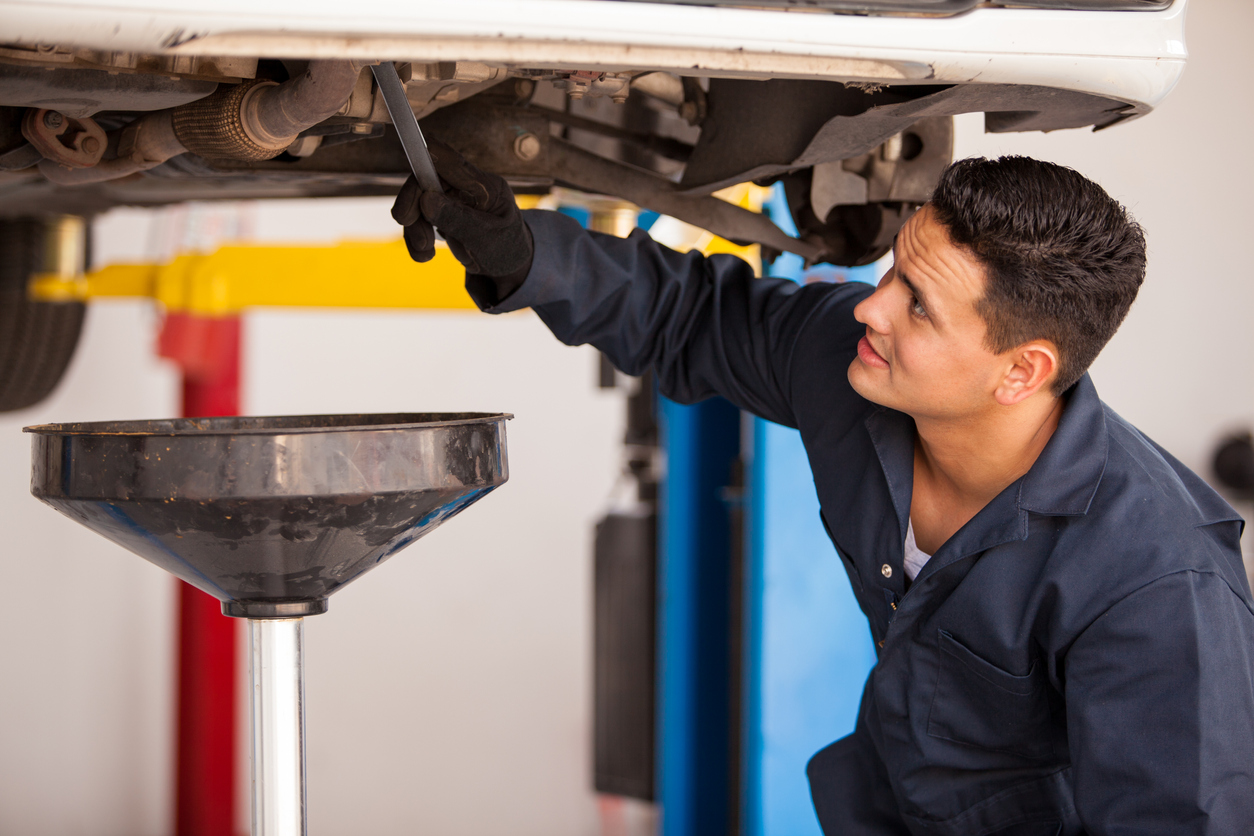
Maintaining a car through regular self-check ups can help you keep your Classic Auto Group car in tip-top shape, and know when it’s time to bring it in for a tune-up or fluids change. Today we’re going to give you some helpful steps for learning how to check your own oil. Making sure your car has adequate oil should be done on a regular basis, but especially so before you embark on any of the exciting road trips or vacations you have planned. Let our trusted service employees help you navigate the basics of engine maintenance with these helpful tips!

Engine Oil or Motor Oil is a vital part of your car’s functionality; it helps lubricate each of the moving metal parts inside the engine of your vehicle. This helps it avoid damage and keeps the engine running smoothly and efficiently. When there isn’t enough oil in the car, the parts won’t get the required lubrication to function properly. If you forget to change or top-off your oil, you may notice a tapping or knocking sound coming from under the hood; the improperly lubricated parts are now grinding metal on metal and that can cause friction and heat build-up. If you continue to operate the vehicle without oil, you’ll eventually cause the engine to seize, and it will mean a costly repair or replacing your car outright with a new one.

You also need to make sure to change your oil regularly, and can consult your vehicle’s owner manual to find the exact mileage milestone for each change. On average, cars need an oil change every 3,000-6,000 miles. As your car drives along, the oil will cycle through the engine and catches contaminants such as bits of metal, carbon particles, and even ash from the cylinders. You may also notice that oil changes may need to be done more frequently during warmer weather, as the high temperatures can cause oil to break down a little more quickly. Dirty engine oil can cause just as much damage if not more so to your engine, as it can become corrosive and increase the wear and tear on your engine.

You can prevent these two costly errors by remembering to regularly check your oil. Here’s how to do so:
- Make sure you park your car on flat, level ground. If your car is in an incline or slope of any kind, the oil stick will not accurately reflect the levels. It may read too low or higher than actual.
- Open the hood of your car and look for the dipstick. In most vehicles, this is marked with a colored handle usually in orange, gold, or yellow with an oil can insignia.
- Hook your finger through the loop of the handle and pull the dipstick straight up and out of the tube. Make sure you have a clean rag or fresh paper towel on hand, and wipe the oil off the dipstick after removing it. You’ll see several lines on the dipstick, words like full or safe or add or low.
- Insert the dipstick back into the oil tub slowly, and push it all the way back down into the tube. Slowly pull it back out and examine the dipstick lines to see how much oil is in the car. If your oil level is between the two lines, there’s enough oil in your vehicle. If not and it reads low, you’ll need to add one or two quarts of new oil. Make sure that you check your vehicle’s owner manual (in the glovebox or online.)
Learn More About Checking Your Car’s Oil + Fluids and Why You Should NEVER Drive a Car with Low or No Oil:
![[Facebook]](https://www.classicdirecttoyota.com/blogs/293/wp-content/plugins/bookmarkify/facebook.png)
![[LinkedIn]](https://www.classicdirecttoyota.com/blogs/293/wp-content/plugins/bookmarkify/linkedin.png)
![[Twitter]](https://www.classicdirecttoyota.com/blogs/293/wp-content/plugins/bookmarkify/twitter.png)
![[Yahoo!]](https://www.classicdirecttoyota.com/blogs/293/wp-content/plugins/bookmarkify/yahoo.png)
![[Email]](https://www.classicdirecttoyota.com/blogs/293/wp-content/plugins/bookmarkify/email.png)
Connect with us


- All-New 2027 Toyota Highlander: The Electric SUV for Illinois
- Top 5 Features of the 2026 Toyota 4Runner That Conquer Illinois Winters
- Celebrate the Holidays by Gifting a Road Trip to the Michigan Ice Fest 2026!
- Extending the Spirit of The Giving Season: Great Ways to Give Back to the Community For the Holidays (Lake County, Waukegan Area)
- Your 2025 Holiday Gift Guide for Car Lovers