



It’s National Dump the pump day!
National Dump the Pump Day exists to help commuters and drivers reconsider the use of fossil fuel vehicles, spreads awareness on the depletion of natural resources such as fossil fuels, and encourages consumers to consider public transportation and alternative fuel vehicles. We understand that not everyone has the privilege or ability to take advantage of mass transit or to walk, bike, or skate to their jobs, so we’re going to also explore some greener options in automobiles!
If you stop by our dealership, our expert sales staff at our dealership would be delighted to help you discover which option is best for you and your family: Hybrid, Plug-In Hybrid, All-Electric. To kickstart your green living journey, we’re going to use today’s blog to help highlight some of the differences between Hybrid versus Electric versus Plug-In Hybrid vehicles, and learn a little bit about alternatives to fossil fuel only cars.
Let’s hit the road and explore our options!
Traditional Hybrid Vehicles are powered by a combination of a traditional internal combustion engine and one or more electric motors, which pull from stored energy in an array of batteries. They rely on traditional gasoline engines to keep the batteries charged while you’re driving.
Plug-In Hybrids have larger batteries charged with a 120-volt or 240-volt outlet installed in your home or in a publicly accessible charging station. The Plug-In Hybrid will rely on depleting the stored battery charges, and once depleted will revert to using the gasoline engine.
All-Electric or Battery Electric Vehicles have an electric motor in place of an internal combustion engine. They’re propelled by a system of one or more electric motors powered by stored energy from battery banks; they have zero exhaust emissions, don’t use gasoline, and can be recharged at home or at publicly accessible charging stations.
Fuel Cell Electric Vehicles are another great choice, but they are not as widely available as the aforementioned models. FCEVs receive their electric energy from a chemical reaction which generates electricity via hydrogen or other source.
Toyota is proud to offer a wonderful selection of hybrid and electric vehicles. No matter what your driving preferences or travel needs, there’s an option to fit your lifestyle! In fact, the brand has made a commitment to their forward thinking vision of “Beyond Zero”, to reach beyond carbon neutrality and find bold new ways to make a positive impact on a community and global scale.


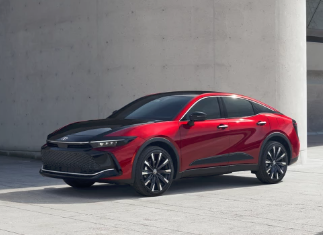
Toyota Hybrid model line-up includes the First-Ever 2023 Toyota Corolla Cross Hybrid with an estimated 45/38MPG; the 2023 Toyota Sequoia Hybrid boasting a 21/24MPG; the 2023 Highlander Hybrid with a 36/25MPG; the First Ever 2024 Grand Highlander Hybrid with 37/34MPG; the 2023 Hybrid Prius with an impressive 57/56MPG; the 2023 Corolla Hybrid with a 53/46MPG, The 2023 Camry Hybrid with 51/53MPG; the Toyota RAV4 Hybrid with a 41/38MPG; the 2023 Venza Hybrid with 40/37MPG; the incredible Tundra i-Force MAX Hybrid with 20/24MPG; the 2023 Toyota Sienna Hybrid with 36MPG; and the gorgeous 2023 Toyota Crown Hybrid with 42/41MPG.


Toyota’s Plug-In model hybrids include the 2023 Plug-In Prius Prime with an incredible 48MPG/114MPGe, and the 2023 Plug-In Hybrid RAV4 Prime with 38MPG and 94MPGe.

If you want to see a gorgeous example of FCEVs in person, look no further than the impressive 2023 Fuel Cell Electric Vehicle Toyota Mirai, which has a 76/71MPGe!

And last but most certainly not at all least, Toyota’s Pure Battery Electric Vehicle (BEV) which uses only powerful electric motors in a refreshingly intuitive and remarkably designed vehicle: the brand new 2023 All-Electric bZ4X with a 252 mile range.
![[Facebook]](https://www.classicdirecttoyota.com/blogs/293/wp-content/plugins/bookmarkify/facebook.png)
![[LinkedIn]](https://www.classicdirecttoyota.com/blogs/293/wp-content/plugins/bookmarkify/linkedin.png)
![[Twitter]](https://www.classicdirecttoyota.com/blogs/293/wp-content/plugins/bookmarkify/twitter.png)
![[Yahoo!]](https://www.classicdirecttoyota.com/blogs/293/wp-content/plugins/bookmarkify/yahoo.png)
![[Email]](https://www.classicdirecttoyota.com/blogs/293/wp-content/plugins/bookmarkify/email.png)
Connect with us


- Electrified & Diversified: Embracing the “Power of Choice”
- 2026 Toyota Camry: Hybrid Performance That Just Works for Everyday Driving
- All-New 2027 Toyota Highlander: The Electric SUV for Illinois
- Top 5 Features of the 2026 Toyota 4Runner That Conquer Illinois Winters
- Celebrate the Holidays by Gifting a Road Trip to the Michigan Ice Fest 2026!