



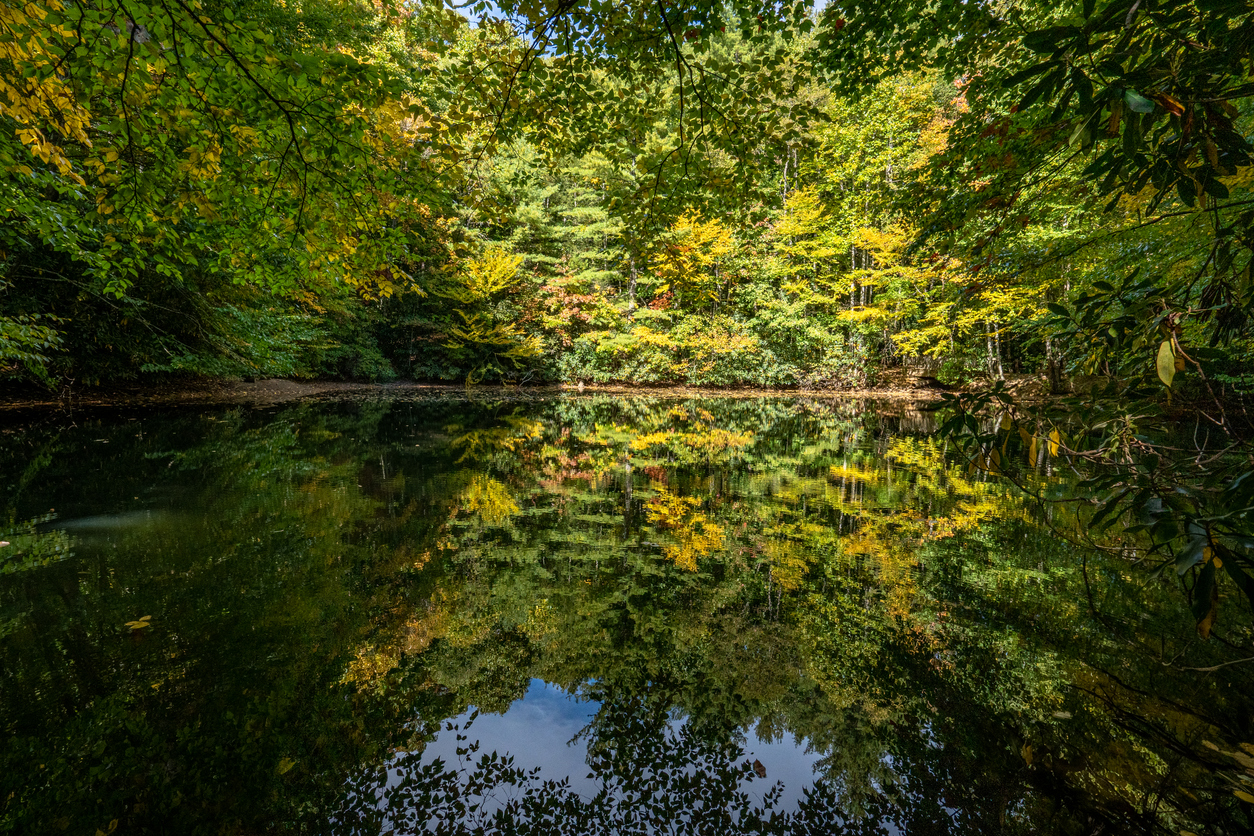
We’re celebrating International Forest Day and on today’s blog, we’re covering four beautiful forests in the US that you simply must see on your next road trip! The International Day of Forests is also an opportunity to raise awareness for the devastating effects of industrial agriculture, logging, and mining efforts, and inform the general public about the importance of restoring forests, protecting the environment, and increasing our conservation efforts.
In 2013, the United Nations General Assembly instituted the International Day of Forests as a way to honor and raise awareness globally for the importance of all varieties and types of forests. The forests of our planet help to filter the air and water we breathe, provide vital food, shelter, and resources to both humans and wildlife, and also protect us from UV rays. Visiting forests has also shown proven benefits to improve your physical and mental health, as well as a sustainable source of energy and resources.

Superior National Forest in Minnesota is jampacked with pristine wilderness for you to explore, with more than 445,000 acres of surface water including 2,000 lakes, 1,300+ miles of streams, and 2,000 miles of trails! Whether you’re interested in trail running, hiking, hunting, horseback riding, or mountain biking, you’ll find a trail to suit your interests. Take a drive down the Superior National Forest Scenic Byway to get an overview of the park along the 54 mile road from Silver Bay to Aurora, and stop off at one of the campgrounds or take a trail hike along the route. The Boundary Waters Canoe Area Wilderness is a must-see stop off within the northern third of the parkland. With more than 1,200 miles of canoe routes and 2,000 campsites, you’ll have no shortage of great outdoors time. It’s a perfect destination for water-loving aficionados, perfect for canoeing, rowing, fishing, and kayaking. The forest is home to 165 varieties of nesting birds who call the wilderness area home, as well as an additional 60+ varieties that pass through, making it a Globally Important Bird Area by the National Audubon Society. Nature photographers keep your eyes peeled and your lens ready, because you’ll find moose, black bears, wolves, and lynx, too!

Dixie National Forest in Utah covers 2 million acres, across the southern portion of the state, and features some of the most stunning red-rock cliff canyons in the US. The forest straddles the divide between the Great Basin and the Colorado River, and visitors will be treated to a variety of landscape environments including desert gorges, mountain forests, plateaus, and alpine lake areas. It’s one-stop shopping for all your nature loving desires! Temperatures range wildly from -30ºF to over 100ºF. Highway 12 is a 124 mile road around the canyon area taking you along Panguitch, Red Canyon, Paunsaugunt Plateau, Bryce Canyon National Park, Grand Staircase-Escalante National Monument, and more. Highway 14 State Scenic Byway winds through the canyons and offers views of Markagunt Plateau, Navajo Lake, Duck Creek, Zion National Park,and even the rim of the Grand Canyon from certain vista points. The forest is also home to pictographs, petroglyphs, preserved dwellings, and other artifacts of the local Ancestral Puebloean tribal people. The forest also offers hundreds of trails for cycling, hiking, horseback riding, and more as well as grounds for camping, fishing, and mountain biking.
Shawnee National Forest in Illinois spans 289,999 acres between the Ohio and Mississippi Rivers in the southern portion of the state. You’ll find gorgeous oak-hickory forests, thriving wetlands, grassy plains and openlands, rocky canyons and cliffs, sheer bluffs made of stunning rock and clay and minerals, and fantastic geological formations. Shawnee is a haven for more than 200 varieties of birds, and focuses on restoration and improvement in local bird populations, specifically of the warbler variety and other threatened species; local birders will rejoice at the diversity of birds in the area thanks to the differing habitat types. You can also submit your own bird findings through the eBird citizen science project app and help contribute to local data collection and conservation efforts! To do a little bird watching and research of your own, check out Pomona Natural Bridge, LaRue Pines Hills Ecological Area, Lake of Egypt, Jackson Falls, and Rim Rock Trail just to name a few. If you love water sports, you’ll be very happy to hear there are opportunities for windsurfing, waterskiing, tubing, swimming, and boating of all kinds! The 160 mile River-to-River trail offers an immense amount of potential for hiking, cycling, backpacking, horseback riding, and trail biking.

Chequamegon-Nicolet National Forest in Wisconsin covers more than 1 million acres of land in northern Wisconsin. Early logging efforts in the 20th century saw fit to remove the “old growth” forest. In the 1930s, however, many new trees were planted by The Civilian Conservation Corps, resulting in an absolutely lush forest with breathtaking scenery. This National Forest was originally two separate forests, but are now managed as one property by the USDA Forest Service. Travelers can enjoy a multitude of activities such as camping (some of which are pet friendly sites), hiking, berry picking (in season), hunting, fishing, cross country skiing, and even snowmobiling. Nature lovers will rejoice to observe roaming wildlife such as deer, bears, foxes, coyotes, wolves, loons, and songbirds. If you’re an angler, you’ll be excited to find trout, bass, panfish, and northern pike! The forest has a number of lakes and streams; Twentymile Creek and the headwaters of the Marengo River also provide clean water flow to Lake Superior!

Be sure to abide by these tips and rules for responsible and eco-conscious behaviors:
- Be prepared for anything. National public lands are wilderness environments, and some are quite far from “civilization.” Be sure to pack enough food, water, and emergency supplies for your whole party.
- Live by the Leave No Trace principles. Whatever you bring into the public lands and parks needs to make its way out with you. Whether the garbage is man-made or natural (fruit peels, veggie waste, pits and seeds from fruit, etc) it all needs to leave when you do. This helps prevent growth of invasive species, or cluttering our trails with garbage. Check out our previous blogs for convenient car accessories for camping and trash collection.
- Never feed wildlife or animals. Wild animals depend on instinct and natural foraging skills to survive; visitors who feed wildlife can inhibit the animals’ self-sufficiency. Animals who depend on handouts from humans can be destructive and invasive as well as endangering the survival of their own species.
- Always read the posted signage at the entrance and within the parks. Signs posted in and around national parks and public lands are there to protect you as much as they are the wildlife and environment. Adhere to posted signs to stay on the trails, conceal your food, or avoid specific areas, etc.
- Know your limits and keep it close. Adhering to openings and closings of parks will help ensure your safety and wellbeing. The same can be said of not taking risks such as exploring “uncharted” areas or going off trail in posted areas.
![[Facebook]](https://www.classicdirecttoyota.com/blogs/293/wp-content/plugins/bookmarkify/facebook.png)
![[LinkedIn]](https://www.classicdirecttoyota.com/blogs/293/wp-content/plugins/bookmarkify/linkedin.png)
![[Twitter]](https://www.classicdirecttoyota.com/blogs/293/wp-content/plugins/bookmarkify/twitter.png)
![[Yahoo!]](https://www.classicdirecttoyota.com/blogs/293/wp-content/plugins/bookmarkify/yahoo.png)
![[Email]](https://www.classicdirecttoyota.com/blogs/293/wp-content/plugins/bookmarkify/email.png)
Connect with us


- All-New 2027 Toyota Highlander: The Electric SUV for Illinois
- Top 5 Features of the 2026 Toyota 4Runner That Conquer Illinois Winters
- Celebrate the Holidays by Gifting a Road Trip to the Michigan Ice Fest 2026!
- Extending the Spirit of The Giving Season: Great Ways to Give Back to the Community For the Holidays (Lake County, Waukegan Area)
- Your 2025 Holiday Gift Guide for Car Lovers