



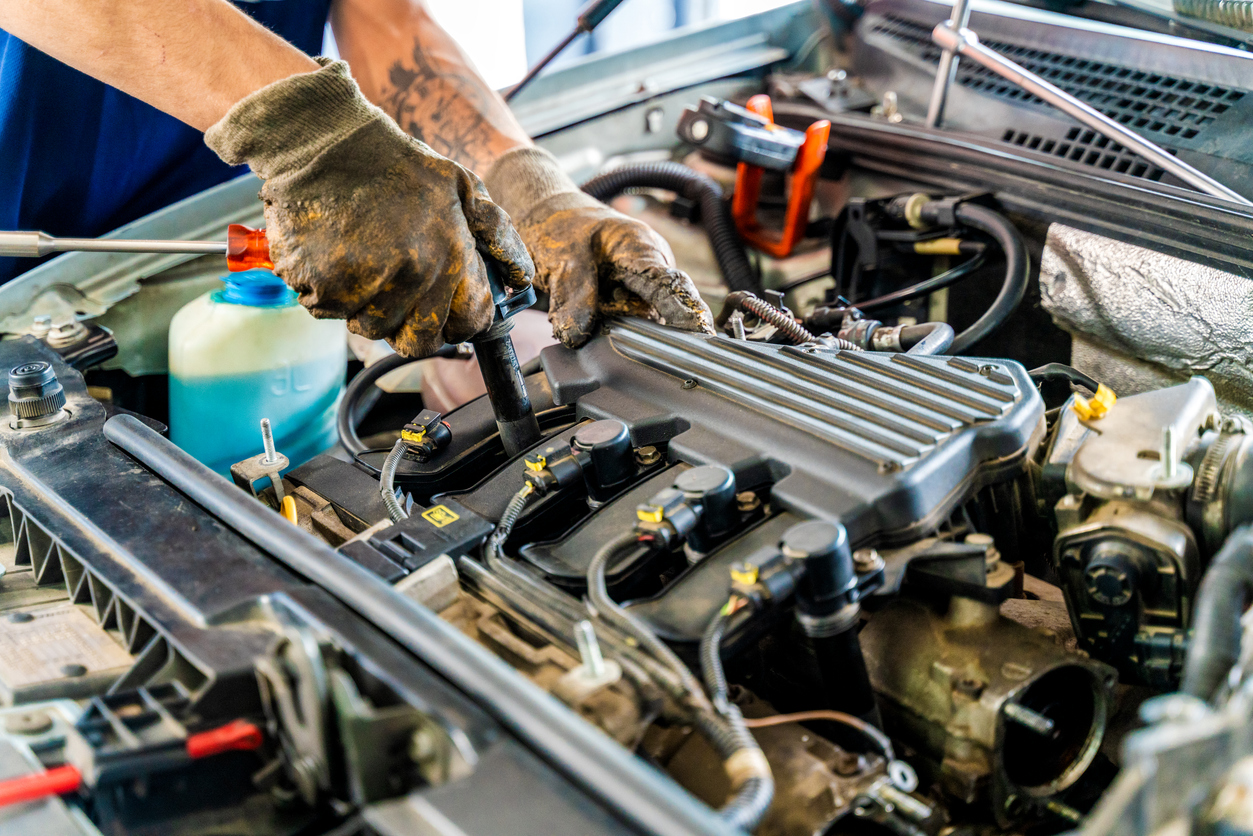
Today is National Tune Up Day! We’ll be covering all of the different items that your service technician and mechanic will perform during an engine tune-up, as well as reiterating mileage service points for your vehicle. It’s important you maintain regular tune-ups and service appointments to ensure that you avoid costly repairs or long-term damage to your vehicle.

Why do I need to do regular engine tune-ups? Is it really that big of a deal?
An engine tune-up is specifically designed to thoroughly inspect and service your vehicle’s engine and its related components. Skipping an engine tune-up may cause your vehicle to encounter driveability issues like stalling, trouble starting, engine misfires, poor gas mileage, or even overheating and leaving you stranded.

What can I expect from an engine tune-up, and is it costly?
Your mechanic may need to replace some parts as needed due to normal wear and tear, while others may be cleaned and inspected for anticipated replacement timelines. Depending on the type of vehicle, amount of services rendered, and other factors, the average tuneup ranges between $500-$800*, which if regularly maintained will save you a lot of money in the long run on large or catastrophic repairs!

Okay, let’s go through the full low-down on what happens during an engine tune-up appointment:
During the tuneup your spark plugs will be inspected, cleaned and replaced, as well as the spark plug wiring. Your spark plugs are a crucial part of the internal combustion process; their tiny spark ignites the fuel and as a result moves the pistons up and down to allow the engine to start, accelerate, and facilitate gear changes. You’ll notice it’s time to repair them when you’re getting poor gas mileage or notice some hard starts, rough idles, and poor acceleration capabilities.
The air filter will be replaced to ensure proper fuel efficiency and performance, reduce likelihood of engine failure, and stave off more expensive repairs down the line.
The fuel system will receive a cleaning and inspection. The fuel filter will be replaced to allow for optimal fuel flow, and prevent dirt, particles, and other contaminants from reaching the fuel injector and clogging the system. Failure to replace this at recommended intervals may lead to engine misfiring, prevent your vehicle from starting at all, rough or shaky idling, poor engine performance and poor fuel economy. The fuel lines will also be inspected for signs of leakage or damage and replaced as needed.
The Serpentine Belt and Timing Belt will be inspected for regular wear and proper tension. Timing belts are replaced every 50-60,000 miles or if you notice engine vibrations, cracking, or fraying; the serpentine belt can be replaced slightly sooner if signs of significant wear show cracking, squealing, it becomes misaligned, or there are overheating issues.
Emission levels will also be checked during a tune-up to help identify any ignition or engine performance issues. This check will also include the oxygen sensors, fuel injectors and intake, and overall exhaust system. In some vehicles, poor emissions levels may be indicative of a damaged catalytic converter, faulty oxygen sensor, loose or defective gas caps, EVAP system defect, problems with the ignition, and other related faults.

What else should you be checking on your vehicle at regular intervals?
These are generally recommended guidelines from most vehicle manufacturers, but please note that some maintenance may be required sooner due to increased driving activities, environmental factors, age of the vehicle, and type of car (ICE, Hybrid, Electric, etc). Refer to your owner manual for specific information on your personal make/model of vehicle.
- Every 3,000-6,000 miles you should receive an oil change. (Check your vehicle’s manufacturer guide for specific mileage requirements and type of oil – synthetic or regular. Older models may need closer to the 3k mark)
- If you’re purchasing or leasing a brand new vehicle, you’ll generally want to schedule a maintenance appointment at the 10,000 mile mark. This initial service will often include tire rotation, air filter, oil change and parts.
- Older non-electronic ignition systems vehicles should be serviced either 10,000-12,000 miles or annually (whichever comes first!) and those with newer fuel injection systems and electronic ignitions can go 25,000+ between major tune-ups; check with your trusted mechanic or service department for guidelines, and consult your vehicle manufacturer handbook.
- At 10,000 miles you should have your tires rotated and vehicle aligned.
- At 30,000 miles you should have a full tune-up service including coolant, power steering, hoses and belts checked/replaced, and an engine checkup.
- At 50,000 miles you may need to service the following: Shocks and struts (suspension system), replace brake pads, new fuel filter, exhaust system inspection, automatic transmission tune-up and service.
- 50,000-70,000 miles you’ll need to inspect all of the belts, valves, and hoses, and you’ll want to install new tires if you haven’t already. (Always replace your tires at least 2 at a time)
- 60,000-70,000 miles you’ll need to have your fuel pump and water pump examined for cracks, wear, and tear and especially so if you notice any buzzing noises or your vehicle seems to stall frequently.
- Car Batteries last roughly about 80,000 miles, so if you notice you need to frequently jump your car, there’s a lot of erosion or leaking fluids, then you’ll want to have that swapped out ASAP before your car breaks down.
- Your spark plugs should be replaced between 80,000-100,000 miles.
- 90,000 miles is time to have another full tune-up and once over of your vehicle
- At 100,000 miles, you’ll need to have a bumper-to-bumper inspection of your vehicle including engine, transmission, water pump, timing belt, etc. You’ll need to switch to high-mileage coolants and spark plugs, too.
- At 125,000 miles, the O2 sensors will need to be replaced, the AC/Heating will need service, and you’ll need to replace: coolant, fuel filter, brake fluid, shocks and struts, and get an alignment.
- For high mileage vehicles 180,000-250,000 miles, you’ll want to check the axles, drive shafts, airflow sensor, belts and timing chain, power steering, chassis, fuel injectors, etc. It will need a thorough inspection from bumper to bumper and may require more frequent service maintenance for a smooth ride.
*This pricing is an estimate and not a guaranteed price quote. Consult with your local trusted mechanic for a current market price estimate for your make/model vehicle of engine tune-ups. Some services may have additional costs.
![[Facebook]](https://www.classicdirecttoyota.com/blogs/293/wp-content/plugins/bookmarkify/facebook.png)
![[LinkedIn]](https://www.classicdirecttoyota.com/blogs/293/wp-content/plugins/bookmarkify/linkedin.png)
![[Twitter]](https://www.classicdirecttoyota.com/blogs/293/wp-content/plugins/bookmarkify/twitter.png)
![[Yahoo!]](https://www.classicdirecttoyota.com/blogs/293/wp-content/plugins/bookmarkify/yahoo.png)
![[Email]](https://www.classicdirecttoyota.com/blogs/293/wp-content/plugins/bookmarkify/email.png)
Connect with us


- Top 5 Features of the 2026 Toyota 4Runner That Conquer Illinois Winters
- Celebrate the Holidays by Gifting a Road Trip to the Michigan Ice Fest 2026!
- Extending the Spirit of The Giving Season: Great Ways to Give Back to the Community For the Holidays (Lake County, Waukegan Area)
- Your 2025 Holiday Gift Guide for Car Lovers
- Great Holiday Gift Experiences in the local Lake County Illinois Area for Holiday 2025 Season