



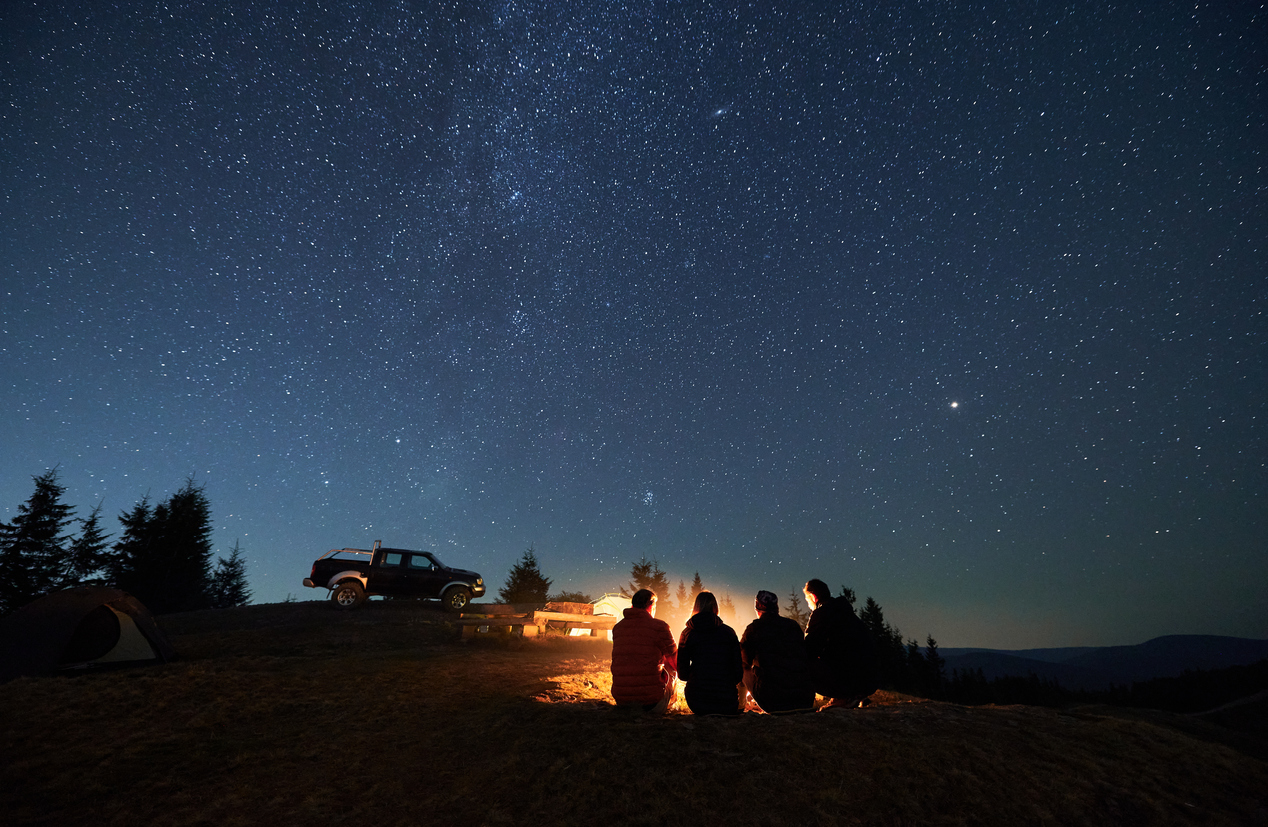
Are you a night owl? Does staying up late to get a peek at the moon or watch a falling star make you giddy with joy? Have you found yourself waking up late at night and taking a stroll in the crisp, cool night air? Well, then have we got a road trip destination list for you! Each of the entries on today’s blog are perfect for taking in a view of the impressive night skyscape. Whether you’re looking for specific constellations, or just wish to marvel at the vastness of space, these Dark Sky Parks and wildlife areas will do just the trick! You’ll make memories to last a lifetime at these impressive night sky stargazing spots across America.
Great Dark Sky Spots to go Stargazing Across the US
Death Valley National Park, California
This amazing location is considered to be a Gold Tier International Dark-Sky Association designation. You’ll be able to catch some incredible stars, meteor showers, and other celestial formations not visible from anywhere else in the entire world. Visitors to this area highly recommend doing your best stargazing in the Mesquite Flat Sand Dunes, Harmony Borax Woods, Badwater Basin, and Ubehebe Crater areas. If you’re lucky enough to be in the area during the next flyover schedule, you may even be able to catch the International Space Station overhead on one of its rotations (NASA even made a special tool online just for the occasion.) Not only is this an excellent location for stargazing enthusiasts, but it’s prime location for nightscape photographers to test their chops at places like Zabriskie Point, Mesquite Flat Sand Dunes, and Harmony Borax Works for the best opportunities. Looking to make your trip even more memorable? Visit the park during the Spring Season and you can catch the multi-day Dark Sky Festival!
Big Bend National Park, Texas
If you’re looking for top notch stargazing, then this truly is the place for you. Known for having the least light pollution of any national park in the lower 48 states, this offers a refreshing reprieve away from most human civilization and housing. It received international Dark Sky Park status in 2012, as was its neighboring park, Big Bend Ranch State Park, totaling 1,112,000 acres of pristine dark sky territory. Visitors recommend aspiring astronomists hit up the Fossil Discovery Exhibit Area and Sotol Vista along the Ross Maxwell Scenic Drive for open horizon lines in all directions as well as higher elevations for better views. From June through August, the Milky Way should be visible almost all night, with best prime viewing hours starting at midnight.
Cherry Springs State Park, Pennsylvania
Another International Dark Sky Park on our list, this one has been dubbed one the best stargazing spot on the East Coast. The best time to visit is scheduling around a New Moon, when the skies are at their darkest. It will afford you the best chance to view the Milky Way, which isn’t visible in the area during a Full Moon. You can register in advance to check out the telescopes on site with the local park rangers. The park also offers a Clear Sky Chart with 48-hr predictions of weather and cloud cover. For something exciting and unique, you can check out the fascinating “Nature at Night” programs, which offer a chance to view the park’s wildlife and environment in a new perspective, and learn about their nocturnal habits.
Great Basin National Park, Nevada
Another fantastic International Dark Sky Park and one of the most renowned in the 48 lower states. With a clear summer sky, you may be able to see fantastic celestial bodies such as the Andromeda Galaxy, Jupiter, Saturn or Mars, and seasonal surprises like the Pleiades Cluster or the Orion Constellation in winter. Visitors note that the Astronomy Amphitheatre at the LEhman Caves Visitor Center, Mater Overlook along Wheeler Peak Scenic Drive, and two nearby locations: Baker Archaeological Site and The Ranching Exhibit along Highway 488 are some prime-time viewing for stars, but they do not allow overnight camping.
Joshua Tree National Park, California
This iconic American national park has four specifically designated stargazing areas where you can view phenomena like the Perseid Meteor Shower, Summer Triangle Great Square of Pegasus and even the Andromeda Galaxy; be sure to check out Quail SPrings, Hidden Valley, Cap Rock, and Ryan Mountain. You can drive through the park and stop at any of the roadside pullout areas and pop up a camping chair to view, or you can book a campground and enjoy a night of sleeping under the stars, with the Pinto Basin Road location offering the darkest skies. Visitors recommend the Cottonwood Campground for best starry night sky viewing. It’s a very popular spot with nightscape photographers, especially due to it’s prime viewing of The Milky Way! The Rangers in the park also offer special programming to teach you more about the Night Sky and you can book through the links on their visitor calendar or check out a partner program with Sky’s the Limit Observatory.
Canyonlands National Park, Utah
The park is a member of the Colorado Plateau Dark Sky Cooperative, aimed at celebrating the cosmos, minimizing light pollution, protecting night skies and natural darkness, and connecting visitors with astronomy and science. You won’t have a need for fancy equipment here, as plenty of constellations and celestial bodies are apparent with the naked eye. The Colorado Plateau and Canyonlands offer astounding views of the night sky and an estimated 2,500 twinkling stars above on a regular basis. However, visitors with binoculars or a telescope may be lucky enough on a clear night to see the rings of Saturn! The beauty of this park is that no two visits will ever be alike, making it a trip you’ll want to experience again and again.
Badlands National Park, South Dakota
Home to the Badlands Astronomy Festival annual summertime celebration, this top park site offers breathtaking views of star fields floating above imposing landscapes. The best spots to view are from Pinnacles Overlook, Panorama Point, Big Badlands Overlook, and most spots on the Badlands Loop Road. You’ll be treated to more than 7,000 stars on most clear nights, thanks to the sincere lack of light pollution and civilization. Be sure to stop by the Badlands Observatory as well to learn more about astronomy and scientific educational research.
North Cascades National Park, Washington
With more than 600,000 acres designated as the Stephen Mather Wilderness, free from the trappings of manmade electronics and housing, you’ll get to experience the night sky as you’ve never seen it before. You’ll hear a symphony of wildlife as birds, critters, and bugs all sing their nighttime seranades, and you might catch some of the nocturnal species hunting. Visitors recommend stargazing spots at Diablo Overlook, Washington Pass Overlook, Artist Point, Rainy Pass, and Cascade Pass, just to name a few.
![[Facebook]](https://www.classicdirecttoyota.com/blogs/293/wp-content/plugins/bookmarkify/facebook.png)
![[LinkedIn]](https://www.classicdirecttoyota.com/blogs/293/wp-content/plugins/bookmarkify/linkedin.png)
![[Twitter]](https://www.classicdirecttoyota.com/blogs/293/wp-content/plugins/bookmarkify/twitter.png)
![[Yahoo!]](https://www.classicdirecttoyota.com/blogs/293/wp-content/plugins/bookmarkify/yahoo.png)
![[Email]](https://www.classicdirecttoyota.com/blogs/293/wp-content/plugins/bookmarkify/email.png)
Connect with us


- All-New 2027 Toyota Highlander: The Electric SUV for Illinois
- Top 5 Features of the 2026 Toyota 4Runner That Conquer Illinois Winters
- Celebrate the Holidays by Gifting a Road Trip to the Michigan Ice Fest 2026!
- Extending the Spirit of The Giving Season: Great Ways to Give Back to the Community For the Holidays (Lake County, Waukegan Area)
- Your 2025 Holiday Gift Guide for Car Lovers