



Spring is finally here and we’re so excited! We’re planning plenty of weekend getaways and short road trip adventures, sort of like a microdose of that Summer Vacation energy. But with this increase in travel comes the reminder that now more than ever, you should be keeping up with your maintenance. Maintaining your regular service call schedule and maintenance appointments may also decrease the risk of having engine troubles due to long drives and increasing hot weather. Let us help you be prepared for anything with today’s latest installment of the Gearhead Guru Guide!

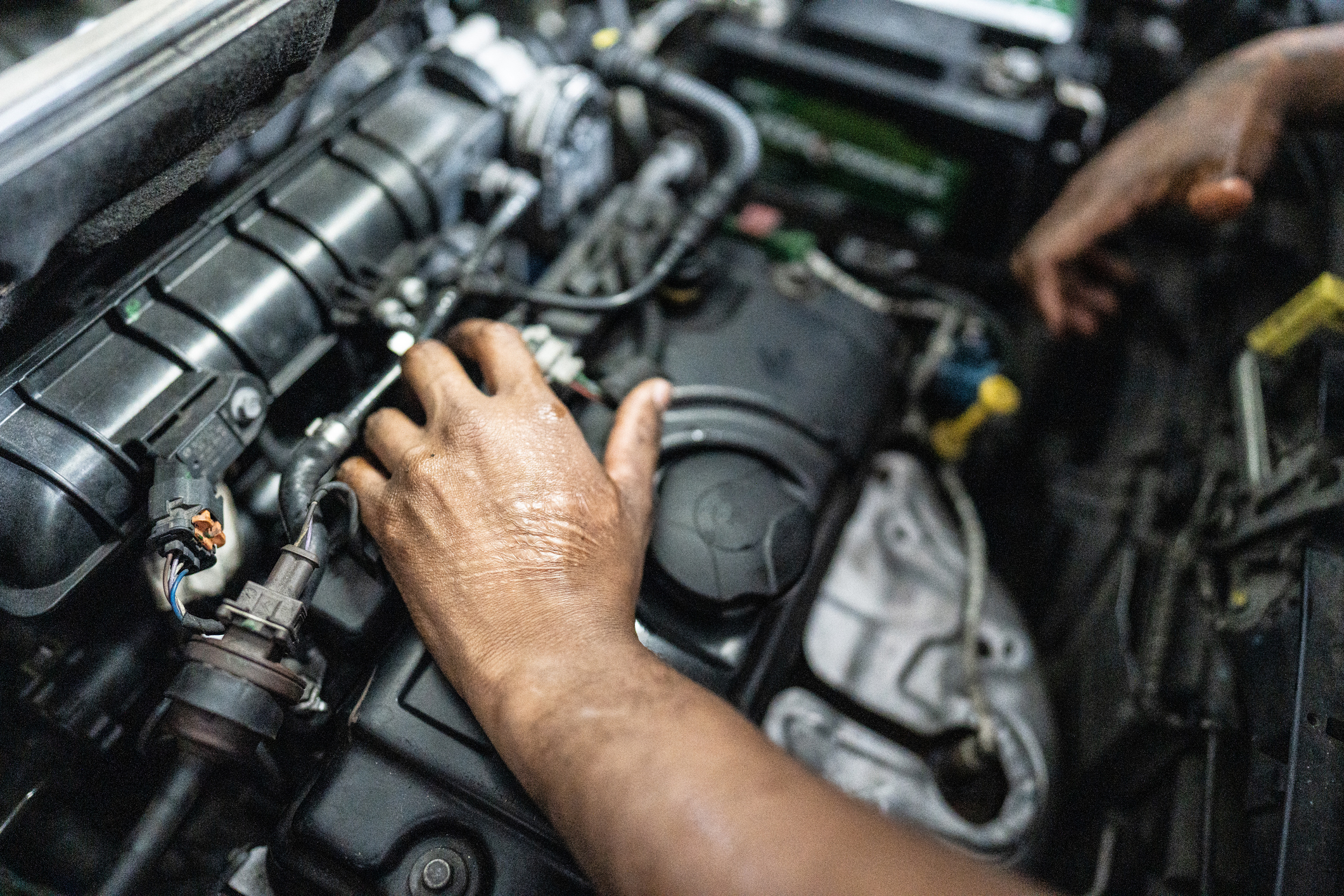
Your vehicle’s engine has one primary function: Convert fuel into mechanical energy and propel the vehicle forward. An internal combustion engine converts energy from heat of the burning gasoline into mechanical torque, which is applied to the wheels to make the car move. Key engine components that make this process work seamlessly include Pistons, the Crankshaft, cylinder, and Valvetrain. Maintaining your engine through oil changes, coolant checks, and regular tune-ups can help extend the life of your vehicle.
Keep reading to learn more about how to diagnose common engine problems and how to avoid them!

Don’t skip those oil changes and remember to regularly check your vehicle’s oil!
Proper lubrication is key to ensuring your engine works properly by reducing friction and preventing overheating. Skipping engine oil changes can lead to increased emissions, overheating, poor fuel economy, increased wear on the engine, and potentially catastrophic engine failures. The average oil change should be performed every 3,000-6,000 miles, but you’ll want to consult your owners’ manual for specifics on your make/model and year vehicle. (Some synthetic oils allow up to 10,000-15,000 miles between changes in specific cases.) Check your oil regularly to make sure it is clean and clear; if it looks dirty and dark or sludgy, bring it in for an oil change and inspection ASAP to ensure no further damage is occurring meanwhile.
Flush and change that Dirty/Old Coolant and avoid overheating!
For vehicles that are 5+ Years old or have 100,000+ miles on them, bring your vehicle in to a service center for a radiator flush and refilled with fresh coolant. Dirty coolant is rendered no longer effective, leading to rust, corrosion, reduced flow and clogs. If your dirty coolant clogs the radiator, your vehicle is likely to overheat and cause serious damage.
Avoid engine misfires, rough idle, and low gas mileage by replacing spark plugs at recommended intervals.
Vehicle spark plugs should be swapped every 30,000 to 100,000 miles, depending on the make/model/year of your vehicle. You can consult your vehicle owner’s manual for the proper timeline of replacements. Continuing to drive with a faulty spark plug reduces power to the engine, tanks your fuel economy, and can put a heavy load on vehicles with a catalytic converter. You can do a visual inspection to check if your spark plugs are worn; a normal spark plug will have brown or gray or tan deposits. If the sparkplug is bad, you may notice white deposits and residue, melted electrodes, black dry soot, or even black and oily deposits, which each have their own issues. Bring your vehicle in for a spark plug change and diagnostic to stay ahead of any other related troubles brewing.
Don’t ignore any signs of coolant leaks!
If your vehicle loses too much coolant, the engine could overheat, resulting in poor performance levels, a significant drop in power, and potentially catastrophic engine damage. You should bring your vehicle in ASAP for a service repair if you notice any coolant leaking. If it happens while driving, the damage could happen very quickly depending on the temperature, speed at which you’re driving, and how little coolant remains – you could have minutes before it overheats. You can check for signs of a coolant leak around the radiator cap, the hoses in the engine compartment, and also on the actual radiator itself. Sometimes, a leaking hose or hole in the radiator may be a slow leak, and may not overheat quickly. Additionally, there is a significant environmental safety issue with leaking coolant, as the sweet smell often attracts household pets, wildlife, and sometimes even children, who may ingest it and face toxicity issue. So if you notice or suspect a leak in the coolant, bring it in ASAP!
Other common culprits of engine troubles your mechanic may bring up include (but are not limited to) damaged oxygen sensors, lean or rich air and fuel mixtures, worn combustion parts, bad fuel injectors,and more.
If you suspect any engine issues may be affecting your vehicle, you can call Classic Auto Body Shop of Waukegan and we’ll help you get your vehicle in tip-top shape.
![[Facebook]](https://www.classicdirecttoyota.com/blogs/293/wp-content/plugins/bookmarkify/facebook.png)
![[LinkedIn]](https://www.classicdirecttoyota.com/blogs/293/wp-content/plugins/bookmarkify/linkedin.png)
![[Twitter]](https://www.classicdirecttoyota.com/blogs/293/wp-content/plugins/bookmarkify/twitter.png)
![[Yahoo!]](https://www.classicdirecttoyota.com/blogs/293/wp-content/plugins/bookmarkify/yahoo.png)
![[Email]](https://www.classicdirecttoyota.com/blogs/293/wp-content/plugins/bookmarkify/email.png)
Connect with us


- All-New 2027 Toyota Highlander: The Electric SUV for Illinois
- Top 5 Features of the 2026 Toyota 4Runner That Conquer Illinois Winters
- Celebrate the Holidays by Gifting a Road Trip to the Michigan Ice Fest 2026!
- Extending the Spirit of The Giving Season: Great Ways to Give Back to the Community For the Holidays (Lake County, Waukegan Area)
- Your 2025 Holiday Gift Guide for Car Lovers