



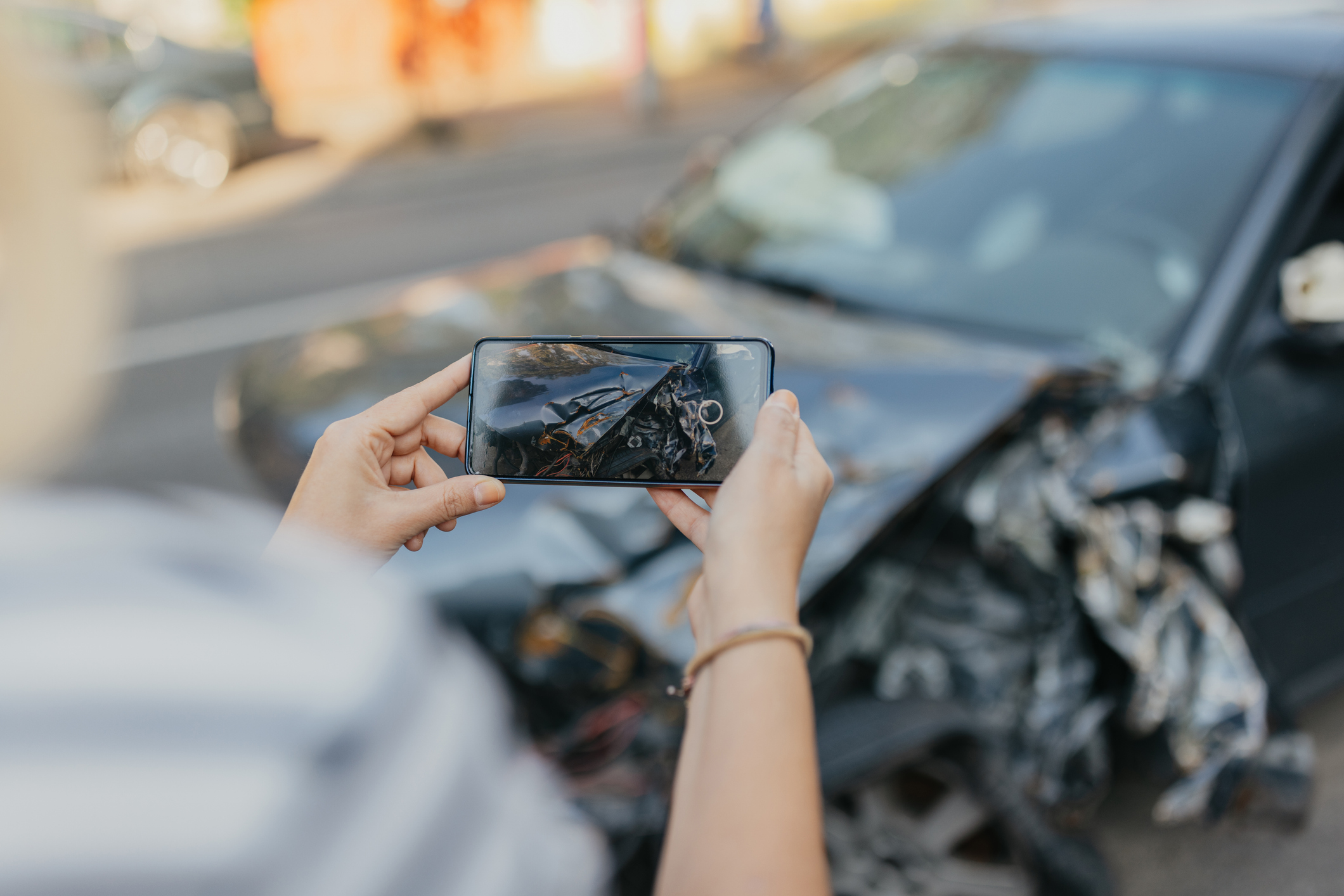
While we all do our best to avoid collisions and accidents, sometimes life has other plans. If you’ve been involved in a car accident or collision, even with wildlife, you may find yourself feeling overwhelmed and stressed, struggling to organize your thoughts. While it’s certainly not the easiest to think on your feet in the moment, you’ll certainly be better prepared with a rehearsed emergency preparedness plan!

Knowing what to say, do, and document at the scene of an accident can make the world of difference should one actually happen. That’s why we’re here to help with a handy checklist of information that you can keep in your vehicle for any future incidents to help make sure you take proper steps to protect yourself and gather pertinent information.

Here’s a quick rundown of what to do if you’ve unfortunately been in an accident or collision with another vehicle!
Stop your vehicle, turn on your hazards, and turn off your engine. Do your best not to block traffic or stand in the road.
Get yourselves to safety if you are unable to move the vehicles; find a safe space in the median, the shoulder, or other safe distance from oncoming traffic or dangerously damaged vehicles.
Contact 9-1-1 or local law enforcement and let them know that you have been in an accident. The operator or local police will arrange for an ambulance and officer to arrive on-site and assess all parties.
Be sure to exchange the following information, even if you don’t fil til a later date this is VITAL to get from all parties:
DO NOT admit fault or volunteer other personal information unless law enforcement is questioning you; any comments you make may be used against you during your claim, case, or potential trial.
Name, age, address, phone number, work number/employer of all involved
Car insurance company and policy number and policy expiration date
At bare minimum, the license plate number for the driver/owner of each vehicle
Write down the mile marker of highway or cross-streets if applicable
Thoroughly document the situation (for use with your personal injury lawyer and insurance claims agent):
Note the date, time, and weather at the time of the incident.
Pictures and video of the damages at the scene of the incident as well as after you’re pulled over safely.
Create a simple diagram of the incident and the vehicles involved and direction of travel.
Document the condition of each car and any injuries to all involved persons/pets and note if the person is a driver, passenger, pedestrian, or member of the other party
If property other than cars has been damaged, photograph that as well.
If the collision involved a wild animal, and you’re able to document that with visuals, that’s also helpful for insurance companies and mechanics to help assess damage.
Gather names and contact information of any potential witnesses (bystanders, other drivers, etc.) who will be able to recount or corroborate the events and testimony of those involved.
If you feel you have been seriously injured on site, request transport to a hospital or local emergency room, or a medical assessment from EMTs. If you do not feel immediate transport is required, call and schedule a doctor’s appointment ASAP and let them know you’ve been in an accident so they can log your physical condition and do a thorough physical examination for your records.
File an accident report, and pick up a copy at the police station or via the Department of Motor Vehicles website. Report the accident to your insurance company, even if you think the other driver is at fault. If your report is not filed, you may experience issues and struggles during insurance claims or other incident related filings. Many insurance providers have an app that you can download and report directly from the scene of the accident and immediately upload your documentation.
Helpful tips and hints to keep in mind to be prepared for anything!
Always keep an emergency supply bag/box in your vehicle in case of emergencies or accidents:
- Bottled Water
- Basic First Aid Kit
- Flashlights
- Blankets
- Jumper Cables
- Disposable Camera
- Note Pad and Pen/Pencil
Always make sure you have the following items in your glove compartment or other safe space in your vehicle:
- Updated license and registration
- Copies of your insurance ID cards
- Emergency contact information of friends/family
- A Printout of our checklist to ensure you don’t miss anything important
Things to keep in mind:
- Don’t post to social media or discuss the accident with anyone other than an attorney or your insurance company representative.
- Keep in Touch with your insurance company and keep clear, concise records of all communication with them, the other party’s insurance, medical doctors, etc.
- Get a physical copy of the police/accident report.
- Keep track of all expenses and keep copies of all receipts for related expenses.
- Keep track of all medical treatments and request clear copies of records.
- Consider hiring an attorney, or requesting assistance through your car insurance company.
This blog post is for informational and educational purposes only, and does not substitute for legal advice or official recommendations. Please consult your attorney and/or insurance company for specifics.
![[Facebook]](https://www.classicdirecttoyota.com/blogs/293/wp-content/plugins/bookmarkify/facebook.png)
![[LinkedIn]](https://www.classicdirecttoyota.com/blogs/293/wp-content/plugins/bookmarkify/linkedin.png)
![[Twitter]](https://www.classicdirecttoyota.com/blogs/293/wp-content/plugins/bookmarkify/twitter.png)
![[Yahoo!]](https://www.classicdirecttoyota.com/blogs/293/wp-content/plugins/bookmarkify/yahoo.png)
![[Email]](https://www.classicdirecttoyota.com/blogs/293/wp-content/plugins/bookmarkify/email.png)
Connect with us


- All-New 2027 Toyota Highlander: The Electric SUV for Illinois
- Top 5 Features of the 2026 Toyota 4Runner That Conquer Illinois Winters
- Celebrate the Holidays by Gifting a Road Trip to the Michigan Ice Fest 2026!
- Extending the Spirit of The Giving Season: Great Ways to Give Back to the Community For the Holidays (Lake County, Waukegan Area)
- Your 2025 Holiday Gift Guide for Car Lovers