



Today we’re celebrating the local Midwest Indigenous Peoples and Native American Culture with a great list of historic sites that you simply must visit! Several states celebrate Native American Day at the end of September and early October as a way to honor and celebrate the rich culture and history of the first inhabitants of our nation. While it’s not a federal holiday, it is an important commemoration to connect us with this complex part of US history. Each of these sites holds a special place in preserving history and promoting the healing and connection between indigenous and settler peoples. Here in Illinois, we are on ancestral land belonging to the Peoria, Kaskaskia, Piankashaw, Wea, Miami, Mascoutin, Odawa, Sauk, Mesquaki, Kickapoo, Potawatomi, Ojibwe, and Chickasaw Nations. We hope that you’ll add these important museums and cultural historic sites to your next road trip to learn more about their history.
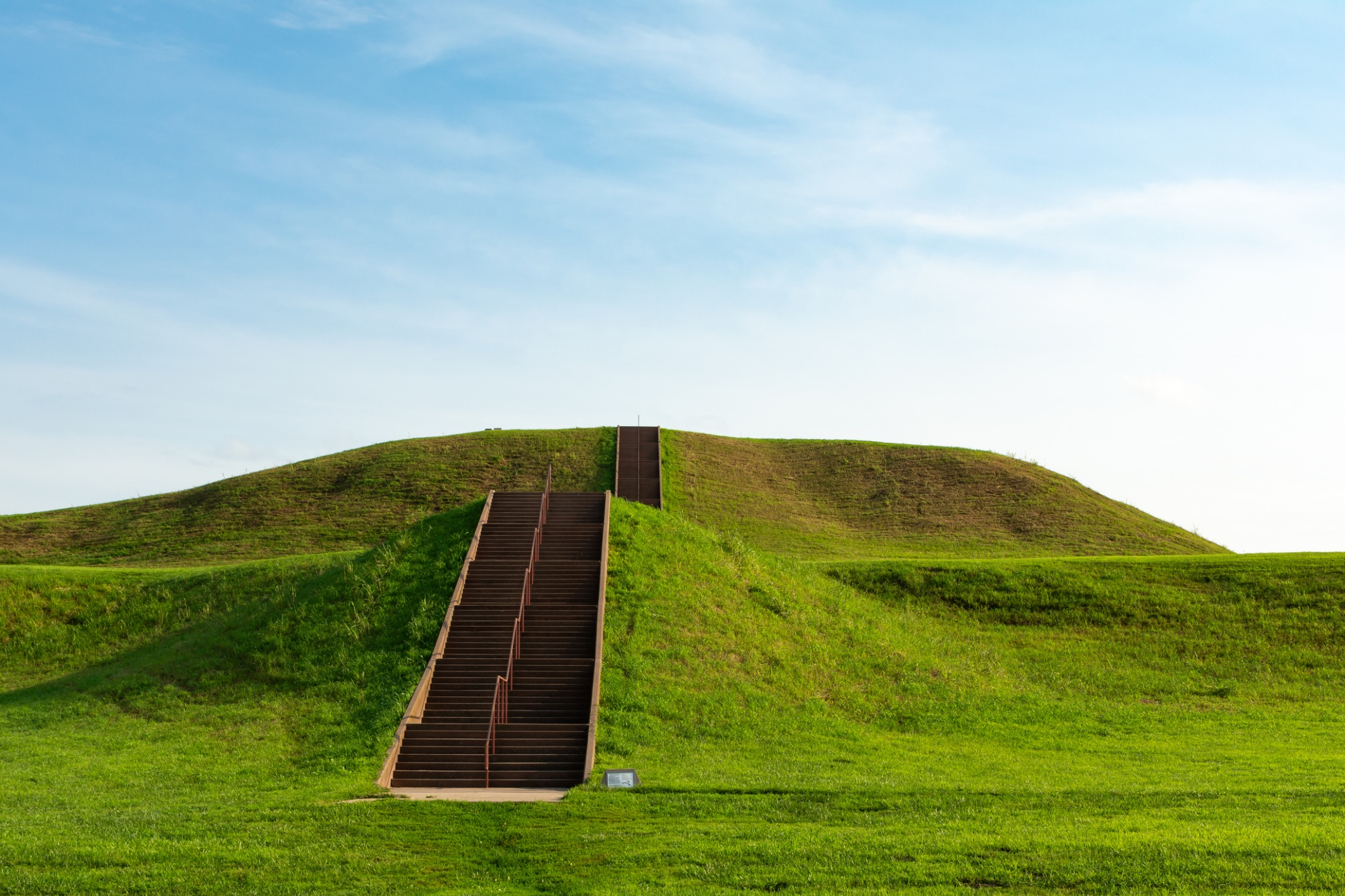
Cahokia Mounds State Historic Site in Collinsville, Illinois
This special historic site preserves 70 of the original 120 earthen mounds built and maintained by prehistoric Native American tribal groups. There is an Interpretive Center on site which offers museum quality galleries, a life-size recreation of local tribal villages, a theater, and educational programming. The largest attraction on site is the 100-ft tall Monks Mound, the largest prehistoric earthen mound in the Americas. Take a tour of the nearly 6 miles worth of trails up and around the mounds, and then stop by the Interpretive Center to learn more about the history of the people who once lived here.
Gichigamiin Indigenous Nations Museum in Evanston
This museum chronicles the history of the indigenous people that call this area their ancestral homelands: the Anishinaabeg (Ojibwe), Odawak (Odawa), and Bodewadmik (Potawatomi) Nations. A new exhibit opened this year highlighting contemporary woodland artwork featuring the works of living artists and their connection to historic traditional arts called “Living Stories: Contemporary Woodland Native American Art” which will run through December 30th 2025. Other exhibits include “A Regional Tour of American Indian Cultures” which showcases cultural and historical aspects of local indigenous people, and how they maintained their way of life in the post-colonial world; the St. Kateri Youth Mural, a youth-driven project via the St KAteri Youth Circle NonProfit which provides programming connecting Native Youth to their culture, values, and traditions. Learn about the food and sustainable gardening practices of the Great Lakes Indigenous peoples through the “Indigenous Gardening and Foodways” initiative programming.
Effigy Mounds in Harpers Ferry, Iowa
This historic site preserves more than 200 prehistoric mounds, some of which are even shaped like animals. The mounds date back to 500BC to 1300AD and are spread across 2,5000 acres of forested land bordering the Mississippi River. Take a stroll down the numerous trails and learn about the creators of these historically significant mounds. You’ll also get a glimpse of the many plants and animals that call this region home, and see how that inspired the creation of the mounds. 20 different tribes hold a strong connection to the mounds at this national monument and sacred space including Iowa Tribe, HoChunk Nation, Winnebago Tribe, Sioux Nation, and more.
Mid-America All-Indian Museum in Wichita, Kansas
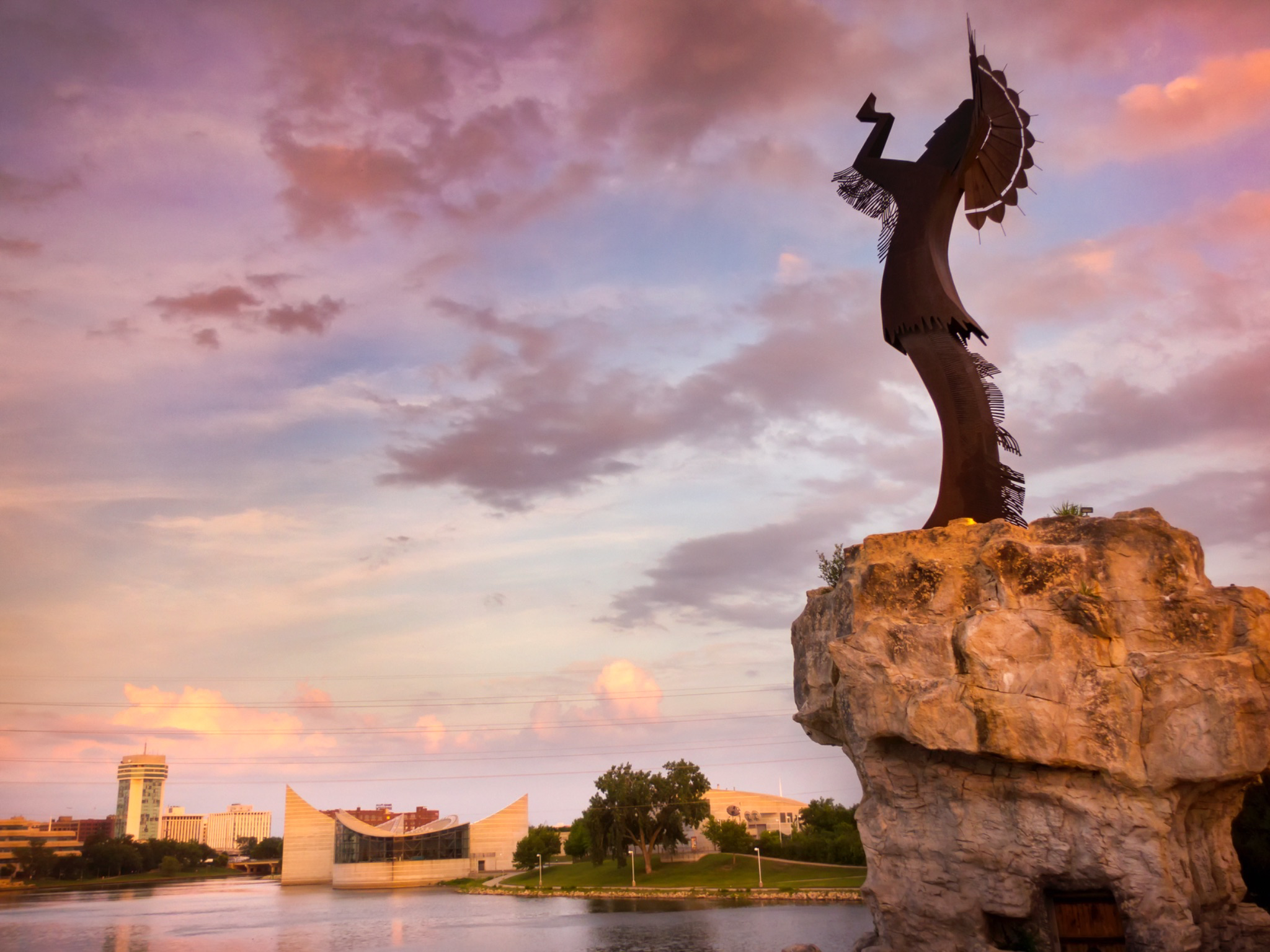
This museum is dedicated to educating visitors about the history of local indigenous tribes, and the preservation of Native American culture and practices for future generations. The museum houses a large body of artwork by the late Kiowa-Comanche painter known as Blackbear Bosin, iconic creator of “The Keep of the Plains” sculpture in Wichita; this statue stands at the confluence of the Big and Little Arkansas rivers with raised hands honoring the Great Spirit. There is also an extensive collection of Alaskan Native artwork from the mid-20th century, flags from more than 70 American Indian Nations located in the Gallery of Nations. There is also a community-run lendable collection of traditional regalia meant to share with the local youth participating in traditional powpows so they can be included in their cultural practices regardless of financial status.
Reconciliation Park in Mankato Minnesota
Sometimes, history does not always have a bright spot. This park was created to commemorate the lost lives of 38 Dakota tribespeople who were hanged near the site in 1862. The park was created in 1997 to promote a healing and connection between the indigenous Dakota people and non-Dakota peoples. A visit to the park encourages people to reflect, meditate, and remember. The monument was carved from a 67-ton block of local Kasota limestone by artist Tom Miller, intended to commemorate and symbolize the heritage, strength, and survival of the Dakota peoples. The park is also surrounded by native flowers and prairie grasses.
Genoa Indian Industrial School Museum in Genoa, Nebraska
Situated on the site of the former Pawnee Reservation property, this “reeducation” center was the fourth largest non-reservation boarding school established by the US Office Of Indian Affairs. The goal was to ensure Native American children could “assimilate into American society”. The facility housed students from more than 10 states and 40 different tribal nations and was in operation from 1884 through 1934. The facility is now a non-profit organization aimed to collect and preserve the history of the treatment of indigenous peoples in America, and promote awareness and healing in the process.
First Americans Museum in Oklahoma City, Oklahoma
Visitors to this impressive museum will learn about the collective histories of 39 different First Americans Nations in Oklahoma. With a sprawling 175,000 square foot facility, the museum showcases numerous state of the art exhibits, community events, and a wide variety of educational programming. It houses a multipurpose theater, a restaurant and cafe serving up indigenous inspired cuisines, and a gorgeous museum store featuring exclusive items produced by First Americans artists themselves. The FAMily Discovery Center is a pop-up-book inspired world filled with Native Stories, animal sculptures, and more to help visitors connect with local Oklahoma history and tribes.
Frog Bay Tribal National Park in Bayfield, Wisconsin
A gorgeous park along the coast of Lake Superior, this property is the first Tribal National Park in the US. It celebrates the cultural importance of water to the local indigenous tribes, and their spiritual connection that is associated with Lake Superior. This beautiful boreal forest, coastal wetlands, and sand beaches. The area includes more than 300 acres of protected lands in total on the Bayfield Peninsula including at-risk boreal forest, 120 acres of wetlands and freshwater estuaries, and nearly 4,000 feet of undeveloped Lake Superior Shoreline.
![[Facebook]](https://www.classicdirecttoyota.com/blogs/293/wp-content/plugins/bookmarkify/facebook.png)
![[LinkedIn]](https://www.classicdirecttoyota.com/blogs/293/wp-content/plugins/bookmarkify/linkedin.png)
![[Twitter]](https://www.classicdirecttoyota.com/blogs/293/wp-content/plugins/bookmarkify/twitter.png)
![[Yahoo!]](https://www.classicdirecttoyota.com/blogs/293/wp-content/plugins/bookmarkify/yahoo.png)
![[Email]](https://www.classicdirecttoyota.com/blogs/293/wp-content/plugins/bookmarkify/email.png)
Connect with us


- Top 5 Features of the 2026 Toyota 4Runner That Conquer Illinois Winters
- Celebrate the Holidays by Gifting a Road Trip to the Michigan Ice Fest 2026!
- Extending the Spirit of The Giving Season: Great Ways to Give Back to the Community For the Holidays (Lake County, Waukegan Area)
- Your 2025 Holiday Gift Guide for Car Lovers
- Great Holiday Gift Experiences in the local Lake County Illinois Area for Holiday 2025 Season