



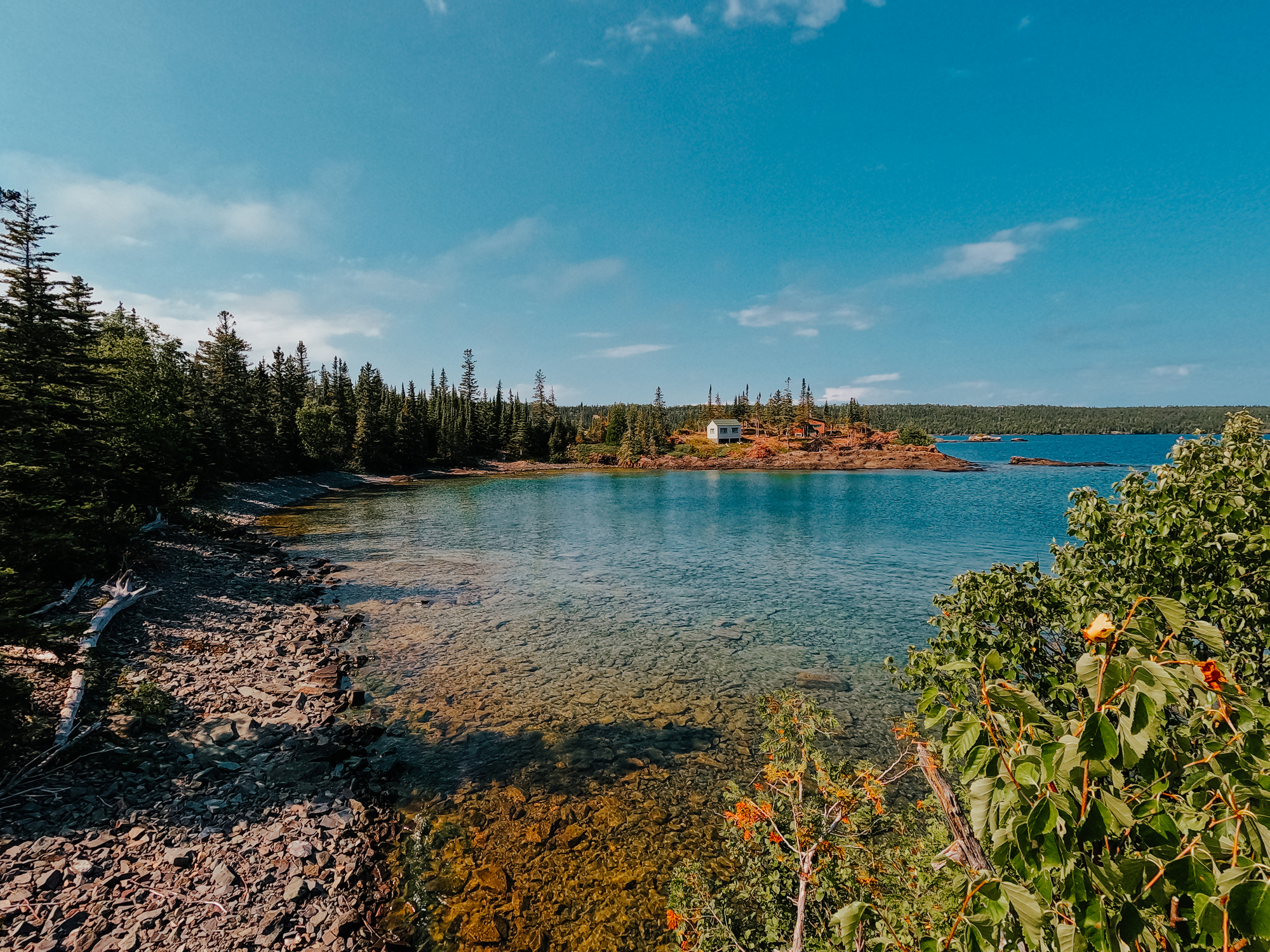
Isle Royale is nestled in the crystal waters of Lake Superior, and the park is open to visitors in Mid-May through September. Dotted with historic sites, wound with ribbons of hiking trails and scenic overlook routes, home to several historic shipwrecks and sunken ships, and pristine wilderness where majestic moose and wild wolves still roam free, this is a must-see park located in Keweenaw County, Michigan.
One of the qualities that makes it so incredibly special is that it’s also considered a “US Biosphere Reserve”, meaning that it functions effectively as a living laboratory and research ecosystem. The aim of sites like Isle Royale National Park is to preserve and encourage biodiversity, protect and promote healthy ecosystems, continue the dialogue about sustainable agriculture and research as well as economic development, to create shared experiences between visitors and researchers, and foster a stronger relationship between humans and nature.

With over 165 miles of scenic hiking trails, 36 different campgrounds, and numerous opportunities for adventure, too. You’ll want to plan at least a four day stay so you can take in as much of this beautiful preserved land as possible. Transportation options are limited to ferries, personal private boats, and seaplanes; select from the Ranger III, Queen IV, Sea Hunter III, Voyageur II ferries depending on your departure and arrival locations. Group camping is available with permits and advanced reservations, making it a great best friends getaway, family reunion spot, or even a coworkers’ bonding trip.
You can enjoy exploring the historic lighthouses or any of the 10 shipwrecks, or if you prefer a more traditional activity you may enjoy boating, kayaking, paddle boarding, and fishing. Thanks to the immense amount of options for hiking trails, you’ll have plenty to choose from for a trek along what will feel like your own private island, sometimes not noticing another human for quite some time.

Houghton
Houghton is the Isle’s mainland headquarters, along the Portage Canal. The visitor center is the home port for the Ranger III ferry, as well as being the location for visitors to obtain their boating permit before heading out to the island. You can visit the park store as well as request a special 25-minute park orientation video to start your visit, or sign up for the park’s Junior Ranger Program!
The nearby Lookout Louise Trail is situated over Duncan Bay, in between Isle Royale and Thunder Bay, Ontario, and provides a spectacular view of the park. Hikers beware that it is a mostly uphill mile-long trail, but on a clear day you’ll be rewarded with views of Pie Island, the Sibley Peninsula, and Edward Island!
Rock Harbor Region
Rock Harbor is located on the northeast end of Isle Royale National Park and can be researched by the Ranger III, Isle Royale Queen IV, Voyageur II, seaplane services, or by private boat/seaplane. Once you reach this area of the island, you’ll be immersed in the peaceful boreal forests filled with spruce and fir trees. It’s a wonderful place for some Front-country hiking as well as paddling, fishing, and enjoying guided tours. Key things to enjoy here are Scoville Point, Suzy’s Cave, the Pete Edisen Fishery, Suzy’s Cave.
The Edisen Fishery is a historic campsite and fishing spot at the south end of Rock Harbor, named for the last fisherman that manned the area, Pete Edisen.
Suzy’s Cave is on the eastern end of the park, just a short hike away from the Rock Harbor area. There’s a very impressive inland sea-arch formed by thousands of years of waves moving through the area.
Stoll Memorial Trail to Scoville Point is a reasonable trail for beginners that offers gorgeous views of Lake Superior and a fully immersive experience of the beautiful wilderness of the park.
Mount Franklin Scenic Overlook and Greenstone Ridge Trail
The Greenstone Ridge Trailspans between Windigo Harbor on the western end to Rock HArbor on the eastern end. The trail spans over 40 miles if you include all spur trails, and is best suited to intermediate backpackers traveling over the course of several days (5-8 day recommended) The overlook is 1,080 feet high, and provides visitors with impressive views of Lake Superior and Canada as well as the northern side of the island. Visitors recommend this as either a one-day hike or an overnight trip, depending on your skill level. As you hike to the area, you’ll cross through marshes, swamps, forested areas, and enjoy mountainscape overlooks.

Windigo Region
This Front-Country wilderness offers scenic views, hiking trails, and can be reached by ferry, seaplane, or private boat. Windigo is located on the southwestern end of the park, and is a great opportunity to enjoy hiking, paddle boarding or kayaking or canoeing, attend special ranger programming, and more.
Hike to the Minong Ridge Overlook to experience Isle Royale’s West End, panoramics of Lake Superior, and the Canadian Shoreline
Grace Creek Overlook affords visitors a beautiful view of Grace Creek, Grace Harbor, and Lake Superior as well.
Lighthouses
There are four historic lighthouses on the island. The oldest of which is Rock Harbor Light, a sentry for decades along the Rock Harbor Channel; though it is no longer actively illuminated it is the most viewed and visited lighthouse. Passage Island Lighthouse is on the northeast side of the park, actively guiding ships traffic through the Isle Royale’s main island and Passage Island; though it was once manned by attendants, it’s been converted to an automated, flashing white light. The Rock of Ages Lighthouse is the tallest lighthouse of Isle Royale, and is built on a 50’x200’ rocky outcrop in the water. Isle Royale Lighthouse is set on the edge of Menagerie Island on the south shore at the entryway to Siskiwit Bay, and is reachable only by private boat’ this lighthouse sends a beacon out up to 10-miles!
Shipwrecks
There were 10 major shipwrecks along the coasts of Isle Royale and listed on the National Register.
- The SS Algoma, a passenger steamer in the 1880s, broke in half and parts of the stern remain.
- The SS America was a package freighter from 1898-1928; you can still see the midship and stern, including the engine room, galley, and some passenger cabins.
- The SS Henry Chisholm was a bulk freighter from the late-1880s through the late 1890s; the steam engine is the most prominent feature of the shipwreck site.
- SS Chester A Congdon was a freighter from 1907-1918, and its wreckage includes a pilot house, the bow on the south side, and an intact stern on the north side.
- The SS George M Cox was a passenger steamer for nearly 20 years in the early 1900s; the wreckage is scattered along the site and you’ll find steel plating as well as exposed machinery.
- The SS Cumberland was a passenger steamer in the 1870s whose wreckage features the wooden hull, side-wheel, and boiler.
- The SS Emperor was a bulk freighter for nearly 40 years, and its wreckage is mostly intact with the bow area showing the most damage.
- The SS Glenlyon was a bulk freighter from the early 1890s through 1924, and its wreckage is scattered throughout the reef.
- The SS Kamloops was a package freighter for a mere 3 years before it wrecked, and it’s located at extreme depths so most of it is intact and undisturbed.
- The SS Monarch was a package freighter from 1890 through 1906, and large sections of wooden wreckage are scattered at the bottom.
![[Facebook]](https://www.classicdirecttoyota.com/blogs/293/wp-content/plugins/bookmarkify/facebook.png)
![[LinkedIn]](https://www.classicdirecttoyota.com/blogs/293/wp-content/plugins/bookmarkify/linkedin.png)
![[Twitter]](https://www.classicdirecttoyota.com/blogs/293/wp-content/plugins/bookmarkify/twitter.png)
![[Yahoo!]](https://www.classicdirecttoyota.com/blogs/293/wp-content/plugins/bookmarkify/yahoo.png)
![[Email]](https://www.classicdirecttoyota.com/blogs/293/wp-content/plugins/bookmarkify/email.png)
Connect with us


- All-New 2027 Toyota Highlander: The Electric SUV for Illinois
- Top 5 Features of the 2026 Toyota 4Runner That Conquer Illinois Winters
- Celebrate the Holidays by Gifting a Road Trip to the Michigan Ice Fest 2026!
- Extending the Spirit of The Giving Season: Great Ways to Give Back to the Community For the Holidays (Lake County, Waukegan Area)
- Your 2025 Holiday Gift Guide for Car Lovers