Blog / Classic Toyota

Blog

All Classic Toyota Classic Toyota News Arts and Culture Local Things To Do Food and Drink Travel Blog Waukegan Toyota Dealer Pets and People Models Waukegan Toyota Service New Inventory Toyota Prius RAV4 Toyota RAV4 4Runner Tacoma Waukegan Used Cars 4Runner i-FORCE MAX Camry Corolla Highlander Tundra
Toyota_Safety_Connect_001-1500x827

Toyota Announces Extension to Safety Connect and Service Connect Trials

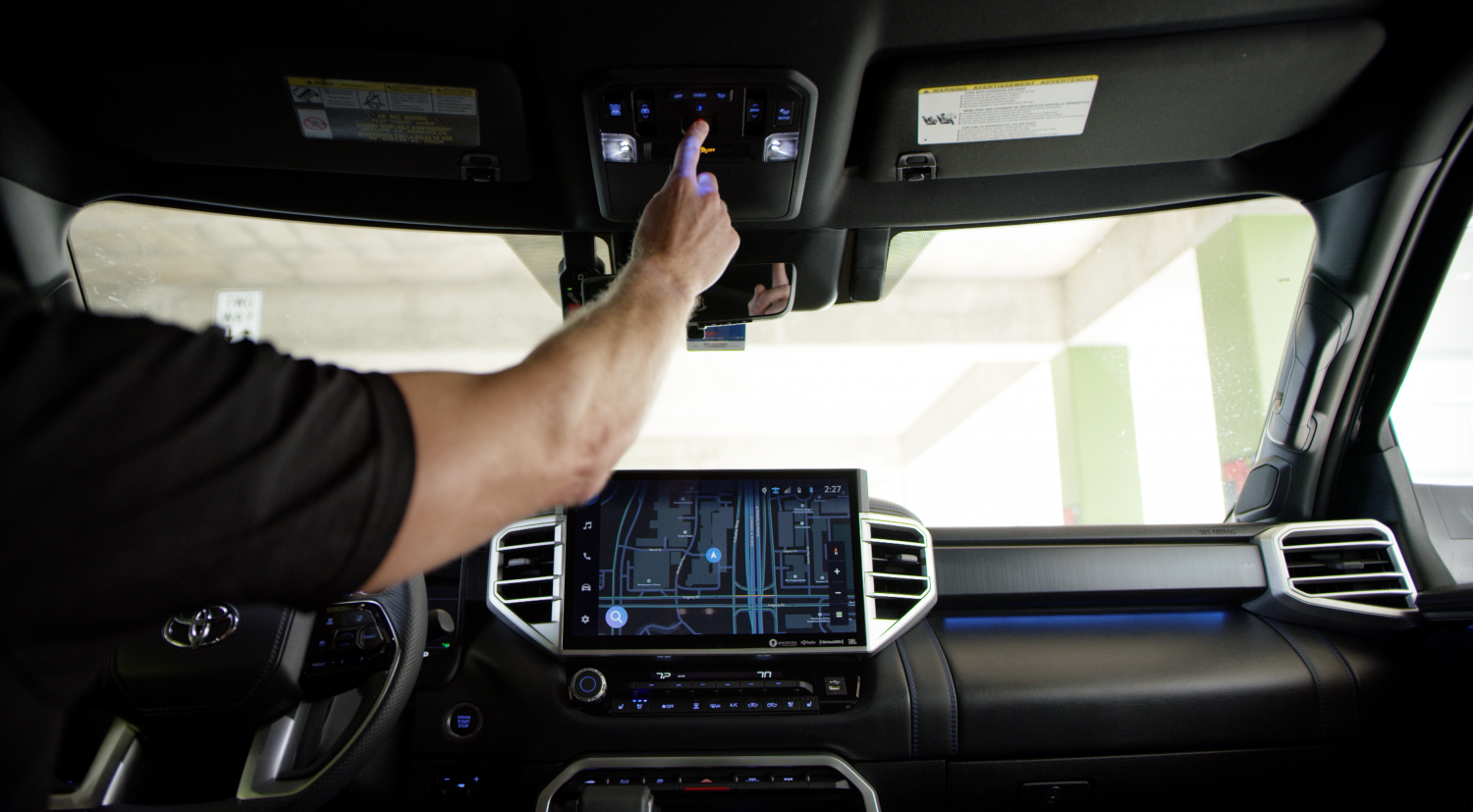
Up to 10-Year Trial Periods on Select 2023 Models Featuring New Generation Toyota Audio Multimedia as well as the 2022 Toyota Tundra* Emergency Assistance Can Dispatch Emergency Services to Vehicle’s Location Enhanced Roadside Assistance Builds on Toyota’s Commitment to Safety and Customer Care Service Connect Provides Maintenance Reminders and Vehicle Health Reports more PLANO, Texas (Sept. 28, 2022) – Toyota today announces additional peace of mind to assist when the unexpected occurs. Safety Connect, a suite of available services that help drivers stay secure while on the road, is now available with an extended trial period to customers of select Toyota models. The suite of available services includes 24-hour emergency assistance, 24-hour enhanced roadside assistance, automatic collision notification and stolen vehicle locator**. “We are constantly looking at ways to offer our customers enhanced driving experiences,” said Steve Basra, group vice president, Connected Technologies, Toyota Motor North America. “With our new extended trial for Safety Connect and Service Connect, a wide range of services enable Toyota owners to enjoy more peace of mind when behind the wheel.” Toyota’s Safety Connect suite of services includes: Emergency Assistance: The vehicle’s Emergency Assistance Button is designed to offer drivers a simple, 24-hour connection to response center agents, who can request dispatch of necessary emergency services directly to the vehicle’s location in case of a medical or other emergency on the road. Enhanced Roadside Assistance: The Emergency Assistance button can connect drivers with 24-hour Roadside Assistance at no additional cost to provide battery jumpstarts, emergency fuel delivery, tire repair or replacement service and towing and winching as necessary. In the event of an accidental lockout, users can also use the Toyota app on their smartphones to receive emergency lockout protection assistance. Automatic Collision Notification: Toyota’s 24-hour response center will automatically be notified in the event of an airbag deployment or severe rear-end collision. The 24-hour response center agent will attempt to speak with the vehicle’s occupants, then notify local emergency services to request dispatch of emergency services to the vehicle’s location. Stolen Vehicle Locator: If a vehicle is stolen, our response center agents can assist authorities in locating the vehicle using GPS technology immediately after filing a police report. Toyota’s Service Connect suite of features includes: Maintenance Reminder: Routine maintenance is key for a vehicle to run at its best. With Service Connect, maintenance reminders can be sent to owners via email, the Toyota app or through the Toyota Owners’ account. Vehicle Health Report: Important information about the vehicle, such as recall and service campaigns, vehicle warnings and alerts, maintenance information can easily be accessed via the Toyota app. Vehicle Maintenance Alert: Should an owner opt for this service; vehicle alerts and maintenance alerts can be shared with a preferred dealer. The dealer can then contact the customer when maintenance is required. Safety Connect and Service Connect are available to Toyota owners through the Toyota app. Toyota app downloads are available for iPhone® or Android™ smartphones. To download, please visit: https://www.toyota.com/connected-services/toyotaapp/. Once downloaded, owners can sign-in to register, access and manage settings. Click here to learn more about Safety Connect. Click here to learn more about Service Connect. *The Safety Connect and Service Connect suite of services will be available with up to a 10-year trial (4G Network dependent) for owners of select 2023 Toyota vehicles equipped with the new generation Toyota Audio Multimedia System. Vehicles include the following Toyota models: 2023 bZ4X 2023 Corolla 2023 Corolla Hatchback 2023 Corolla Cross 2023 Crown 2023 GR Corolla 2023 Highlander 2023 RAV4 2023 Sequoia 2023 Tundra 2023 Venza The 2022 Tundra also will receive extended trial periods for Safety Connect and Service Connect at no extra cost. Additional eligible models may be announced at a later date. The Safety Connect and Service Connect trial periods begin on the original date of purchase or lease of a new vehicle. In addition to these enhancements, Insure Connect will continue to be available to Toyota customers as a complimentary connected service through the Toyota app. Insure Connect empowers customers to leverage their own driving data to receive usage-based insurance benefits providing safe driving tips and possible policy discounts. *Safety Connect and Service Connect depend on certain factors outside of Toyota’s control in order to operate, including 4G network availability, an operative telematics device, a cellular connection and GPS signal. Without any one or more of these things, the services may be limited or precluded, including access to the response center and emergency support. Services vary by vehicle and are subject to change at any time without notice. About Toyota Toyota (NYSE:TM) has been a part of the cultural fabric in the U.S. and North America for more than 60 years, and is committed to advancing sustainable, next-generation mobility through our Toyota and Lexus brands, plus our nearly 1,500 dealerships. Toyota directly employs more than 39,000 people in the U.S. who have contributed to the design, engineering, and assembly of nearly 32 million cars and trucks at our nine manufacturing plants.  By 2025, Toyota’s 10th plant in North Carolina will begin to manufacture automotive batteries for electrified vehicles. Toyota has more electrified vehicles on the road than any other automaker, with electrified vehicles comprising more than a quarter of our 2021 North American sales. To help inspire the next generation for a career in STEM-based fields, including mobility, Toyota launched its virtual education hub at www.TourToyota.com with an immersive experience and chance to virtually visit many of our U.S. manufacturing facilities. The hub also includes a series of free STEM-based lessons and curriculum through Toyota USA Foundation partners, virtual field trips and more. For more information about Toyota, visit www.ToyotaNewsroom.com.

Red and white semi-truck speeding at sunrise on a single lane road USA

Celebrating National Trucker Day with Fun Facts About the Trucking and Transportation Industry

Today is National Truckers Day!  In the age of lighting-fast shipping, ubiquitous subscription services, and even grocery delivery, today’s Truck Drivers are more valuable than ever; in fact, the industry is expected to grow 21% in the next 10 years as a result!  So let’s take a look at some of the neat fun facts about the trucking industry, and the ways that it’s evolving with our ever-changing world! more The first semi truck was invented in 1898 by Alexander Winton from Cleveland Ohio since he needed a way to transport his cars to buyers many miles away. German-American blacksmith Charles Freuhauf is credited with inventing the first tractor trailer in 1914, devised as a way of conveniently transporting his boat! There are over 15 million trucks in operation today across the United States, and if you lined them up end-to-end they would reach from Earth to the Moon! Truck engines are engineered to drive more than one million miles before they’re retired, which is 800,000 more miles than the average car engine lasts. Talk about efficiency! Since the trucking industry consumes about 50 billion gallons of fuel each year, with the average commercial truck consuming 20,500 gallons of gas annually. As a result, engineers are committed to producing cleaner fuel vehicles such as clean diesel, hybrid, and even electric models, and it’s come a long way already! Operating one diesel truck back in 1988 equates to the clean diesel emissions of sixty of today’s modern trucks, and emissions from large trucks have been cut over 95% in the past two decades. 1 in every 14 jobs in the United States is directly affected by the trucking industry, something we’ve all become heavily aware of during the ongoing Covid19 pandemic. The majority of trucking companies across the US are small business operations from everything like fresh food to medical supplies to livestock to construction supplies. Have you ever ordered groceries online for delivery? Perhaps you have your favorite pantry items on autoship fulfillment? Or maybe you’ve dined out at a restaurant recently? Then you will find it less than surprising that 90% of Americans like you have eaten food that’s been delivered via refrigerated truck! While we’re ordering overnight goods and groceries to our cozy homes, the truckers who deliver them are spending an average of 240 nights away from their homes and families each calendar year. About 60% of Truck Drivers today own pets, and 40% of those drivers take their buddies on the road with them. There are more than 3.5 million truck drivers in the United States, and on average the age of drivers is older than most other professions at 45 to 46 years old.

Interior of autonomous car. Driverless vehicle. Self driving. UGV. Advanced driver assistant system.

Exploring Advancements in Automotive Technology: Past, Present, Future, and Really Cool Concept Cars

Today is National Techies’ day and we’re covering some of the latest and greatest in updates to automotive technology including some features we now use everyday that once seemed quite futuristic!  From self-driving cars to plug-in hybrids to voice activated features, we’re taking a look into some of the latest and greatest features of the automotive industry.  Whether you’re looking for a daily driver, family car, or even something to hit the track on weekends, there’s so much fascinating technology on the market today and in the pipeline pending!  Let’s take a look at some of the latest news on updates to vehicle design, new tricks for older cars, and other advances in technology together on today’s blog. more When Marty McFly and the Doc hit the road in the mid 1980s in their flying time machine DeLorean, it seemed a far off futuristic concept.  How could we have such astounding tech as hoverboards, electric cars,or flying cars?  Yet here we are in 2022, looking down the pipeline at some of the most fascinating and convenient amenities in technological advances. Today, we’ve got smart tech hybrid vehicles that can optimize fuel efficiency without human interference, and fuel-free vehicles that charge anywhere from a few minutes to a few hours for up to 350+ miles in range, and with feature options such as Built-in 4G LTE and 5G Wi-Fi hotspots allowing passengers and drivers to access phone calls, streaming services, GPS apps and much more without having to use their wireless carrier’s data plan. Enjoying the backup cameras, lane-keep assist, and collision warning features?  Miniature camera sensors installed all around the car, surveilling the exterior of your vehicle for objects, people, animals, and obstructions, something that just a few decades prior seemed only achievable in science fiction movies.  Got your hands full from all the grocery shopping?  Not a problem! Your truck or SUV is equipped with sensors to open and close the trunk, hatch, and doors upon sensing you approaching.  Hate getting into a hot car in summer or a frigid car in winter? Many cars also feature not just heated seats but cooling and massaging options, with modern styling that’s as much about ergonomics as it is aesthetics.  What once seemed unattainable is now the every day! It’s really, really impressive how far we’ve come in just a short amount of time! And that, friends, is just the beginning.  Let’s investigate some of the unveilings and concept vehicles of recent years automotive conventions and shows! Take a peek at every electrical vehicle that was on display at this year’s recent Chicago Auto Show thanks to EV Motoring on YouTube. Kia has announced that they’ll have 14 fully electric models by 2027!  The EV9 SUV, unveiled in 2021 at the Los Angeles Auto Show, will be the first car to use autonomous driving technology, AutoMode. AutoMode is the range of autonomous driving technologies including a highway driving pilot mode, and a series of additional self-driving tech and safety features.  The vehicle is expected to be launched in 2023! Learn more about this feature and vehicle here: The new future of racing may just be this incredible car from Hyundai like the N Vision 74 Drift car.  Are you itching to see the new tech live and in action for this concept car come to life? Well, we’re thrilled to share this video from Top Gear where you’ll get to see this one-of–a-kind vehicle take a few rounds on the track.  And we’ve got to say, we’re really excited about it, and it gets our little gearhead hearts revving for sure. Attendees to the Chicago Auto Show 2022 this year got a great look at the Toyota Rhombus Concept Car.  This vehicle is a battery-powered electric vehicle with an aggressive and modern looking diamond shaped design.  While the vehicle may or may not be produced in its current incarnation, it’s been thus far well-received by enthusiasts. It places high value on interior space comforts with ample legroom and swivel seats for a lounge-like interior.  The good news is that this is just one of their 10 BEVs anticipated for announcement over the next few years. Toyota also dropped a series of incredible updates to their model range and tech, and has unveiled new features and at least 6 different electric vehicles.  They’re expanding their lineup with an increase in options and models in the HFCVs, EVs, Hybrids categories. Let’s check out the 2023 Toyota bZ4X electric vehicle and its features here: Looking for a hybrid model car in your favorite crossover size? Toyota’s got you covered with the Corolla Crossover Hybrid 2023: Take a look at some of the features and aesthetics of the upcoming Toyota Vehicles including electric cars such as the Rhombus and the bz4x…and even flying cars: Looking to explore concept cars and independent builds for futuristic vehicles? Check out these cool videos for even more neat automotive technology. VantaTech is exploring 55 of the most beautiful future concept cars with designs predicted from 2023 through 2050 in concept releases. The Fully Charged show got a sneak peak at the Aptera, an incredibly unique EV inspired by none other than fish!

autumn - time to change tires on winter tires

Classic Toyota's Fall Car Care Tips for Safe Driving in Autumnal Weather

Of course, the arrival of Autumn means breaking out the cozy sweaters, scarves, boots, but that’s not all!  In addition to wardrobe changes and seasonal decor, Fall also means ushering in of rainier, foggier weather and slippery roadways.  Today we’re covering some helpful tips and tricks for car care maintenance to ensure you’re prepared for these autumnal weather changes.  Need a little help to get your car in tip-top shape? Give us a call at Classic Auto Body Shop to schedule a service appointment and we’ll handle your vehicle’s maintenance in a jiffy! more Install some all-weather floor mats and trunk mats. Fall weather means more time outdoors in nature, and with it comes all manner of dirt, grime, dust, and debris as well as those blustery, rainy days that bring mud and muck.  Protect your car’s interiors and cut down on your cleaning maintenance with a good set of rubber/silicone floor mats! Inspect the vehicle’s wiper blades, defroster, and heating systems. As the weather gets colder and rainier, it’s vital to your safety that you have properly working wiper blades to clear away wet leaves and debris, and maintain clear visibility during inclement weather.  Check your owner’s manual to ensure you’re getting the proper size wiper blades, and consider one with hydrophobic coating built-in!  It’s also important to check the defroster and heat blower system, as it will help dissipate the fog and condensation off your windshield before you start driving and keep visibility clear.  Before it gets too cold out, consider applying a thorough application of a water-repellant such as RainX to the glass surfaces on your vehicle to aid in visibility during storms. Service your whole brakes system: Emergency Brake, Brakes/Lines, Rotors, etc. It’s vital to have a good set of brakes and quality rotors, and is the difference between the ability to stop safely and avoid accidents.  It is important to make sure that your braking system and brake light are in perfect working order before you’re faced with a split second decision to swerve, stop short, or find a wet patch of leaves on the roadway. Check your front and rear brakes, emergency brake, and brake light system before the slippery road conditions start!  You want to drive with confidence knowing your vehicle will keep you safe in the event of potential accidents! Check your car battery. Colder months mean we’re more apt to leave our car running to “warm it up” so we don’t shiver on our morning commutes.  This also means a higher potential for draining the battery through accidental means.  Be prepared in the event of human error or issues at start-up by always keeping a portable battery charger to jump-start in the event you’re stranded with no one around, or in a space where no one can reach your vehicle.  If a vehicle is going into or coming out of storage, the battery should definitely be checked and replaced as they do lose charge while sitting. Have a wheel alignment and tire rotation, and inspect the tires thoroughly. We’ve recently covered tire maintenance on an earlier blog this month, but it’s always worth mentioning again! After all, it’s one of the most vital components to your vehicle’s function.  Check your tire pressure and make sure the PSI matches the manufacturer requirements (can be located in your manual or on a label on the side door pockets or frame.)  Look for signs of wear and tear such as bulges and bubbles, cracks or small tears, or significant tread wear leaving bald spots.  Consider rotating your tires if you’ve not done it in a while.  Any damaged tires should be replaced, and a good set of all-weather tires swapped in for summer tires. Ensure your car’s headlights and casings are clean, and replace dim or broken bulbs. Fall has ushered in the beautiful fall foliage, and also those gorgeously moody, foggy and misty mornings, and the waning evening sunlight.  It’s important that you make sure you have bright, clear headlights to maintain road safety and reduce accidents. See something we’ve left off our list? Want more car care maintenance tips? We’re all ears! Let us know in the comments what you think we should include on upcoming lists and blog posts.

2023_GR_Corolla_Core_SupersonicRed_020-1500x1000

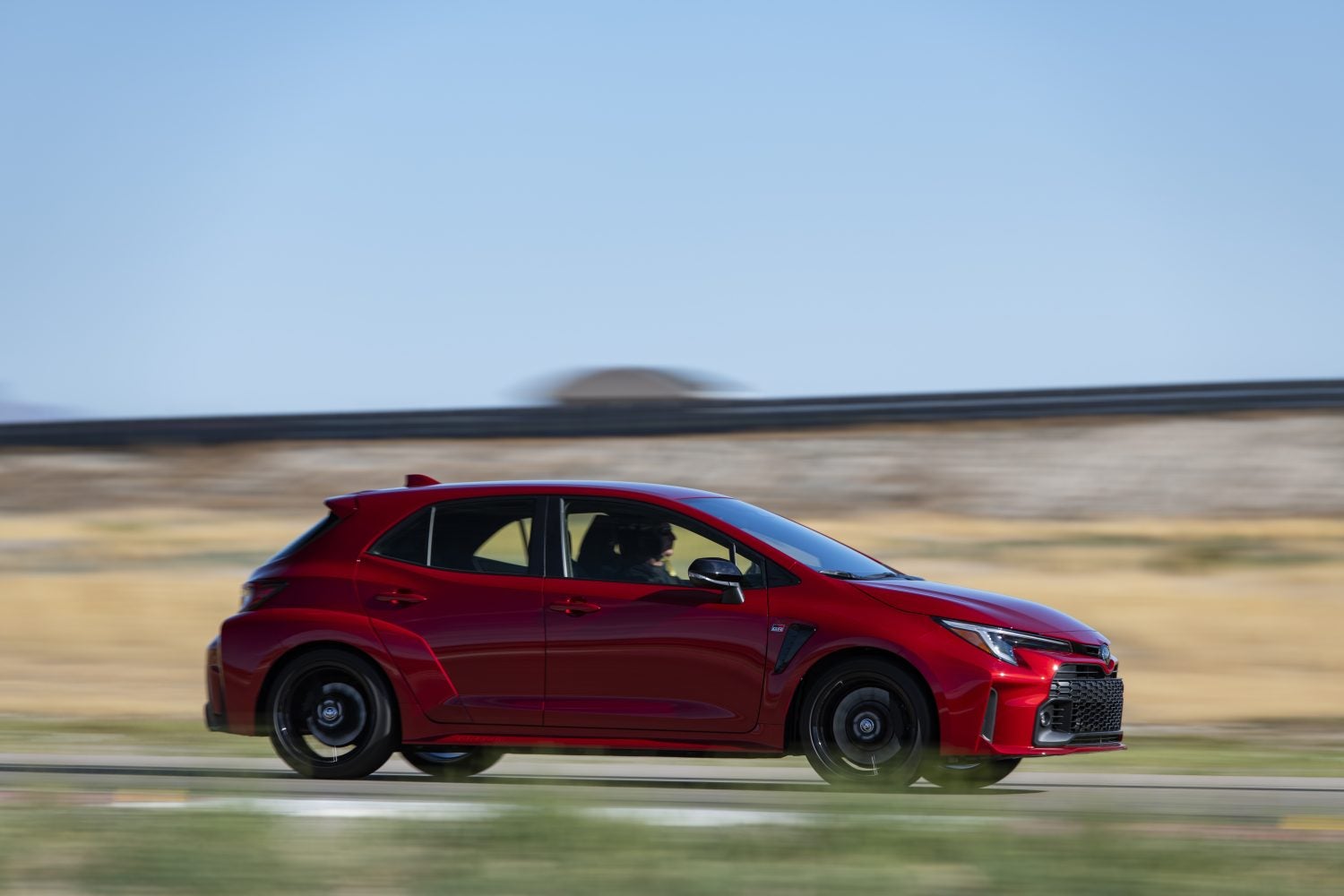
Toyota News: First-Ever GR Corolla Rockets Out this Fall

1.6L, three-cylinder turbo engine delivers 300 hp and up to 295 pound-feet of torque GR-FOUR AWD system with customizable front-rear power settings Available in three models: Core grade, launch-year-exclusive Circuit Edition and ultra-limited MORIZO Edition Born from rally racing and tested to meet the highest standards set by master driver Akio Toyoda and professional TOYOTA GAZOO Racing drivers Pure Toyota sports car, precision built at the GR Factory at Toyota’s Motomachi Plant Complimentary 1-year membership to the National Auto Sport Association, featuring a High-Performance Driving Event with expert instruction more SALT LAKE CITY, Utah (Sept. 14, 2022) – The first-ever 2023 GR Corolla might be the newest member of TOYOTA’S GAZOO Racing sports car family, but this hot hatch is ready to make a big impression on North American streets. Rooted in rally, developed under the scrutiny of master driver Akio Toyoda and inspired by Toyota’s sports car lineage, GR Corolla looks to rocket to the top of driver wish lists as it debuts at dealerships later this year. Powered by the lightweight, compact-yet-powerful G16E-GTS turbocharged, three-cylinder engine that pumps out an impressive 300 horsepower, GR Corolla will come in three grades: the Core grade, Circuit Edition and the limited, track-focused, MORIZO Edition. GR Corolla Core grade is expected to arrive at dealership lots in the Fall of 2022. The MORIZO Edition is expected in Winter 2023 and Circuit Edition is expected in Spring 2023. GR Corolla’s impressive output is thanks in part to a unique triple exhaust that reduces back-pressure for maximum power delivery. The Core grade and Circuit Edition push out 300 hp and 273 lb.-ft. of torque, while the MORIZO Edition hits 295 lb.-ft. High strength engine components and a turbocharger also help GR Corolla punch above its weight. With a max boost of 25.2 PSI on the GR Corolla Core grade and Circuit Edition and 26.3 PSI on the MORIZO Edition, GR Corolla models have a manufacturer estimated 0-60 mph time of about five seconds. Peak torque output on the Core grade and Circuit Edition hits between 3,000-5,500 rpm, with max horsepower at 6,500 rpm. TOYOTA GAZOO Racing engineers have aggressively tuned the G16E engine for additional power on the MORIZO Edition, with peak torque coming in between 3,250-4,600 rpm. Regardless of the model, drivers will find satisfying torque across the powerband. Exclusively available with an intelligent Manual Transmission (iMT), GR Corolla’s short throw shifter and moderately tuned clutch keep drivers engaged with hands-on thrills. iMT is off by default for drivers who prefer finding the rev on their own but is easily turned on by the push of a button to the left of the steering wheel. For further responsiveness customization, Eco, Sport, Track and Custom drive mode selector comes standard on all grades. Toyota’s GR-FOUR All-Wheel-Drive (AWD) drivetrain brings rally-inspired engineering to the GR Corolla. With the twist of a dial or a push for Track mode, drivers can adjust the GR-FOUR system to fit a variety of road conditions and driving styles with 60-40, 50-50 or 30-70 torque distribution to the front and rear wheels. The GR Corolla is built on Toyota’s GA-C platform, with enhanced frame reinforcements developed specifically for GR Corolla at the GR Factory at Toyota Motomachi plant. Available Core grade colors include Ice Cap, Black and Supersonic Red, all paired with a color keyed roof and rear lip spoiler, GR-FOUR stamped side rockers and wide-fender flares. On the inside, seating for five will come with GR-logoed fabric sport seats. The Circuit Edition will be a limited-run model available for 2023 only. Standard colors are Ice Cap, Supersonic Red and Heavy Metal with the same GR-FOUR stamped side rockers and wide fenders as the Core grade. It adds a forged carbon fiber roof, vented bulge hood, a sporty rear spoiler, Brin-Naub® suede and synthetic leather-trimmed trimmed sport seats with red accents and a leather wrapped MORIZO signed shift knob. The MORIZO Edition sheds the back seat in the name of weight savings and will be available in Windchill Pearl and a MORIZO Edition exclusive NEW matte finished Smoke gray color. It also comes equipped with a forged carbon fiber roof, rear lip spoiler, vented bulge hood, Brin-Naub® and synthetic leather-trimmed sport seats with red stitching, red mesh inserts and Ultrasuede® wrapped MORIZO signed shift knob. All grades come equipped with Toyota’s all-new, US-developed multimedia system with an 8-inch touchscreen standard. Toyota Safety Sense 3.0 (TSS 3.0) will also come standard. Inspired Engineering In 2007, Akio Toyoda wanted to expand the company’s racing experience in its car development activities. As a starting point, he chose to compete in the 24 Hours of Nürburgring, the grueling endurance race held on the famous track winding through the German forest. It was an unofficial Toyota activity at the time, so the team was called GAZOO Racing and was made up of employees, including Akio Toyoda driving under the alias of MORIZO. With a limited budget, the newly named team entered the race with two second-hand Altezzas. Despite adversity, both cars finished the challenging race, and a new era of Toyota motorsports and product development, one founded on a spirit of challenge aimed at instilling change, began. As TOYOTA GAZOO Racing’s first wholly developed and manufactured model for the North American market, the GR Corolla carries this spirit forward. With professional drivers, experts and MORIZO at the wheel, GR Corolla was tested repeatedly at some of Japan’s leading circuits, including Fuji Speedway, Suzuka and Tsukuba Circuit. In addition, the GR team carried out heavy duty dirt and snow driving with a Japanese Rally Championship driver. No road was left untested in the process, so engineers and technicians could sharpen acceleration and control worthy of the GR name. GR Factory To help meet the performance goals for the GR Corolla, Toyota has established a dedicated GR Factory at its production facility in Motomachi, Japan. It is the birthplace of legends such as the Lexus LFA and Supra A80 and is now home to the first GR production line, where GR Corolla and GR Yaris are assembled. The body and component assembly lines comprise several different cells connected by automatic guided vehicles (AGVs) rather than the conveyors featured in conventional car plants. This fully flexible method of working, with many manual assembly techniques, enables precise body and suspension alignment, with variations in vehicle dimensions and weight kept to a minimum. Being assembled by experts means that each GR Corolla takes longer than a conventional mass-produced car. The assembly line has been streamlined for precision, with elements such as body alignment and weld checks to ensure that each GR Corolla is crafted with meticulous care and attention. TOYOTA GAZOO Racing has brought together highly skilled technicians from throughout the company to work on the GR Corolla. This team not only serves to assemble every GR Corolla but also helps to enhance the technical skills of other workers across Toyota facilities when learning is shared. It is a philosophy that’s part of the overall GR mission at Toyota, developing people, growing the automotive enthusiast and motorsport community and making ever better cars. The GR-FOUR System With all TOYOTA GAZOO Racing sports cars firmly rooted in motorsports, it only makes sense that the GR Corolla’s drivetrain was born from the rigors of rally racing. At the heart of the new GR Corolla is the GR-FOUR All-Wheel-Drive system, Toyota’s first sports all-wheel-drive system in over 20 years. Developed in collaboration with the TOYOTA GAZOO Racing World Rally Team and honed by WRC drivers, it delivers exceptional levels of traction and control with engineering designed to optimize drive power to each wheel, while remaining simple and lightweight. Inspired by rally driving, the GR-FOUR system is designed for a variety of conditions. Whether the driver is looking to adjust performance for dirt, rain or snow, or just in the mood for a different feel, the GR-FOUR system offers settings to match. With a twist of the dial, GR Corolla adjusts its four-wheel drive performance to fit the driver’s needs. For everyday situations, drivers can set a front/rear torque distribution of 60:40. For sporty driving, balance can shift to the rear, with 30:70 distribution for a fun-to-drive quality on winding roads and circuits. For maximum stability, a 50:50 setting can be used for fast, competitive track driving on circuits or special stages. In each mode, the torque balance will automatically adjust in response to the driver’s inputs, vehicle behavior and road or track conditions. The GR Corolla Circuit and MORIZO Editions are also equipped with front and rear Torsen® Limited-Slip Differentials (LSD), which offer enhanced cornering performance and grip with control of left and right-hand drive torque distribution on the front and rear axles. The Core grade comes with AWD open differentials standard, with the dual LSD available as part of the Performance Package on the Core grade. Revolutionary Three-Cylinder Turbo Engine For GR Corolla, Toyota engineers took the same turbocharged G16E-GTS powerplant used in the GR Yaris and boosted its output for performance you will feel. Thanks to a three-pipe exhaust system, GR Corolla produces 300 hp and a satisfying exhaust note without any augmented engine noise. For the pure joy of its rumble, the center pipe is open while idling and up to 20 mph, where it will then close. At 4,500 RPM’s the pipe reopens, reducing exhaust backpressure for powerful acceleration. The G16E also benefits from motorsport technologies that maximize performance, including multi-oil jet piston cooling, large-diameter exhaust valves and a part-machined intake port. Displacing 1,618 cubic centimeters, it produces a maximum power of 300 hp and 273 lb-ft. of torque on the Core grade and Circuit Edition and 295 pound-feet of torque in the MORIZO Edition model. Compact and lightweight, the DOHC 12-valve engine features a single-scroll ball-bearing turbo and is matched to a 6-speed intelligent Manual Transmission (iMT) with rev-matching engineered to accommodate high torque levels. The turbocharger is integrated in the exhaust manifold, reducing weight, while control of wastegate bypass gases is used to improve the catalyst’s warm-up efficiency. Combustion is fed by Toyota’s D-4S direct and port fuel injection system, which operates at high pressure for maximum fuel dispersion, for a manufacturer’s estimated 21 city/28 highway/24 combined mpg rating. Wide, Rigid and Designed to Handle To achieve control worthy of the GR badge, a highly rigid body was specially constructed for GR Corolla. Based off the GA-C platform, GR Corolla is designed for handling performance that rewards the driver. Enhanced rigidity comes from significantly more weld points in the frame, particularly to strengthen joints, with 349 more spot welds. Further gains are made through extensive use of structural adhesive, which increases the joint rigidity between component parts. There are just over nine additional feet of adhesive on the Core grade/Circuit Edition and nearly 20 more feet on the MORIZO than the Corolla Hatch. Additional structural support includes underfloor tunnel and rear wheelhouse braces. The MORIZO Edition adds two braces that span the rear of the cabin for structural support. The brace also serves as an in-car “tire rack” that allows a spare set to be vertically placed for a track day. The front suspension is a MacPherson-type strut design that is light weight and maximizes the tires’ grip potential. Made up of circuit-tuned coil springs, shock absorbers and stabilizer bars, the front suspension is designed to maximize power delivery to the wheels and provide optimum cornering capability on all surfaces. The rear suspension uses a double-wishbone type multilink assembly that accommodates the AWD system’s goal of maximum agility and stability. The MORIZO Edition tweaks the suspension with a stiffer spring rate on the circuit-tuned coils and red-painted monotube shock absorbers. Wide tread tires ensure high cornering performance while maintaining the excellent high-speed stability of the GR Corolla’s 103.9-inch-long wheelbase. The Core grade and Circuit Edition wear 235/40R18 Michelin Pilot Sport 4 tires and come equipped with 18-in. gloss-black 15-spoke cast alloy wheels. The MORIZO Edition wears 245/40R18 Michelin Pilot Sport Cup 2 tires that are mounted on 18-in. forged alloy wheels. Stopping power comes from opposed, fixed-caliper disc brakes with 14-inch x 1.1-inch ventilated and slotted rotors outfitted with 4-piston aluminum calipers on all grades. At the rear, 11.7-in. x 0.7-in. ventilated rotors with 2-piston aluminum fixed-caliper disc brakes come standard on the Core grade. Red-painted GR logoed calipers are standard on the Circuit and MORIZO Editions. The red-painted front and rear calipers are available with the Performance Package on the Core grade. Lightweight and Aerodynamic Throughout GR Corolla, there has been a focus on saving weight to maximize the performance potential without compromising strength and safety. This rigorous approach is particularly evident in the car’s construction, with extensive use of lightweight metals and materials used in key areas. On the Circuit and MORIZO Editions, the roof is made of a forged carbon sheet molding compound. This lightweight, highly rigid material is lighter than steel, helping lower the car’s center of gravity. Aluminum is used for the hood while front door panels are steel on all grades, with light and strong high-tensile steel in critical areas designed so that the car’s structure can help safely absorb and dissipate impact forces. The MORIZO Edition takes weight savings a few steps further. The removal of the back seat, use of forged wheels and ounce-cutting measures like no rear door speakers, no rear window regulator or rear wiper, makes the MORIZO Edition about 100-pounds lighter difference than the Circuit Edition. Curb weight for the Core grade comes in at 3,252 pounds (3,262 pounds when equipped with the dual LSD option), Circuit at 3,285 pounds, and MORIZO at 3,186 pounds. GR Corolla’s 0.35 coefficient of drag is partially attributed to GR Corolla’s ascending nose and tapering roof line. Wind flow is directed onto the rear lip spoiler to reduce drag. As with rally cars, the shaping of the front and rear canards and GR-FOUR stamped lower rockers efficiently channel airflow down the sides of the vehicle and a flat underfloor helps reduce drag and improve stability. Rally Ready Hot Hatch Style The wide stance and broad hatchback design of GR Corolla projects a strong, attack-ready style with its black GR badged functional matrix grille. The dynamic exterior includes functional air ducts flanking both sides on the Core grade and MORIZO Edition, and a stylish front grille featuring integrated LED fog lamps and GR badge comes standard on all models. Auto on/off LED headlamps and LED DRLs are also standard on all grades. All grades feature wide front and rear fender-flares. The Circuit and MORIZO Edition have a bulge hood with functional air ducts. The forged carbon fiber roof on the Circuit and MORIZO Editions are matched with a matte black roof-mounted shark fin antenna. The Core grade features an aluminum hood with a color-keyed roof and matching shark fin antenna, gloss black power outside mirrors with turn signal indicators and gloss black window molding. The Circuit Edition comes with heated side mirrors standard, which are available with the Cold Weather Package on the Core grade. Side, front and rear GR Corolla badges are standard on all models. At the rear, all models feature a rear lower bumper cover with functional air vents, which come in gloss black on the Circuit Edition. The tapering of the roof and rear pillars are complimented by a high mounted black rear sport spoiler on the Circuit Edition and a color matched rear-lip spoiler on the Core grade and MORIZO Edition. The wide track and flaring of the rear fenders emphasize the car’s wide, low silhouette, with a ground clearance of 5.3 inches on the Core grade and Circuit Edition and 5.1 inches on the MORIZO Edition. Race Inspired Interior The design of the GR Corolla’s interior reflects the car’s performance, especially around the driver’s cockpit. Incorporating the feedback of professional drivers, a GR Full TFT meter was newly developed with a 12.3-inch color Multi-Information Display (MID) that shows 4WD mode, turbo pressure, gear position indicator and tachometer. The brightly lit display is designed for easy viewing in any condition and even features a start-up GR animation. The shift lever is designed for a quick throw between gears. Positioned where the driver’s arm is naturally lowered from steering, the action is light with short shift strokes, adding to GR Corolla’s performance quality. GR Corolla uses a pull type mechanical parking brake. The Core grade’s cabin is finished with black and silver details. Drivers and passengers will find fabric trimmed sport seats with gray stitching and GR badged headrests; 6-way adjustable driver’s seat with suede covered sheet seatback pocket; 4-way adjustable front passenger seat with seatback pocket are standard on the Core grade. The Circuit Edition’s interior is finished in black with red trim details around the door handles, center console, steering wheel and side air vents. For an added touch, a leather wrapped “Morizo” signed shift knob comes on the launch year Circuit Edition. Drivers and front passengers are cradled by Brin-Naub® suede and synthetic leather-trimmed sport seats with red stitching, red mesh inserts, seat back pockets and GR badged headrests. The driver’s seat is 6-way adjustable, and passenger’s seats are 4-way adjustable. The MORIZO Edition offers exclusive red and black trim and details, including a red seat belt strap and a GR Ultrasuede®-wrapped, tilt/telescopic sport steering wheel with red sight line. The limited-edition model comes with Brin-Naub® and synthetic leather-trimmed semi bucket sport seats with red stitching, red mesh inserts and GR badged headrests; 6-way adjustable driver’s seat; and a 4-way adjustable front passenger seat. Ultrasuede is also wrapped around the MORIZO signature shift knob. Single zone automatic climate control and power windows with one-touch auto up/down function is standard on all grades. Heated front seats and heated steering wheel are standard on the Circuit and MORIZO Editions and are available with the Cold Weather package option on Core grade. A GR leather-trimmed tilt/telescopic sport steering wheel with audio, Multi-Information Display, Bluetooth® hands-free phone and voice-command controls comes standard on the Circuit Edition. Standard on all models is a push button GR engine start/stop button, aluminum sport pedals, two USB Type C charging ports, one 12V auxiliary power outlet, lighted foot wells, front console tray and rear console box. Qi-compatible wireless smartphone charging with full charge indicator light is standard on the Circuit Edition and available with the Technology package on the Core grade. Toyota Audio Multimedia All GR Corollas feature Toyota’s all-new, North American developed Audio Multimedia system. Displayed on an 8-inch touchscreen, the system offers an improved user experience and a wide range of enhanced connectivity and convenience features, including Connected Services trials 1. Users can interact with the new system’s design through touch and voice activation. And with Intelligent Assistant available with an active Drive Connect trial or subscription 1, simple phrases like “Hey Toyota” awaken the system for voice-activated commands to search for directions, find Points of Interest (POI), adjust audio controls, change the cabin temperatures and more. The cloud-based native navigation system offered through and active Drive Connect trial or subscription allows for real-time Over-the-Air updates for mapping and Points of Interest (POI), and Google POI data is integrated to ensure up-to-date search capability. Toyota Audio Multimedia allows for simultaneous dual Bluetooth phone connectivity with support for wireless Apple CarPlay® and Android Auto™ capability. An active Wi-Fi Connect trial or subscription offers 4G connectivity through AT&T for up to five devices and enables the new Integrated Streaming feature, providing the ability to link separate Apple Music® and Amazon Music subscriptions to the vehicle for onboard control. Adding to the already robust offering of audio multimedia features, the GR Corolla has playback ability with HD Radio, USB data and a SiriusXM® Platinum Plan three-month trial subscription. The Circuit Edition offers an enhanced audio experience with an available eight speaker JBL® Premium Audio system including an eight-channel, 800-watt amplifier. The GR Corolla comes with a host of additional standard Connected Services. Safety Connect includes an Emergency Assistance Button (SOS), 24/7 Enhanced Roadside Assistance, Automatic Collision Notification, Stolen Vehicle Locator and Collision Assistance with up to a 10-year trial service. Service Connect offering drivers the capability of receiving Vehicle Health Reports, Maintenance Alerts and reminders with up to a 10-year trial. 1 4G network dependent. After the trial period ends, a paid subscription is required. More details on trial periods and subscription-based features can be found at https://www.toyota.com/connected-services/. Safety & Other Technology All GR Corolla models come standard with Toyota Safety Sense 3.0 (TSS 3.0), which includes enhancements made possible by system sensors with advanced detection capability. The Pre-Collision System with Pedestrian Detection is also capable of detecting motorcyclists and bicyclists in certain conditions. When making a turn or approaching an intersection, the system is designed to detect forward or laterally approaching oncoming vehicles and provides audio/visual alerts and automatic braking in certain conditions. Lane Departure Alert with Steering Assist is designed to notify the driver via audible and visual alerts and slight steering force if it senses the vehicle is leaving the lane without engaging a turn signal. GR Corolla will be equipped with Dynamic Radar Cruise Control (DRCC), which is designed to detect the preceding vehicle and adjust speed in order to maintain a preset distance. And when DRCC is set and engaged, and Lane Tracing Assist is activated, this system uses sensors to detect the lane or a preceding vehicle and provides steering support to help keep the vehicle centered in its lane while improved lane recognition delivers refined performance of Lane Departure Alert with Steering Assist and Lane Tracing Assist. Automatic High Beams are designed to detect preceding or oncoming vehicles and automatically switch between high beam and low beam headlights. Road Sign Assist is designed to recognize certain road sign information using a forward-facing camera and display them on the multi-information display (MID). In addition to the TSS 3.0 system, other standard safety features on the GR Corolla include Blind Spot Monitor (BSM), which is designed to help detect and warn when vehicles are approaching or positioned in the adjacent lanes. Rear Cross Traffic Alert (RCTA) helps detect vehicles approaching from either side while backing out and provide a visual and audible warning. Toyota’s Rear Seat Reminder comes standard on the GR Corolla Core grade and Circuit Edition. The feature can note whether a rear door was opened within 10 minutes of the vehicle being turned on, or at any time after the vehicle has been turned on, with a reminder message in the instrument cluster after the engine is turned off, accompanied by multitone chimes. Hill Start Assist Control (HAC) also comes standard on all GR Corolla models and helps improve control by reducing backward movement when starting from a stop going uphill. Option Packages GR Corolla Core grade is available with the following packages: Performance package: Includes front and rear Torsen® Limited Slip Differentials (LSD), 4-piston aluminum fixed-caliper disc brakes, red-painted calipers with GR logo; 14-in. x 1.1-in. ventilated and slotted rotors (front), and 2-piston aluminum fixed-caliper disc brakes with red-painted calipers and GR logo; 11.7-in. x 0.7-in. ventilated rotors (rear). Technology package: Includes Premium Audio with Dynamic Navigation and JBL® w/Clari-Fi® and Qi-compatible wireless smartphone charging. Cold Weather Package: Includes heated front seats and heated steering wheel. Manufacturer’s Suggested Retail Price (MSRP) GR Corolla Core grade will arrive at dealership lots in the Fall of 2022. The MORIZO Edition will arrive in Winter 2023 and Circuit Edition will arrive in Spring 2023. Limited Warranty and ToyotaCare Toyota’s 36-month/36,000-mile basic new-vehicle warranty applies to all components other than normal wear and maintenance items. Additional 60-month warranties cover the powertrain for 60,000 miles and corrosion with no mileage limitation. Toyota dealers have complete details on the limited warranty. GR Corolla also comes with ToyotaCare, a plan covering normal factory-scheduled maintenance and 24-hour roadside assistance for two years or 25,000 miles, whichever comes first. RELATED MEDIA RELATED IMAGES RELATED VIDEOS About Toyota Toyota (NYSE:TM) has been a part of the cultural fabric in the U.S. for more than 60 years, and is committed to advancing sustainable, next-generation mobility through our Toyota and Lexus brands, plus our nearly 1,500 dealerships. Toyota directly employs more than 39,000 people in the U.S. who have contributed to the design, engineering, and assembly of nearly 32 million cars and trucks at our nine manufacturing plants. By 2025, Toyota’s 10th plant in North Carolina will begin to manufacture automotive batteries for electrified vehicles.  With the more electrified vehicles on the road than any other automaker, a quarter of the company’s 2021 U.S. sales were electrified. To help inspire the next generation for a career in STEM-based fields, including mobility, Toyota launched its virtual education hub at www.TourToyota.com with an immersive experience and chance to virtually visit many of our U.S. manufacturing facilities. The hub also includes a series of free STEM-based lessons and curriculum through Toyota USA Foundation partners, virtual field trips and more. For more information about Toyota, visit www.ToyotaNewsroom.com. About TOYOTA GAZOO Racing TOYOTA GAZOO Racing embodies Toyota’s commitment to overcoming every limit to make ‘ever-better’ cars, to forge new technologies and solutions under the extreme conditions of motorsports, and to never stop innovating. TOYOTA GAZOO Racing races its cars to push the limits for better and to learn from the toughest challenges. Competing on every kind of road, no matter what the challenge, inspires TOYOTA GAZOO Racing to build ‘ever-better’ cars and engineer Toyota’s future DNA to bring freedom, adventure, and joy of driving to everyone. For more information, visit www.toyotagazooracing.com.


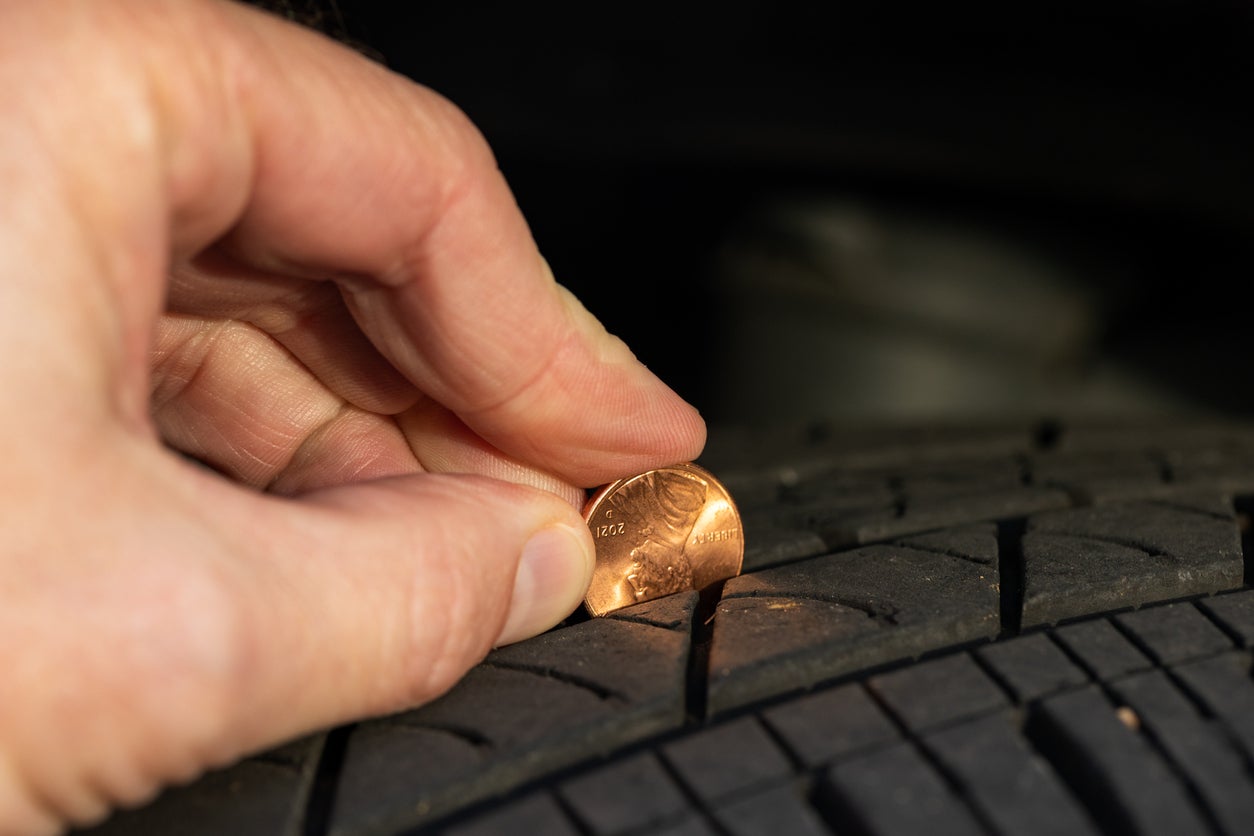
Checking tread depth on a tire by using a penny

Classic Auto Body Shop's Guide to Tires: Anatomy of a Tire, Tire Wear and Maintenance, and Choosing the Right Tire for Your Car

The experts at Classic Body Shop want to share their wealth of knowledge with you all on one of the most vital parts of your vehicle when it comes to safety and stability: The tires!  While it may seem like a “no-brainer” that tires are in need of maintenance, we’re going to share a little more detail on why we should all pay a little closer attention to the health of our tires beyond the obvious.  Let’s take a look at how a tire is constructed, what the elements do, and why keeping an eye on these things is tantamount to safe driving. more The tire has four very important functions for your vehicle: supporting the weight, changing and maintaining the direction of your driving, providing traction and braking, and absorbing road shocks.  Each element that composes the tire’s structure and frame is imperative to safe driving and functioning on the roadway. Carcass: This is the load-bearing framework which forms the body of the tire, made of thin textile fibers bonded into rubber.  It contains the inflation pressure and aids in supporting the load and absorbing impact, and helps it resist pressure. Tread: The tread,  sometimes also known as a “track”, is the rubber on the circumference of a tire that contacts the road surface.  Modern tires have an average tread depth of 8 to 9 millimeters (10/32nds to 11/32nds of an inch).  Good read depth should be 6/32nds of an inch or deeperWhen a tire has a tread depth below 1.6 millimeters it loses its grip, and impairs your vehicle control, stability, and braking performance. Shoulder: The shoulder on each tread is designed to protect the belt and carcass of the tire, and is where the tread and sidewall of the tire meet.. Belt: The Belt is a reinforcement layer extending to the outer circumference of the carcass under the tread, and improves the stiffness of the tread area.  It is made of rubber-coated layers of steel, fiberglass, rayon and other materials which provide puncture resistance, and also help the treads maintain contact with the road surface. Bead: The bead area supports the extremities of the carcass on each side of the tire, and is the edge of the tire that sits on the wheel itself. Bead Filler: This reinforcement rubber compound has a triangular cross-section, and is used to increase the stiffness of the bead and extends up into the sidewall area. It helps create a sea which holds air inside the tire. Bead Wire: A ring-shaped reinforcement material that is made by bundling together several high-carbon steel wires coated with red copper or bronze.  It has good flexibility and high strength, which is why it provides the framework for the tire structure. Inner Liner: The inner liner is a thin, air-tight layer of special rubber that keeps the air inside your tire and maintains the tire pressure, promoting good fuel economy. Side Wall: The sidewall is the smooth, vertical area on the tire between the tread and the bead, and provides lateral stability and support. It can be seen when you look at the tire from the side after its mounted on the vehicle. Rim: The tire wraps around the rim, which is the skeletal structure of the wheel assembly.  The rim provides structure and form, allowing the tire to wrap around it and fill with air. Now that you’re an expert on the anatomy of a tire, let’s go through some of the things you should know about maintaining, repairing, and replacing a tire. You should check your tire pressure monthly, or whenever the temperature changes with a difference of 10º  higher or lower, and inflate to the specifications listed in your manual or on the inside of the door panel. Check your tire’s tread depth each time you check the pressure, and replace the tire if it is worn down to 2/32nds to 4/32nds of an inch.  You can insert a penny into the tread groove with President Lincon’s head upside down.  If you are able to se the top of Lincoln’s head, you need to replace the tires.  Alternatively, if your tire treads are extremely low, you may notice your tire’s “treadwear indicators, which are raised sections between the tire’s treads; if you can see these replace them immediately. Examine the treads and sidewalls for any cuts, cracks, scrapes, punctures, bulges, bumps, or cracks.  Take a good look to make sure there are no nails, screws, or other foreign objects lodged between them.  If you spot any damage or wear-and-tear, you should bring your car in for a patch by a trusted service employee or a full replacement. Make sure to have your tires rotated with each routine service appointment such as an oil change or alignment.  This will ensure that your tires wear evenly and safely, reducing the chance of flats due to overuse or extreme wear. Check with your mechanic or trusted tire installation technician to find the best tires that match your vehicle’s recommended size/type, your driving style and average mileage, local/seasonal weather hazards, and your budget. Most tires typically last around 50,000 miles, which is about 3 to 5 years average for the typical driver, but this does vary depending on your driving habits, where you live, and where you drive most. Drivers who frequently use unpaved roadways, go off-roading, and those who are “lead-foot drivers” may need to replace them more frequently than average.  Check with your trusted mechanic or local tire specialist to assess your needs. Curious to learn more? Checkout these great videos:

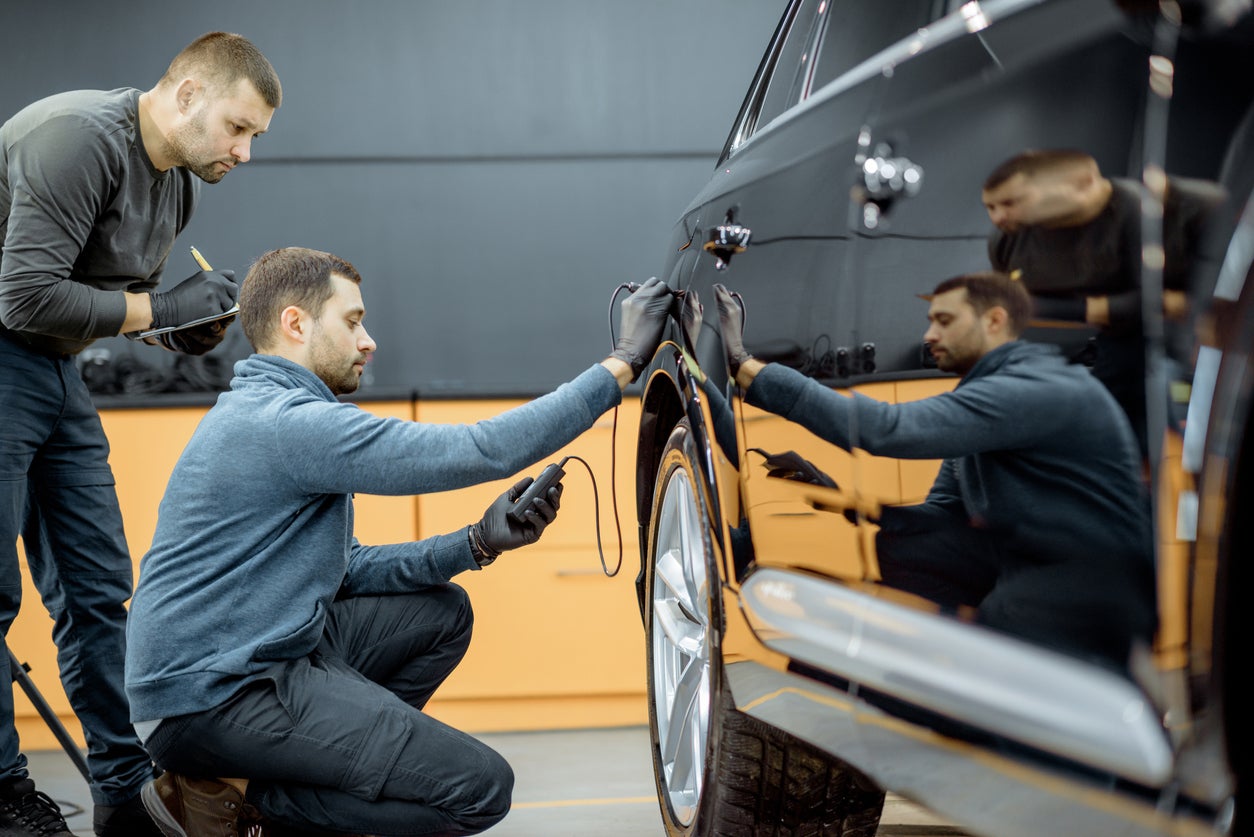
Workers examining vehicle body for scratches

What Do Auto Body Shops and Automotive Service Centers Do?

Wondering when you should bring your car to the body shop?  We’re here to help shine a light on some of the reasons you should take your car in for repair and service, and what major items a body shop sees the most. The average auto repair shop will fix engine components, mechanical and technical issues, and restore worn or broken parts from daily use.  The automotive mechanic can diagnose technical problems with your vehicle, monitor fluid levels/lubrication, and all manner of things in regards to operation and running.  You’ll see a mechanic frequently to perform regular maintenance to keep your car running smoothly. An autobody shop can restore vital elements of the physical structure such as the frame, door, window, bumper, and other parts that aren’t involved in the mechanical function.  Auto Body technicians specialize in restoring, refinishing and replacing the structural components to match original factory specifications.  Visits to a body shop are usually less frequent than a need for regular mechanic maintenance appointments. What are the major reasons to bring your car to an auto body shop? If your car has been hit by debris from the road, the body shop can repair the dings, dents, and damage from daily driving: cracks and stars in windshield, refuse falling from trucks, knicks and scratches from roadway debris. If your car has been side swiped on the street and left with cosmetic damage or technical damage from scrapes, bangs, broken mirrors, and other issues from mild collisions If your car has been left to the elements and mercy of mother nature: fallen tree limbs, broken branches, hailstorms, icicles and snowdrifts, water damage. What does the auto body shop repair regularly? Removing dings and dents in the sheet metal and straightening them out Replacing bumpers, body panels, doors, etc. Windshield repair or replacement General restoration following an accident or collision Repairing paint, repainting clear-coat, and restoring factory match paint colors Frame damage repairs to prevent structural issues At Classic Auto Body & Service Center in Waukegan, we do it all!  We’re here to make your experience as easy and stress free as possible.  We have an on-site car rental facility, 24-hour towing service on request, and an easy process for requesting work estimates and scheduling appointments for repair!  Just give us a call and we’ll get you back on the road in no time at all.

TBMNC_001-1500x999

Toyota Announces $2.5 Billion Expansion of North Carolina Plant with 350 Additional Jobs and BEV Battery Capacity

Toyota’s global investment climbs up to $5.6 billion, supporting electrification efforts LIBERTY, N.C. (Aug. 31, 2022) – Toyota announced an additional investment of $2.5 billion in its newest North American facility, Toyota Battery Manufacturing North Carolina (TBMNC). This investment adds capacity to support battery electric vehicle (BEV) battery production and adds 350 jobs, bringing the total employment to approximately 2,100. Scheduled to begin production in 2025, the facility will produce batteries for hybrid electric vehicles (HEV) and BEVs. more Last year, Toyota Motor Corporation announced a global investment of approximately $70 billion (8 trillion JPY*) for electrification efforts. Today, as part of this aspirational goal, TMC announced a future battery production commitment of up to $5.6 billion (730 billion JPY), which includes the new North Carolina investment. “This marks another significant milestone for our company,” said Norm Bafunno, senior vice president, Unit Manufacturing and Engineering at Toyota Motor North America. “This plant will serve a central role in Toyota’s leadership toward a fully electrified future and will help us meet our goal of carbon neutrality in our vehicles and global operations by 2035.” In 2021, Toyota, in partnership with Toyota Tsusho, announced the new Liberty location with an initial investment of $1.29 billion for battery production and the creation of 1,750 new jobs. With today’s announcement, TBMNC’s total investment is $3.8 billion. “This is an exciting time for Toyota, the region and the many North Carolinians we will soon employ,” said Sean Suggs, TBMNC president. “This incremental investment reflects our continued commitment to ensuring jobs and future economic growth for the Triad region.” Join the Team Toyota North Carolina is seeking motivated individuals to join its leadership team. To view and apply for open positions, visit www.toyota.com/careers. Production and maintenance employee positions will be available in early 2023. * Based on December 2021 Yen-Dollar exchange rate RELATED MEDIA RELATED IMAGES RELATED VIDEOS About Toyota Toyota (NYSE:TM) has been a part of the cultural fabric in North America for more than 60 years, and is committed to advancing sustainable, next-generation mobility through our Toyota and Lexus brands, plus our more than 1,800 dealerships. Toyota directly employs more than 48,000 people in North America who have contributed to the design, engineering, and assembly of nearly 43 million cars and trucks at our 13 manufacturing plants.  By 2025, Toyota’s 14th plant in North Carolina will begin to manufacture automotive batteries for electrified vehicles.  With more electrified vehicles on the road than any other automaker, more than a quarter of the company’s 2021 North American sales were electrified. Through the Start Your Impossible campaign, Toyota highlights the way it partners with community, civic, academic and governmental organizations to address our society’s most pressing mobility challenges. We believe that when people are free to move, anything is possible. For more information about Toyota, visit www.ToyotaNewsroom.com.

Enjoying sunset with my dog

Classic Toyota's YouTuber Roundup for September

We’re all recovering from a very busy holiday weekend, so we thought we’d keep things a little lowkey when it comes to blog updates.  After the transition to work week vibes, we figured it would be fun to kick back and relax with a little YouTube video fun!  Check out our roundup of recent and interesting uploads to some of our favorite channels. more We love seeing all the ways that folks customize their cars and really make their mark on the automotive world. Check out these interesting vehicles and cool collectible cars in this Automotive Meet Recap from Ed’s Auto Reviews on Youtube. Who doesn’t love a good rags to riches story? Well, this wild van has had quite the ride from rags to riches to rags to abandonment and finally restored to its former glory.  Check out this super fun video from our fave channel, Tavarish! Donut Media has arguably one of the most fun channels in the Automotive YouTubesphere. The crew is testing “Shark Tank” Car Products and giving you a full rundown.  Watch the pitch, watch the test, and decide for yourself!  Check it out. If you’re not subscribed to Rich Rebuilds, what are you waiting for?!  You’ll love the wacky and creative antics of Rich and his pals as their Electrified Garage takes on a slew of unique electric and alt-fuel rebuilt and reconfigured vehicles. In this episode, they’re trying out a solar powered car with 1000 miles of range! Who hasn’t watched a sci-fi movie and thought man that would be so cool to drive those futuristic cars? Well, thanks to experimental technology and conceptual engineering you may be closer to your dreams than you think!  Check out this concept car test driven by the Fully Charged Show on YouTube. This video from Marques Brownlee’s “Auto Focus” segment (and channel!) highlights the future of the car industry and the switch from fossil fuels to alt and electric cars. Check out his feedback and experience driving and enjoying the recently released Hyundai IONIQ. Looking for ways to connect with other likeminded folks in automotive industry? Car Meets are a fantastic way to connect with the community and make friends and network.  Check out this video from Gears and Gasoline about the positive aspects of Car Meets and car culture!

Learning to drive. Two young men in a driving session

Classic Toyota's First-Time Car Buying Guide for Families with Teen DRivers

School is starting and many young drivers are taking their first steps to independence by driving to their classes and after school jobs, social events, sports games, etc.  If you’ve got multiple teens in your household, the car swap shuffle can get a bit tiring and hectic!  As a result, you may be considering buying an additional vehicle for the family, or for your young driver to have to themselves. Like any other big family decision relating to your teen exploring the world, this can be a little overwhelming if you’re new to the process!  That’s why we’re here to help break it down into several easy-to-digest steps for wading through the waters of purchasing a first car for your teens.  Check it out and let us know if there are any other helpful hints and tricks your family has used, and we may included it in an updated column in the future! more A Helpful First Time Car Buying Guide for Teens & Their Families Decide on your budget. Many families will share cars with new drivers, or will pass down an older model as parents upgrade their ride, and as a result will want a budget friendly option. Shop around and test-drive multiple models, and see what type of vehicle that suits your needs is available at different price points. If you need a loan, younger drivers will require a co-signer due to lack of credit history and less stable employment history.  Be sure to talk this out as a family, and decide the best course of action ahead of loan applications. Many loans also come with title fees, a down payment requirement, and other costs, so be sure to do your research on that. Paying for a car up front can save you a lot of money in the long run.  Set a budget that you can comfortably afford to pay via cash or check, and avoid costly interest fees on loans.  Remember to include title fees/transfers, registration costs, and initial insurance payments in that budget. Figure out your daily mileage (home to school and back, school to work and back, average weekend visits with friends) and determine your average gas costs. Choose a car that fits your monthly budget with good gas mileage or higher electric charge mileage. Research average insurance coverage costs and payments for the make/model of cars you’re looking at, and best coverage that ensures your safety and fits within your budget. This can be a monthly, quarterly, or yearly expense depending on payment plan selection. Decide whether you’re going for a new or used ca r.  Most new drivers opt for budget-friendly used cars, but there are pros and cons to each. Weigh both as a family and decide which you prefer. Newer cars are the most advanced options, and have lower associated repair costs, but they do require financing or leasing and more expensive insurance. Older used cars can be a more economical option up front, you’ll have a wider variety of makes/models to choose from, but there is always a higher risk for repairs and maintenance. Used cars from 2013 and higher will fit most any budget and will have ideal safety features such as Anti-Lock Brakes, Traction control, and stability control. Newer cars within the last 3-5 years may also be equipped with Forward-Collision warning, Blind-spot monitoring, Heads-Up Displays, voice activated infotainment systems, and other driver-assist technologies. With the onset of COVID19 pandemic, both New and Used vehicle sales have been impacted, so plan ahead for potential wait times on specific models and features, and consider a flexible shopping plan with multiple selections in case your first choice is out of stock. Do thorough research on your options. After you’ve reached a budget plan, it’s time to consider a few things, such as what will be your daily usage, what features do you need, are you the sole driver or sharing, etc. Think about what kind of car you’ll need: will it be comfortable for long distances, a vehicle with room for multiple passengers, lots of room for athletic equipment, etc.  Make sure all of your car searches factor in the following: safety features, reliability and longevity, fuel economy, tech and digital features, vehicle resale value. Choose a vehicle that has a Good Crash-Test Rating via Kelley Blue Book verified sources (IIHS and NHTSA); these test for roof strength, head restraints and seats, front and side impact damage, roller damage, etc. Read all financial paperwork and sales agreements very carefully. If you’re a younger driver, be sure to bring along a parent or guardian who can help you navigate the agreements and negotiate your best deals. Decide what features are must-haves and what you can do without. Each make and model year of car has different features and amenities. It’s up to you and your lifestyle to find the right match of indispensable electronic and convenience features. Consider things like: Do you need a GPS?  Can you do without satellite radio or do you require digital interfaces?  Will a hybrid, all electric, or gas vehicle be best for your daily driving needs?  Do you need room for equipment such as sports gear, bikes, luggage, school supplies, etc? When you and your new driver are ready to make your purchase, you can give us a ring at Classic Auto Group and we’ll gladly steer you in the right direction of your perfect first car!

Date on a sunset

Classic Toyota of Waukegan's Summer Car Care Tips to Check Before Your Next Trip

Welcome to another edition of our Car Care Service Tips blog!  We’re here to help you maintain our vehicle between your regularly scheduled maintenance appointments at our service center and auto body shop.  Check out these summer essential service points before you head out on your next long drive or day trip. more Check Tire Air Pressure and Rotate Tires After several day-trips or even a lengthy drive to your vacation destination, your car tires are going to have seen their fair share of wear-and-tear.  Check the tread depth for signs of wear or uneven tread; replace or patch any damaged tires.  Check the tire pressure before you depart on your next adventure, and especially with any 10 degree temperature change outside. Inflate them to the recommended PSI from the manufacturer’s guidelines. Make sure you bring your car in for a wheel alignment check and have the tires rotated to ensure even wear. Top off Fluids While it’s important to keep your car’s fluids in check on the regular and with each seasonal maintenance, it’s imperative that during the summer months you especially keep an eye on your Coolant and motor oil levels. An increase in summer travel along with high-heat can mean these fluids are depleted quicker than average, and the last thing you want is to be stranded on the highway with a seized engine.  Make sure that you have Antifreeze/Coolant topped off as well as the appropriate oil before you leave on a long trip. Change Oil and filter Each vehicle make/model will differ in mileage requirements for oil changes, but most are between 3,000 and 6,000 miles between an oil change service.  Be sure that you bring your car in at the appropriate mileage markers especially if you’ve been making frequent drives or a long journey.  It will ensure your vehicle runs more efficiently in hot weather, reducing the chance of a seized engine or fuel inefficiency. Clean and/or replace air filter Summer heat means running the AC frequently, and that can lead to a need to replace your air filter in just one or two months as opposed to the usual 3.  Make sure you’re regularly checking the filter and cleaning it as needed, or replacing it earlier if you’ve been doing a lot of driving this summer.  It will ensure that your AC runs properly and can consistently cool your vehicle. Park your car in the shade Finding the shadiest spot in the lot during summer has quite a lot of benefits for your vehicle.  The most obvious benefit of a shady spot is keeping the interior cool, making it more comfortable for you to drive later and preventing damage to the car’s leather or fabric surfaces.  If you can’t find a shady spot, you can add a window shade or a sunshield to the windshield and prevent UV light from warming your car as quickly.  Shaded parking over the long term can also help protect the longevity of your car’s paint and protective clear coat, which can be damaged over time by long exposure to direct sunlight.  Using a fabric car cover for prolonged storage or lengthy parking times such as a few days can help keep paint safe. Is there a topic you wish to see covered in depth on a future service post update? Let us know in the comments on our social media!

Watch now banner in flat style on white background. Play video. Web media. Online translation. Vector illustration

Classic Toyota's YouTuber Roundup of Car Vloggers Worthy of a "Like and Subscribe!"

Check out our picks for great gearhead content on YouTube! In case you haven’t noticed, we really really love cars!  In fact, when we’re not here on the sales floor or in the auto group office, you’ll find many of us out on the road or in our garages working on our own cars.  But even the most enthusiastic Gearhead today’s post comes in.  We’ve rounded up our picks for some of our favorite channels on YouTube for car enthusiasts of all skill levels. more Whether you love to be hands-on under the hood and live the DIY lifestyle, or you prefer the adrenaline rush of track day, there’s something for everyone on today’s blog.  Check out these Car Vloggers and feel free to suggest your fave in the comments and we may feature your picks on our next YouTuber Roundup #1 Donut Media This channel’s content is educational, extensive, vastly interesting, and cleverly presented with a sense of cheeky humor.  Donut Media is the channel for those who want to “nerd out” about cars including fun facts, Top 10 lists, product comparison videos, car news, and so much more. It’s a great option for those who enjoy a more lighthearted approach to automotive topics and education. The team at Donut clearly love what they do, and no matter if you love new cars, old cars, or something in between - Donut Media has a video for you! #2 Mighty Car Mods This charming dynamic duo of Aussie gearheads, Marty and Moog, hves some of the most entertaining content from the other side of the globe.  From beaters to brand new cars, they do it all on their own, always adding their own personal stamp and spin to their projects.  Not only do they modify and mend their favourite cars for racing and daily driving, but they also make movies and music.  What’s not to love about a pair of best friends bonding over what they love? We could all use a little more of their jovial personalities and uplifting attitudes! #3 Engineering Explained Have you ever wondered where combustion engines will be in 10 years?  Curious about the chemical reaction that takes place under the hood of your car?  Want to know how each part of the engine fits together and why it was designed that way? Engineering Explained sets out to break down the most basic question: “How does it all work?” Thanks to Engineering Explained, car enthusiasts of any level will find even the toughest topics broken down into easy to understand tidbits.  Jason Fenske presents his knowledge in a straightforward, easily-digestible way so that you can gain a little insight into how your fave cars work and run, and become a better car owner in the process. #4 Tavarish Tavarish is knowledgeable, opinionated, a big personality, and his personal car collection is a perfect match to his vibe.  You’ll find a wide variety of content on his channel, including some super fun crossover content and challenges with his fellow YouTube Vlogger pals!  This Russian-born and New Jersey-raised car enthusiast has a delightful collection of videos on modifying and repairing cars.  His playlist of 60-Second reviews is perfect for those with short attention spans!  Get the scoop on the latest and greatest cars out there. Looking for inspiration on designing your garage? Check out his dream garage build where he takes you from start to finish in revamping it to fit his needs!  Watch as he buys cars off of Craigslist, Facebook Marketplace, and other local outlets and whips them into shape as the “whip of his dreams.” #5 The Hoonigans Known by collectors, drivers, and enthusiasts alike - the Hoonigan channel has really carved out a name for themselves in the automotive industry.  This team lives for track day, and consistently impress again and again with their tricks, stuns, and Don’t try this at home, folks; many of the stunts and adventures The Hoonigans partake in are dangerous to the inexperienced driver! Stay safe at home and boost your adrenaline by watching from your phone, tablet, or laptop. #6 Gears & Gasoline With more than 1 million subscribers on YouTube, this channel is perfect for vehicle enthusiasts of all kinds.  This passionate team of vloggers has dedicated their channel to chronicling their car modifications, test drives, track days, and even road trip recaps.  With cars ranging from budget friendly options to high end sports cars, there’s plenty to keep you intrigued and subscribed to this channel! Who doesn’t love a little Sunday Drive ASMR? Count us in, that’s for sure!

Contact Us

Fill out this form below and we'll contact you shortly
*Required Fields